


MS Shanker
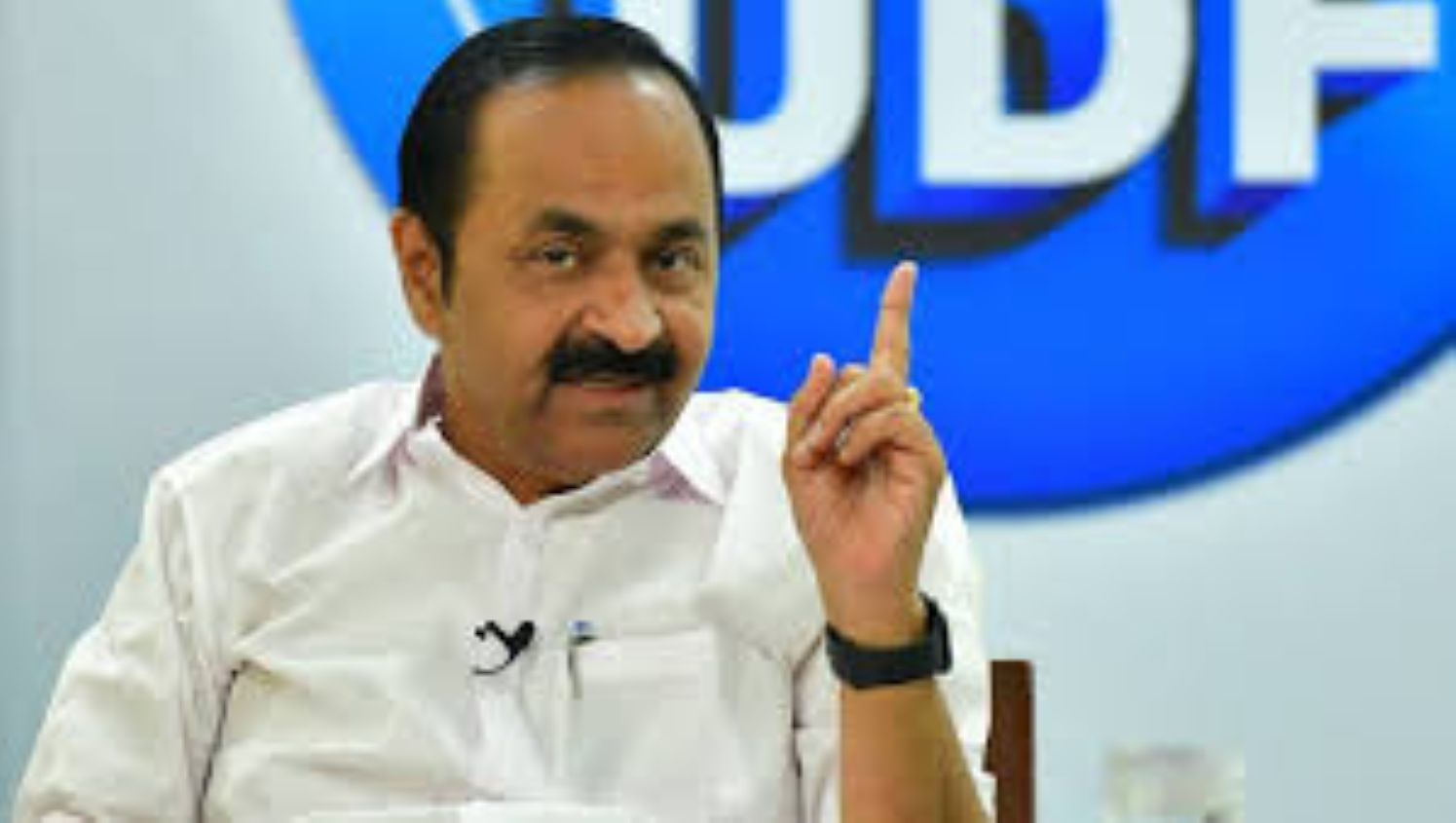
The elevation of V. D. Satheesan as the face of the Congress-led opposition in Kerala was not merely an internal party adjustment. It was, in many ways, a reluctant acceptance of political reality by the Congress high command. The leadership in Delhi may have preferred a more loyal and centrally aligned figure such as K. C. Venugopal, whose proximity to the Gandhi family has long made him influential within the party structure. But Kerala politics is rarely dictated solely from Delhi. It is shaped on the streets, inside community networks, and through the credibility leaders build among ordinary voters.
That is precisely where Satheesan stands apart.
Unlike several Congress leaders whose political growth depended heavily on proximity to the party’s dynastic leadership, Satheesan built his career the old-fashioned way — through relentless grassroots engagement. A five-time MLA, he has consistently maintained a reputation for accessibility, personal integrity, and articulate opposition politics. More importantly, he enjoys considerable goodwill not just within the Congress, but among the broader United Democratic Front constituents, including the influential Indian Union Muslim League.
The Congress high command perhaps realized that forcing another candidate could have triggered friction within the alliance itself. Kerala’s coalition arithmetic leaves very little room for arrogance from Delhi. The memories of Congress decline in traditional strongholds across India continue to haunt the party leadership. The electoral setbacks suffered by Rahul Gandhi and Priyanka Gandhi Vadra in regions once considered politically secure have reinforced a simple lesson — charisma from Delhi alone no longer guarantees political stability on the ground.
Satheesan’s rise, therefore, reflects a deeper churn inside the Congress. It is a recognition that credibility and local acceptance now matter more than court politics within the party.
What makes Satheesan particularly interesting is that he does not comfortably fit into the conventional stereotype often associated with Congress politics in Kerala. He is not seen as a practitioner of overt appeasement politics, nor as a leader willing to indulge in selective religious favoritism for short-term electoral gains. In a state where communal balance is extremely delicate and politically sensitive, this image has worked strongly in his favor.
That does not mean Satheesan is anti-minority. Far from it. His political acceptance across communities stems from precisely the opposite — the perception that he approaches governance and public life through fairness rather than identity calculations. In Kerala’s politically mature society, such balance carries enormous weight.
The real test, however, lies ahead.
Can Satheesan actually provide governance free from the compulsions of competitive appeasement politics? That question will define his political legacy.
Kerala’s political landscape has for decades revolved around carefully calibrated community equations involving Hindus, Muslims, and Christians. Every major political front has, at various points, been accused of pandering to specific vote banks. The Congress-led UDF often faced criticism from opponents for allegedly bending excessively toward minority pressure groups, while the Left too has frequently adjusted its ideological posture for electoral convenience.
Satheesan appears eager to project a different model — one rooted in administrative fairness and economic revival rather than religious symbolism.
His statements regarding sensitive issues such as Sabarimala Temple indicate that he understands the emotional concerns of Kerala’s Hindu population, many of whom felt politically alienated during previous controversies surrounding temple traditions. Yet Satheesan also knows Kerala’s social fabric cannot survive polarization. Kerala’s identity as “God’s Own Country” was built not merely on religious devotion, but on coexistence.
Historically, Kerala embraced Christianity and Islam centuries ago without large-scale civilizational conflict. That social accommodation remains one of the state’s greatest strengths. Satheesan seems conscious that any durable political project must preserve this equilibrium rather than weaponize it.
At the same time, Kerala today faces challenges far beyond identity politics. Rising unemployment, industrial stagnation, migration of youth to foreign countries, mounting debt, and an investment climate often viewed as hostile have created deep anxieties about the state’s economic future. Successive governments, irrespective of ideology, have struggled to transform Kerala from a consumption-driven economy into a robust production and industrial hub.
This is where Satheesan’s promise of a “new Kerala” becomes significant. If he genuinely intends to move beyond tokenism and focus on governance reforms, industrial peace, infrastructure expansion, job creation, and administrative transparency, he could redefine Congress politics in the state.
But that path will not be easy.
He will have to balance coalition compulsions, ideological pressures from within his own party, and the expectations of diverse religious communities. Most importantly, he must resist the temptation — common in Indian politics — to reduce governance into electoral arithmetic.
Kerala does not need another leader managing communities. It needs leadership capable of managing aspirations.
Whether V. D. Satheesan can rise above traditional Congress compulsions and deliver genuinely inclusive, appeasement-free governance remains uncertain. But one thing is already clear — his emergence represents the Congress party’s growing realization that credibility on the ground matters far more than blessings from Delhi drawing rooms.Top of Form



This is an objective analysis by the seasoned Sankar. insightful his observation that the Congress CM has been chosen for true leadership than loyalty to the high command. if I may add, it’s a pity that many MLAs-desginate of CLP opted for AICC general secretary K C Venugopal than Satheeshan, who led Team UDF to the rare tally of 102 seats in the 140-member House. Such is the pull of a decadent topdown system in the GOP.