



The Hanuman Temple is located in Tung village, in Miraj Taluka of Sangli district in Maharashtra. The temple is situated on slightly elevated land, which is why the place is called “Tung,” meaning a raised or higher ground.
This temple is considered ancient and has been a place of worship for several centuries. The present structure dates back to around 1875, when the entire village was relocated due to repeated flooding. Even though the temple was rebuilt at a new site, the original stones and sacred elements were preserved, maintaining its spiritual continuity.
The main deity of the temple is Lord Hanuman, worshipped here as “Tung Maruti.” The idol is made of black stone and stands in a strong and divine posture. It is believed to be a Jagrut (spiritually active) deity, meaning devotees experience quick fulfillment of their prayers. In 1980, the idol was coated with Panchdhatu (a sacred mixture of five metals), enhancing its ritual importance.
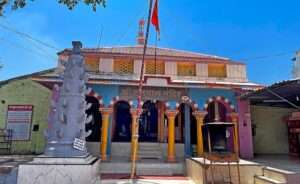
The temple is built in a traditional stone style. The sanctum (garbhagriha) follows the Hemadpanti style of architecture, known for its durability and stone craftsmanship without mortar. In front of the temple stands a tall circular Deepmala (lamp tower).
The entrance hall (mukhamandap) is supported by carved pillars and leads into a spacious wooden sabhamandap (assembly hall), which even has an upper level. The temple tower (shikhara) is beautifully designed with multiple smaller spires and topped with a kalash. The doorway has carvings, including an image of Lord Ganesha, and the walls display scenes from the Ramayana.
Originally, the temple and village were located near a river. Due to frequent floods, the villagers decided to move to a safer location in 1875. The temple was carefully dismantled and reconstructed at the present site using the same stones. This rare event of relocating an entire temple along with the village gives it a unique historical importance.
There is also a strong belief that the temple has a connection with the saint Samarth Ramdas Swami, who was a great devotee of Lord Hanuman.
The Sthalapurana of this temple reflects deep faith and divine protection. It is believed that the idol of Lord Hanuman here is either self-manifested or has been spiritually awakened through centuries of worship. The temple became a sacred place due to the strong presence of divine energy experienced by devotees.
According to local tradition, during the time of Samarth Ramdas Swami, the importance of Hanuman worship increased in this region. It is believed that he either visited this temple or inspired its worship, adding to its spiritual significance.
The most remarkable part of the legend is the relocation of the temple. When floods repeatedly threatened the village, the devotees prayed to Lord Hanuman for protection. With faith and determination, they shifted the entire village to higher ground and rebuilt the temple using the original stones. Despite the relocation, it is believed that the divine presence of the deity remained unchanged.
The deity is widely known as “Navsala Pavnar,” meaning one who fulfills the wishes of devotees. Many people visit with vows and return after their wishes are fulfilled, strengthening the belief that the deity is living and responsive. This continuous faith has made the temple a powerful spiritual center.
Hanuman Jayanti is the most important festival celebrated here, usually during the Chaitra month (March–April). Chaitra Purnima is also observed with great devotion. During these festivals, the temple becomes vibrant with bhajans, kirtans, spiritual discourses, and cultural programs.
A grand palkhi (palanquin procession) is carried out, accompanied by traditional music, drums, and gulal. Large numbers of devotees gather to participate in the celebrations. Every Saturday is also considered highly auspicious, attracting many visitors and creating a fair-like devotional atmosphere.

