Upadhyayula Lakshman Rao
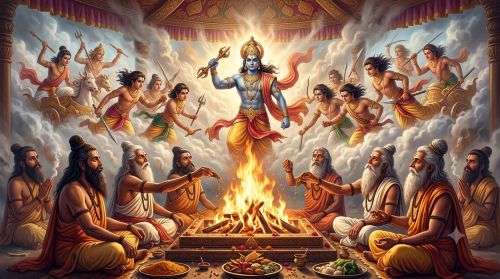
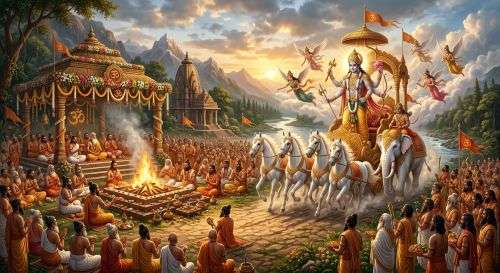
The sage Kakshivantha, in the elevated cadence of Tristubh metre within the sacred hymns of the Rigveda, invokes the twin divine physicians, the Ashvins, whose deeds shine with both compassion and cosmic intelligence. When the wife of Vimada was seized by hostile forces, the Ashvins, swift in resolve, mounted their celestial chariot, subdued the enemies, and restored her to her rightful lord. Just as ritual priests carefully spread the sacred grass to sanctify a sacrifice, and as clouds gather waters to nourish the earth, so too have these hymns been composed in reverence to their divine intervention.
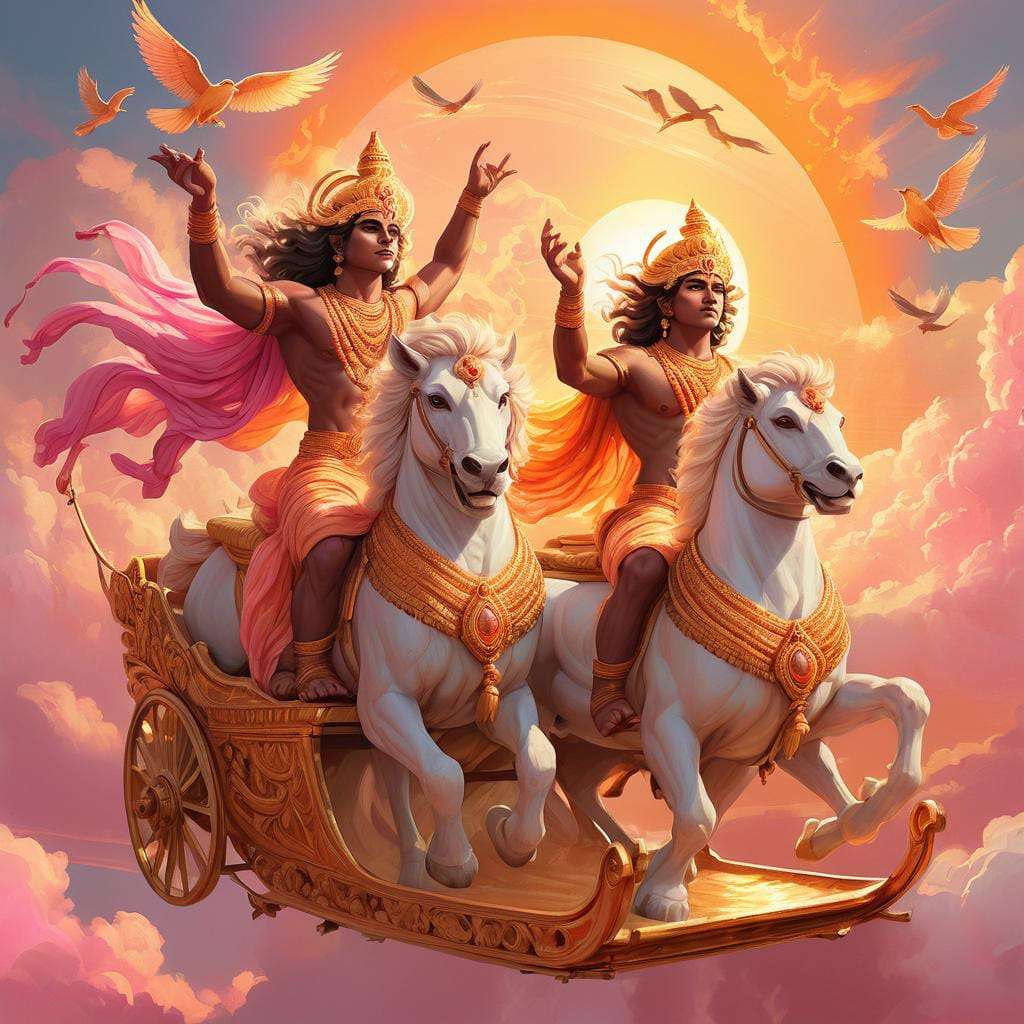
The vehicle of the Ashvins, often described as drawn by donkeys, symbolizes not mere physical strength but a deeper, paradoxical power—humble yet invincible, swift yet enduring. This vehicle rivals even the steeds of Indra and holds favor with Yama. Their chariot traverses realms beyond ordinary comprehension, moving upon the surface of waters and across vast deserts. When Bhujyu, son of Tugra, was abandoned amidst the boundless ocean in a fragile vessel, the Ashvins rescued him with a many-wheeled chariot drawn by six horses, journeying tirelessly for three days and nights, restoring him safely to his father. This act reflects not only divine grace but also an advanced understanding of motion and endurance across extreme environments.
Their benevolence extends further into the realms of sages and kings. The Rajarshi Veda was gifted radiant white horses, symbols of purity, strength, and victory, which rendered him triumphant in battle. The lineage of Angirasa, to which Kakshivantha belongs, was blessed with a mystical elixir derived from the water hyacinth, preserved in the sacred vessel known as Karothara during the grand ritual of Sautramani. This elixir signifies not merely nourishment but the preservation and refinement of life energies.
In acts of profound healing, the Ashvins extinguished hidden fires beneath husks with cooling waters, symbolizing the restoration of balance within concealed disturbances. They rescued Atri, who lay inverted in darkness, restoring him to light, nourishment, and home. They brought forth a well for Gautama, even reversing its orientation to quench his thirst, illustrating mastery over natural laws. Likewise, they rejuvenated Chyavana, removing his aged frailty as one discards worn armor, restoring him to youthful vitality.
Their wisdom is deeply intertwined with spiritual philosophy. The sage Dadhyanga imparted to them the sacred knowledge of Madhu Vidya, as described in the Chandogya Upanishad. This doctrine reveals the universe as an interconnected web of mutual nourishment, where the sun is the essence of sweetness, and all elements—space, air, fire, water, and earth—exist in harmonious interdependence. Such insight reflects an early vision of systemic unity and cosmic ecology, aligning spiritual realization with proto-scientific thought.
The Ashvins also preside over transformative rituals such as Prasvarga Vidya, associated with the sacred heating vessel, symbolizing the awakening of inner fire and the refinement of consciousness through disciplined practice. Their interventions extend into human suffering and resilience. They granted a पुत्र to Vadrimati, restored the severed limb of Vispala with an iron prosthetic, and revived vision in Rujraswa after blindness was imposed as punishment. These acts reveal an advanced conceptualization of surgery, rehabilitation, and justice.
Their chariot, graced by the daughter of Surya, signifies divine approval and prosperity. They aided Divodasa with sustenance delivered through an extraordinary chariot yoked with a bull and crocodile, symbolizing mastery over land and water. They protected Nahusha amidst encircling enemies, guiding him through peril and elevating him to inaccessible heights, beyond the reach of adversaries.
Their compassion reaches even into the forgotten and forsaken. They rescued Rebha, who had been bound and cast into waters for ten days and nights, lifting him as a priest retrieves Soma with a ladle. They restored lost children, revived barren cattle, and brought forth water from hidden depths to quench the thirst of seekers like Saru. Their actions reflect not only divine mercy but also an intuitive grasp of natural processes and restoration.
Thus, the Ashvins stand as luminous embodiments of healing, protection, and wisdom. Their deeds, resounding like thunder that brings rain, inspire both devotion and emulation. Through these hymns, the sage seeks not merely blessings of cattle, progeny, and wealth, but a harmonious life that flows into old age with dignity and fulfillment. In their presence, the sacred and the rational converge, revealing a vision of the cosmos where divine intervention and natural law operate in profound unity.