



KS Nagarajan
At a time when India is aggressively pushing for self-reliance, green energy, and indigenous innovation, I believe the country must also create space for independent innovators who dream of contributing to national development through original ideas and technological experimentation.
My journey as an innovator has been driven by one conviction — that innovation must ultimately serve society and strengthen Bharat’s long-term self-reliance.
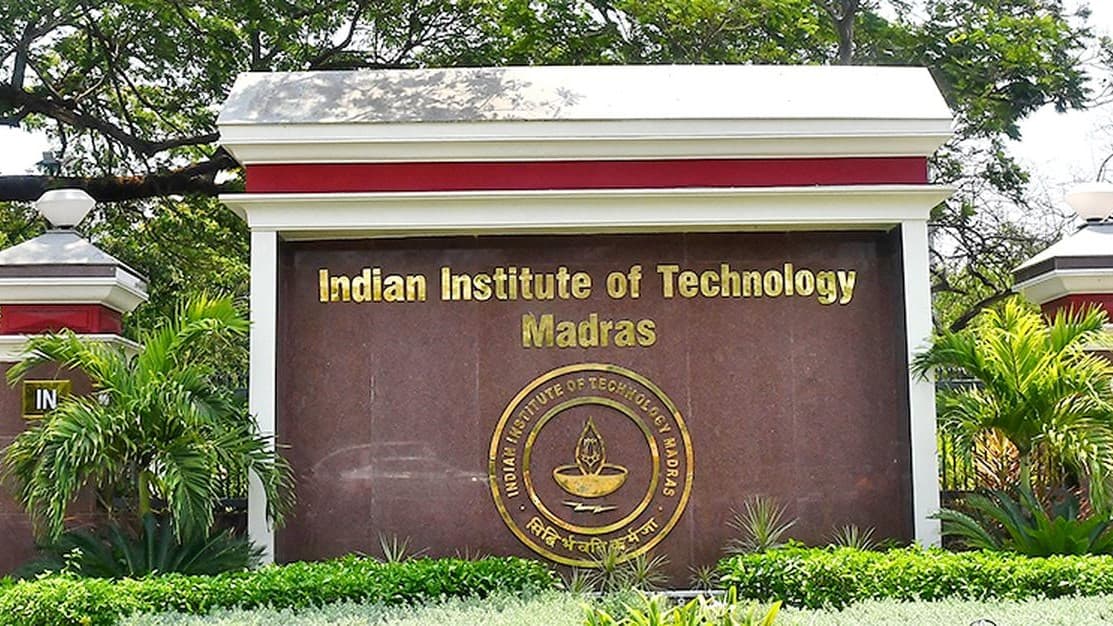
In a detailed communication addressed to senior officials and professors of the Indian Institute of Technology Madras, including Dr. Balaganesh, Professor Hariharan of Electrical Engineering, and other experts, I shared my vision for a futuristic energy-generation system that, if successfully developed, could potentially transform India’s MSME ecosystem, create lakhs of entrepreneurs and jobs, and contribute to green energy generation across the country.
At the heart of my proposal lies not merely a machine, but an idea rooted in India’s larger vision of innovation-led growth. I have proposed what I call the “NaMo Bharat Mudra Entrepreneurs Cum Employees, Innovators, Incubators Trust” — an ecosystem where MSME clusters manufacture components, operate decentralised micro-grids, and establish battery-exchange systems that could function alongside existing fuel stations.
The concept draws inspiration from India’s highly successful LPG cylinder exchange model. I believe standardised battery-swapping systems could similarly open up new possibilities for energy accessibility, infrastructure expansion, and decentralised power management.
What gives me confidence is the encouragement and guidance I have received from IIT Madras professors and experts. I remain deeply grateful to the Director and faculty members of IIT Madras for helping refine my ideas and encouraging innovation-driven thinking.
At the same time, I strongly believe genuine scientific collaboration requires direct interaction among engineers, innovators, designers, and technical experts. Online discussions and WhatsApp conversations cannot replace the depth of deliberation required while designing complex systems involving electrical control mechanisms, dimensional engineering, material sciences, and CAD-based development.
Technically, my proposal revolves around a push-plunger and solenoid-based mechanical arrangement involving coils, magnetic plungers, crankshafts, pulleys, gears, springs, and seesaw-like motion systems. The concept attempts to utilise controlled electromagnetic push-pull movements integrated into a larger gear-driven arrangement for energy generation.
The proposal therefore includes highly specific engineering aspects such as magnetic polarity direction, insulating varnish coatings to minimise undesirable EMF generation, crankshaft alignment, idler gear positioning, support-bearing centres, and torque-transfer angles. While such concepts would naturally require rigorous scientific validation, prototyping, peer review, and institutional testing, they reflect an attempt to integrate mechanics, electromagnetism, and motion systems into a unified framework.
Perhaps the most ambitious part of my vision is the belief that, once a successful micro prototype is developed, the same principles could eventually be scaled for macro applications — including self-running train systems equipped with separate power-generation coaches.
Whether such goals ultimately become technically feasible is for scientists, engineers, and institutions to determine. However, what should not be ignored is the spirit behind such efforts. India’s innovation ecosystem still poses enormous challenges for grassroots innovators, many of whom struggle with lack of institutional support, technical mentoring, funding access, and even basic working infrastructure.
My request for temporary accommodation within the IIT Madras campus itself reflects the difficulties independent innovators often face while attempting to collaborate with premier scientific institutions.
As India aspires to emerge as a global innovation hub, there is an important lesson here. Innovation does not always emerge from multinational laboratories or billion-dollar corporations. Sometimes it emerges from determined individuals driven by a national mission and an unwavering belief that technology can empower society.
India’s future may well depend on how effectively institutions, industries, scientists, and innovators work together to transform raw imagination into scientifically tested and commercially viable solutions. Not every idea will succeed. Not every experiment will revolutionise industry. But nations that encourage experimentation ultimately build stronger cultures of innovation.
My proposal, therefore, is more than just a technical concept. It represents the aspirations of countless Indians who believe Bharat should not merely remain a consumer of global technology, but evolve into a creator of original ideas capable of serving humanity itself. (The author is a former IITian and ONGC official.)




I think the Indian Government should allot funds generously for all kinds of innovations in all fields rather than giving freebies irresponsibly
Even with freebies included- the government can allot and should allocate funds. This will really take BHARATH to next level