Upadhyayula Lakshman Rao
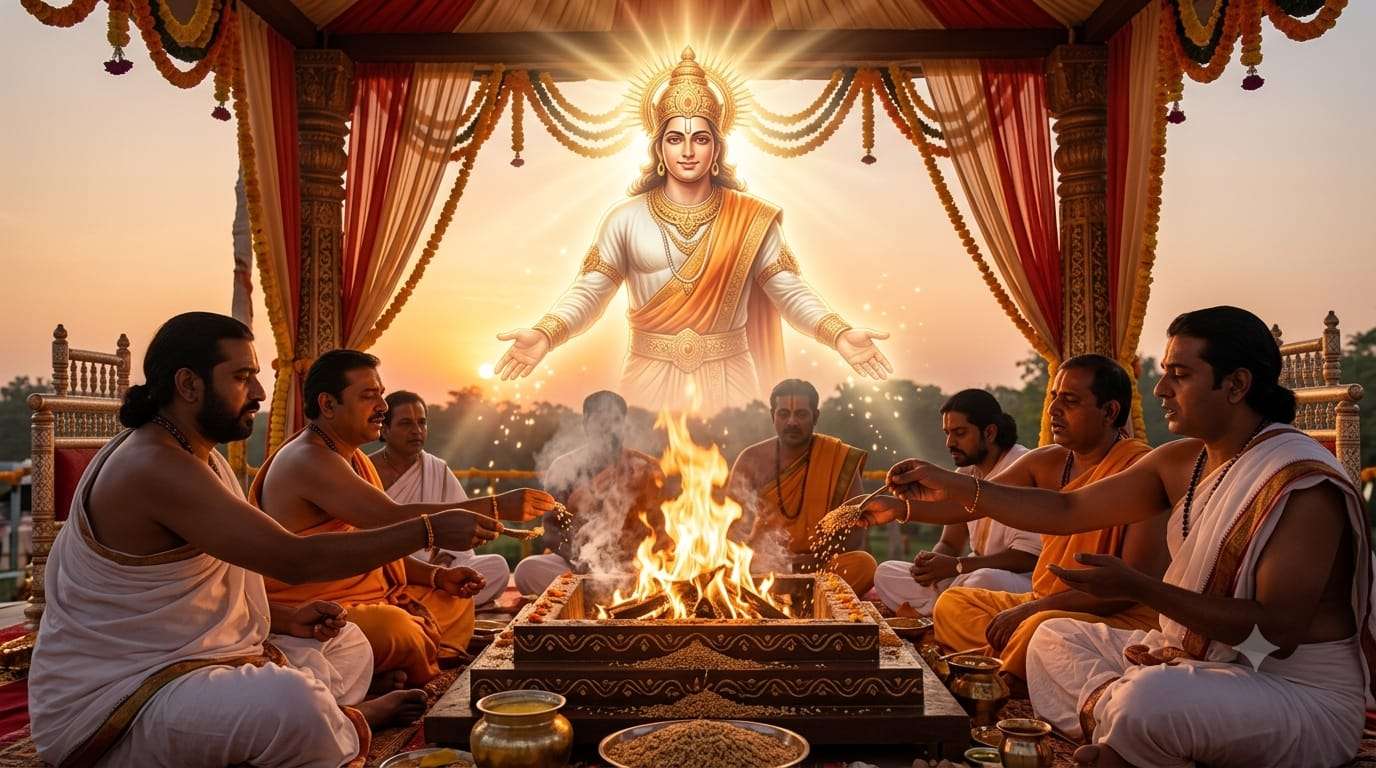
The sage Kutsa, born of the illustrious lineage of Angirasa, raises his voice in solemn praise of Agni through the measured cadence of Tristubh and Jagati metres, weaving devotion with disciplined intellect. He beholds the Agnihotra not merely as a ritual, but as a living bridge between human aspiration and cosmic order. With sharpened intellect and refined wisdom, the seers have fashioned hymns of grammatical precision and luminous meaning, likened to well-crafted chariots that bear the sacrificer toward divine realization. Through such offerings, their minds have become auspicious and steady, for service to Agni purifies thought and aligns it with truth.
Agni is invoked not as a distant deity, but as an intimate friend and unfailing guardian. Under his watch, no adversity dares approach, and the patron who sustains him through sacrifice becomes unconquerable. Strength, wealth, and vitality gather around such a one, while poverty and decline are driven far away. In this vision, Agni is both the transformer of matter and the catalyst of fortune, symbolizing a principle akin to energy itself—ever-converting, ever-sustaining, and ever-uplifting those who understand its discipline.
The sage affirms that through Agni, the rituals gain completion and meaning. The sacred grass is gathered, the oblations prepared, and the cycles of full and new moon observed with reverence and contemplation. These acts reflect not mere tradition, but an early scientific temperament—an awareness of cycles, precision in action, and harmony with natural rhythms. Agni, as the mediator, ensures that every offering reaches its intended divine recipient, suggesting a profound insight into transformation, where material substance becomes subtle essence through fire.
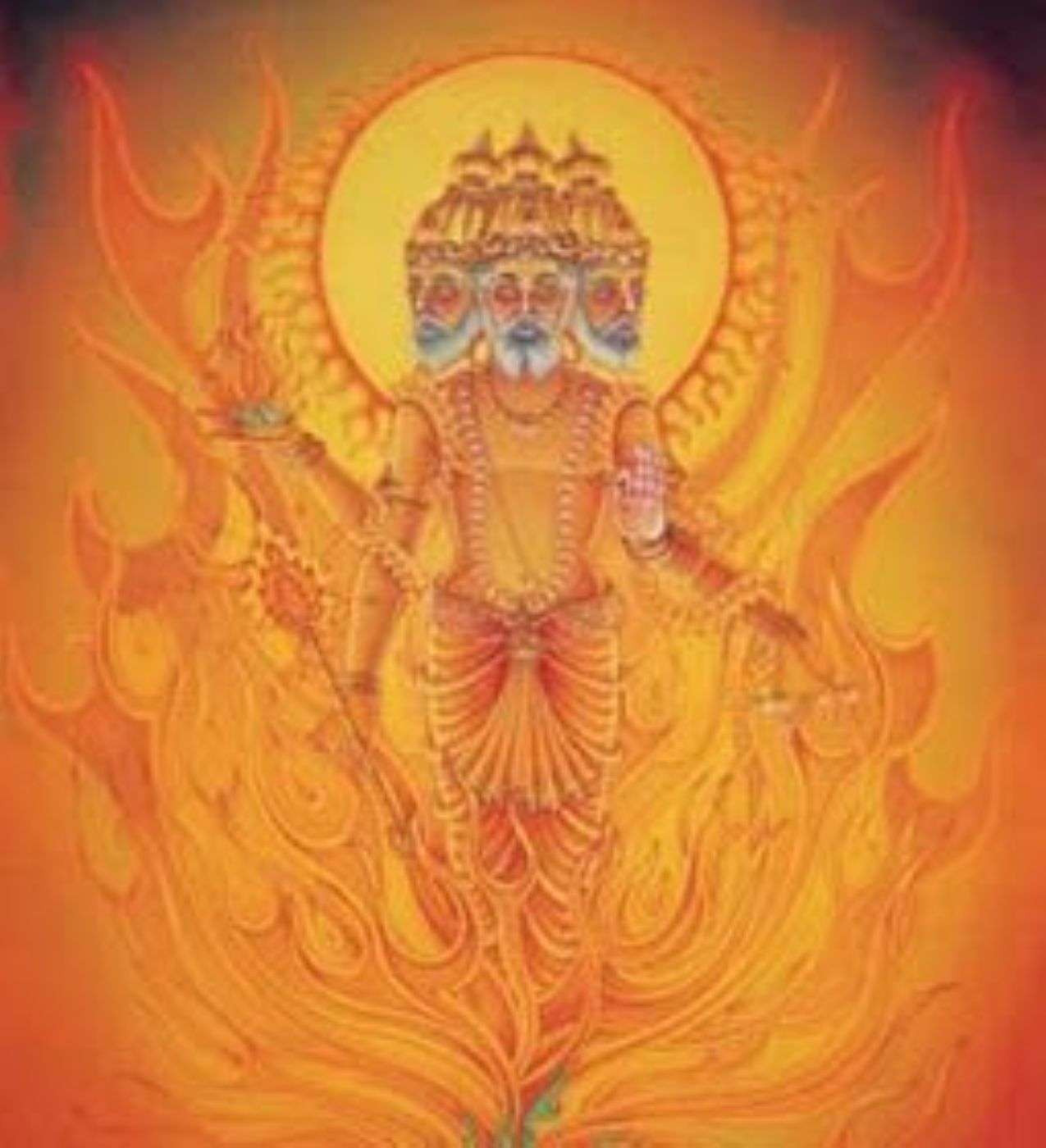
Agni is kin, protector, and witness. His radiant flames, multihued and dynamic, sustain life itself, just as energy in its many forms sustains the universe. His brilliance surpasses even the dawn, for while the dawn reveals, Agni transforms. As the primordial priest, he is said to be present from the earliest revelations, mastering all rites and guiding them to fulfillment. His presence reflects continuity—of knowledge, of tradition, and of the eternal laws governing both cosmos and consciousness.
The imagery of Agni’s motion is vivid and powerful. His red horses, swift as the wind, symbolize the rapid spread of energy, while the crackling of flames echoes like the bellowing of a bull, commanding both awe and reverence. When he blazes through forests, illuminating even the smallest blade of grass, it is a reminder of nature’s latent energy, capable of both creation and destruction. The seers observe this not with fear alone, but with understanding—recognizing in fire the same force that fuels life, industry, and transformation.
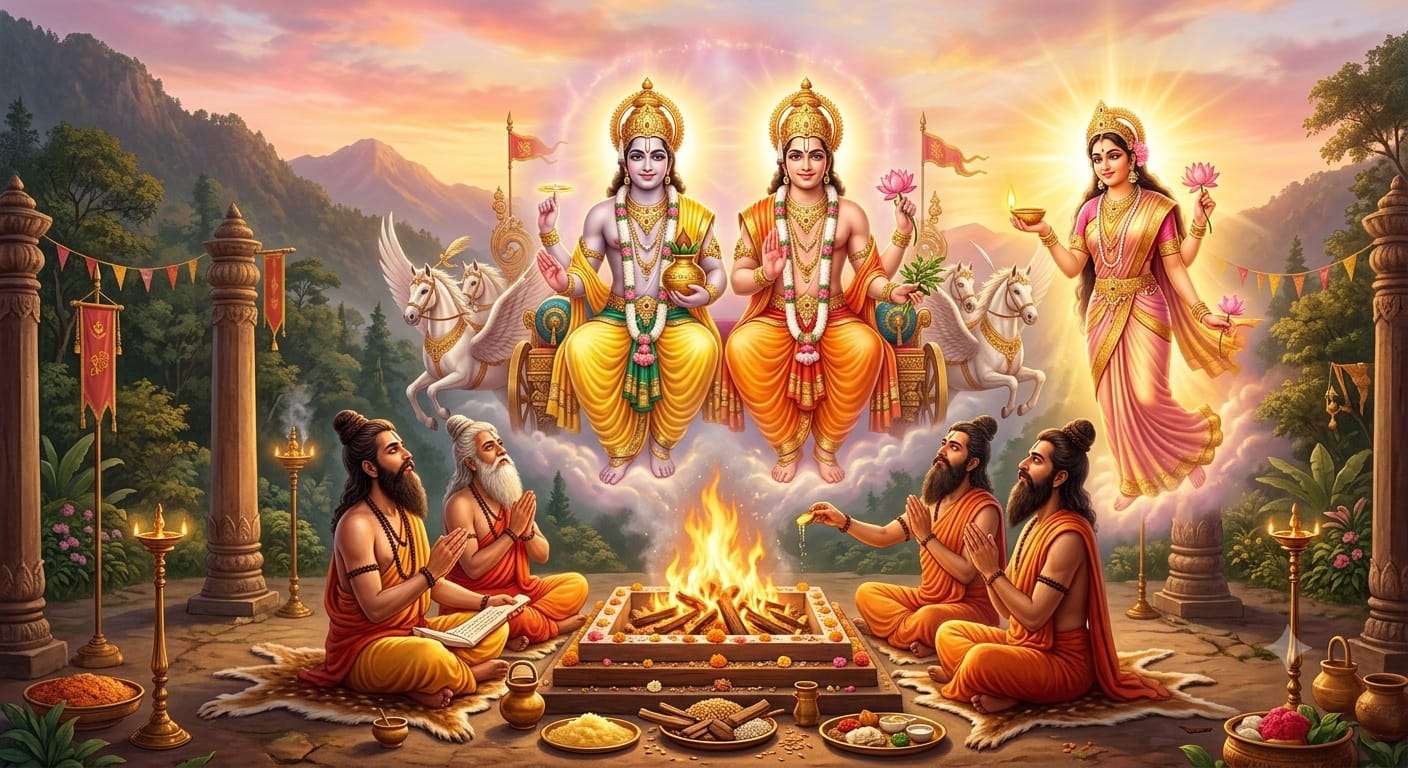
In moments of cosmic tension, the sage calls for harmony among divine forces. The Maruts, embodiments of storm and turbulence, are invoked to lay aside their fury and embrace calm. This reflects an early awareness of balance in natural forces, where even the most dynamic energies must be harmonized for the well-being of the world. Agni, as mediator, stands at the center of this equilibrium, connecting earth, atmosphere, and celestial realms.
The sacrificial ground becomes a microcosm of the universe, with the northern altar as Agni’s dwelling, where he consumes the Soma and elevates it into divine essence. This act mirrors processes of refinement and distillation, where raw substance is transformed into higher states. The patron, through participation, gains not only material rewards but also spiritual merit, longevity, and continuity of lineage. Such aspirations are safeguarded by the collective forces of cosmic order—Mitra, Varuna, Aditi, Earth, Ocean, and Space—suggesting an integrated vision of existence where all elements cooperate to sustain life.
Thus, the hymn unfolds as both devotion and insight, blending spiritual reverence with observational clarity. Agni emerges as the eternal principle of transformation—friend, priest, protector, and guide—whose presence ensures that no darkness endures, no effort is lost, and no sincere offering goes unanswered. Through him, the human journey finds direction, resilience, and illumination, moving steadily toward harmony with the vast and ordered universe