



In matters of national security, half-measures are a luxury India can ill afford. The decisive shift under Prime Minister Narendra Modi reflects a clear understanding of this reality: deterrence is built not on rhetoric, but on capability. Nowhere is this more evident than in the government’s sustained push to modernise the Indian Air Force (IAF)—the nation’s first line of defence in an increasingly volatile neighbourhood.
The induction of the Advanced Short Range Air-to-Air Missile (ASRAAM) into the IAF’s arsenal is not just a routine upgrade; it is a statement of intent. Coming on the heels of India’s recent operational successes, including the much-discussed Operation Sindhoor, the message is unmistakable: India is preparing, comprehensively and methodically, for future threats—including the possibility of a two-front war.
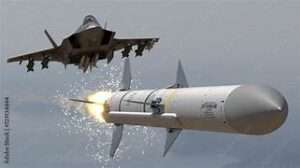
The Ministry of Defence’s move to integrate ASRAAM onto the MiG-29 UPG fleet is a critical step in enhancing close-combat superiority. The missile, developed by the European defence major MBDA, represents a quantum leap over the ageing Soviet-era R-73 currently in service. With a range exceeding 25 kilometres—more than double that of its predecessor—and speeds surpassing Mach 3, ASRAAM dramatically extends the lethal envelope of Indian fighter jets.
But numbers and specifications tell only part of the story. What truly sets ASRAAM apart is its technological sophistication. Designed for high-intensity dogfights, it employs advanced heat-seeking guidance and operates on a “fire-and-forget” principle. This allows pilots to disengage immediately after launch, enhancing survivability in contested airspace. Its dual capability—Lock On Before Launch and Lock On After Launch—offers tactical flexibility that is indispensable in modern aerial warfare.
Importantly, this is not a case of mere import dependence. In 2021, MBDA partnered with Bharat Dynamics Limited to enable local assembly and testing of ASRAAM in India. The establishment of a dedicated facility in Hyderabad is a tangible outcome of the government’s “Make in India” thrust in defence manufacturing. This synergy between global expertise and domestic capability is precisely the model India needs to pursue.
Equally significant is the role of Hindustan Aeronautics Limited (HAL), which continues to anchor India’s indigenous aerospace ambitions. With confirmed orders for 180 LCA Tejas Mk-1A aircraft, 34 Dhruv helicopters, and 156 Prachand attack helicopters, HAL is not merely a supplier—it is a strategic asset. The successful integration and testing of both ASRAAM and the indigenous ASTRA missile underscore India’s growing competence in advanced weapons systems.
The broader vision is unmistakable. While India has not hesitated to acquire cutting-edge platforms such as the Rafale fighter jets from France, it is simultaneously investing in homegrown solutions. The indigenous LCA Tejas programme, already integrated with ASRAAM, exemplifies this dual-track approach—leveraging global technology while nurturing domestic innovation.
Critics often frame defence procurement as a binary choice between imports and indigenisation. The Modi government has rejected this false dichotomy. Instead, it has adopted a pragmatic strategy: acquire what is urgently needed, build what is strategically essential, and collaborate where it is mutually beneficial. This is not just smart policy—it is strategic foresight.
The upgrade of over 55 MiG-29 aircraft, including trainer variants, with ASRAAM missiles ensures that even legacy platforms remain combat-relevant. In an era where aerial engagements are defined by speed, precision, and electronic warfare, such upgrades are indispensable. They extend the operational life of existing assets while bridging the gap to next-generation systems.
For too long, India’s defence preparedness suffered from delays, indecision, and bureaucratic inertia. That phase appears to be giving way to a more assertive and responsive framework—one that prioritises the needs of the armed forces over procedural paralysis.
The Indian Air Force, tasked with safeguarding the nation’s skies across a vast and challenging geography, deserves nothing less. By equipping it with advanced systems like ASRAAM, while simultaneously strengthening indigenous manufacturing through HAL and other public sector undertakings, the Modi government is sending a clear message: India will not be caught unprepared.
In the unforgiving calculus of national security, preparedness is power. And today, India is choosing to be powerful.


