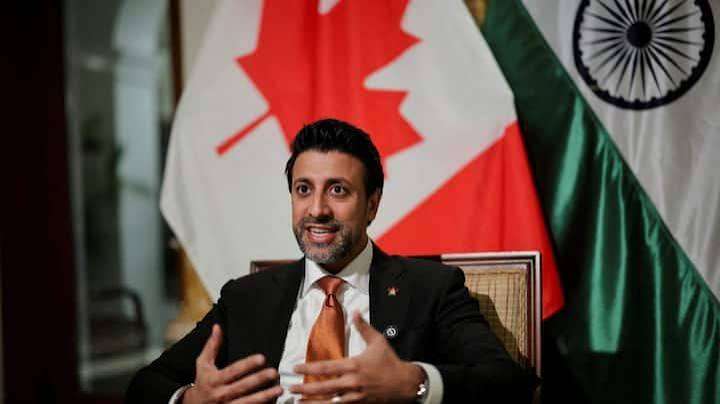
On the evening of May 10, in Hyderabad, the Prime Minister of India stood before the country and asked a question that no head of government asks lightly. He asked Indians to stop buying gold. Not forever, he said. Just for twelve months. Defer the jewellery. Skip the coin. Redirect that impulse toward something more immediately useful to the nation. He called it economic patriotism, and he meant it as a serious request, not a campaign slogan.
Two days before that speech, the Reserve Bank of India published its half-yearly foreign exchange reserves report. Almost nobody read the two documents together. Those who did found a story considerably more interesting than either document told on its own.
Between September 2025 and March 2026, the RBI added 86 tonnes of gold to its reserves. India’s central bank now holds 880.52 tonnes of the metal. Gold’s share of total forex reserves climbed from 13.92 percent to 16.7 percent in six months, one of the steeper moves in recent memory. Of that total, 680 tonnes now sit inside India’s own vaults. Two years ago, less than half of the country’s gold reserves were held domestically. That ratio has shifted with considerable urgency.
Read alongside the PM’s appeal, the picture that emerges is not simply one of coincidence. It is one of institutional candour by omission.
What the Numbers Are Actually Saying
Total forex reserves fell from roughly $700 billion to $691 billion over the same six-month window. That decline did not come from gold. It came from foreign currency assets, primarily dollars, which the RBI was deploying to defend the rupee in open market operations. The ratio of short-term external debt to reserves climbed from 19.7 percent to 21.9 percent. That is not a catastrophic figure, but it is a direction, and the direction is not comfortable.
So the arithmetic is as follows. Dollar reserves are declining. Gold reserves are growing. The institution accumulating gold at an accelerating pace just told the country’s citizens that their personal gold purchases have become inconvenient for the sovereign balance sheet.
That is not a routine policy communication. That is a signal about how seriously the central bank views the current external position.
Why the Twelve-Month Horizon Matters
There is a habit in macroeconomic policy communication of being technically accurate while remaining substantively incomplete. The official position is that the two activities are categorically distinct. The PM’s appeal targets private jewellery and investment demand, which imports gold from abroad and drains dollars in the process. The RBI’s accumulation is a sovereign reserve-management decision that operates through multiple channels. Both of those things are true.
But the question that neither explanation answers is why the message is needed right now, and why the timeframe is a year rather than a season.
India imports roughly 85 percent of its oil, and every barrel is priced in dollars. With crude oil elevated and the Strait of Hormuz carrying residual geopolitical uncertainty, the rupee faces persistent pressure on the import bill alone, independent of any other variables. Gold is India’s second-largest import after crude oil. It is also priced in dollars. When the state asks its citizens to stop converting rupees into gold for twelve months, it is asking them to stop competing with the central bank for the same scarce foreign exchange the RBI needs to keep the currency stable.

The twelve-month framing is the part of the message that reveals the most. Governments do not ask populations to defer culturally embedded consumption patterns for a full year when they believe the underlying stress will resolve in ninety days. You ask for a year when the scenario you are managing has a year-long tail at a minimum.
The Repatriation Pattern Is Its Own Message
The acceleration of gold repatriation from overseas custodians, primarily London and Basel, also deserves attention on its own terms. The RBI began pulling gold home with renewed pace after 2022, when Western governments froze Russia’s foreign exchange reserves following the invasion of Ukraine. The lesson was not subtle. Sovereign assets held in a foreign jurisdiction can be immobilised if the host country decides the political circumstances warrant it. That is not a theoretical risk. It happened to a G20 economy, within living institutional memory.
Afghanistan provided a second and starker version of the same lesson. Central bank reserves held abroad are only as accessible as the bilateral relationship that surrounds them.
The decision to move 100 tonnes of gold across international borders in six months from London and Basel back to Indian vaults is not an operational tidying exercise. It is a contingency decision. It says that the cost of leaving those assets offshore has risen to a point that justifies the friction and expense of bringing them home. Institutions do not absorb that cost without a reason.
The Behavioural Signal That Retail Investors Should Not Miss
For the individual investor, whether an NRI managing cross-border assets or a domestic retail participant, the instinct when hearing a senior official say “stop buying gold” is to take the advice at face value or to dismiss it as political noise. Neither response captures what is actually being communicated.
The more useful question is not whether to follow the instructions. It is to ask what the institution giving that instruction already knows. The RBI has public data, reserve composition detail, short-term debt maturity schedules, and FX intervention cost data that is not available to the retail market in real time. When that institution has been a net buyer of gold for years, when it has been pulling that gold home from foreign custodians at an accelerating rate, and when it simultaneously asks the public to reduce their own gold demand, the signal embedded in those actions is considerably more informative than the press conference.
The action is the signal. The speech is political.
This is not an argument for panic. Panic is always the wrong response to macro stress, and India’s external position, while tightening, remains manageable by most measures. But there is a meaningful difference between a position that is manageable and one that is comfortable. The RBI appears to be preparing for an extended period in which the margin for error is narrower than recent years.
Two Questions Worth Holding for the Year Ahead
The framework for monitoring this thesis is relatively clean. Watch what oil does. If crude stays above $90 per barrel through the second half of the year, the rupee’s import bill pressure does not relent, the dollar demand from energy payments continues, and the RBI’s room to accumulate more gold while also defending the currency narrows further.
The second variable is the September 2026 forex reserves report. If gold’s share of total reserves crosses 20 percent in that report, the institutional commitment to the hedge will have deepened further. That outcome, combined with elevated oil, would say something quite specific about what the RBI’s internal scenario planning looks like.
Neither of those variables requires a catastrophic reading of India’s economy to materialise. They require only that the external environment remains genuinely uncertain for longer than the baseline assumes.
The Prime Minister asked the country to practice economic patriotism. The Reserve Bank of India is practising it too, in the currency of tonnes, not speeches. The difference is that one of those two actors has access to the actual data. Watching what they do, rather than what they say, remains the more reliable form of analysis.