Vinay Rao
The Sunrisers Hyderabad versus Royal Challengers Bengaluru fixture on May 22 is more than a marquee IPL clash. It is an extraordinary opportunity — for cricket, or for the black-market ecosystem that has long thrived within the Hyderabad Cricket Association’s allocation system. The question is which one HCA’s new administration intends to serve.
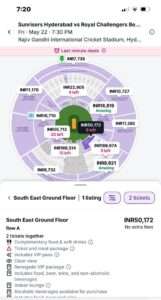
On May 22, Sunrisers Hyderabad take on Royal Challengers Bengaluru at the Rajiv Gandhi International Cricket Stadium. It is the kind of contest that sells itself — two massive fan bases, high IPL stakes, and a guaranteed full house. Demand for tickets has exploded. Third-party resale platforms are reportedly listing seats anywhere between ₹7,000 and ₹1.88 lakh, several times above face value. Premium sections that once carried official prices of ₹5,000 — or were distributed as complimentary quota tickets — are now circulating in an underground marketplace fuelled by scarcity, influence, and institutional leakage.
That demand is not the real story. The real story is what happens inside HCA’s allocation system before a single ball is bowled — and whether, this time, anything will change.
At every high-profile match in Uppal, the real game begins long before the toss. Tickets are quietly spoken for. Complimentary passes move through invisible channels. Accreditation cards change hands. The beneficiaries are usually known in advance. The genuine stakeholders of Hyderabad cricket rarely are.
HCA’s match-day access system rests on three pillars: ticket allocations to clubs and officials, complimentary passes for stakeholders, and media accreditation cards. In any professionally run association, each serves a legitimate purpose. Club allocations ensure that members and officials connected to the game can attend matches that their clubs help sustain. Complimentary passes exist for former players, administrators, and operational staff. Accreditation enables journalists and technical personnel to perform their duties. None of this is controversial. The problem is not the structure. The problem is what the structure has allegedly been converted into.
In practice, club secretaries have routinely received ticket allocations far beyond any reasonable operational requirement. Only a fraction reportedly reaches legitimate recipients. The remainder enters a shadow network of intermediaries, private brokers, WhatsApp groups, political contacts, and business circles — where tickets are traded at prices disconnected from the value printed on them. Passes issued for official purposes routinely surface in the hands of people with no official role whatsoever. Accreditation cards, which should correspond strictly to the number of working journalists and essential ground staff, are allegedly issued in numbers that comfortably exceed genuine requirements. The surplus inevitably finds a market.
The black-market economy surrounding HCA matches does not operate despite the system. It operates through it.
Every ticket that reaches a tout begins its journey somewhere inside the allocation register.
That register — the official record documenting every ticket, pass, and accreditation card issued, to whom, in what quantity, and for what stated purpose — is supposed to be the backbone of accountability. Or at least it should be. Serious questions persist about whether this register has historically been maintained with the rigour expected of an institution functioning in public trust. Incomplete entries. Unclear recipient details. Quantities that fail to reconcile with what is visible on the ground. Whether such discrepancies stem from incompetence or deliberate opacity, the outcome remains identical: accountability disappears.
What makes this worse is that this is not theoretical misconduct. At previous IPL matches in Hyderabad, black marketeers have reportedly been caught with HCA-issued tickets in their possession. Yet the trail has rarely, if ever, been pursued back to its administrative source. No meaningful scrutiny of allocation records followed. No club secretary was publicly held accountable. No visible corrective action emerged. The racket survived because consequences never arrived.
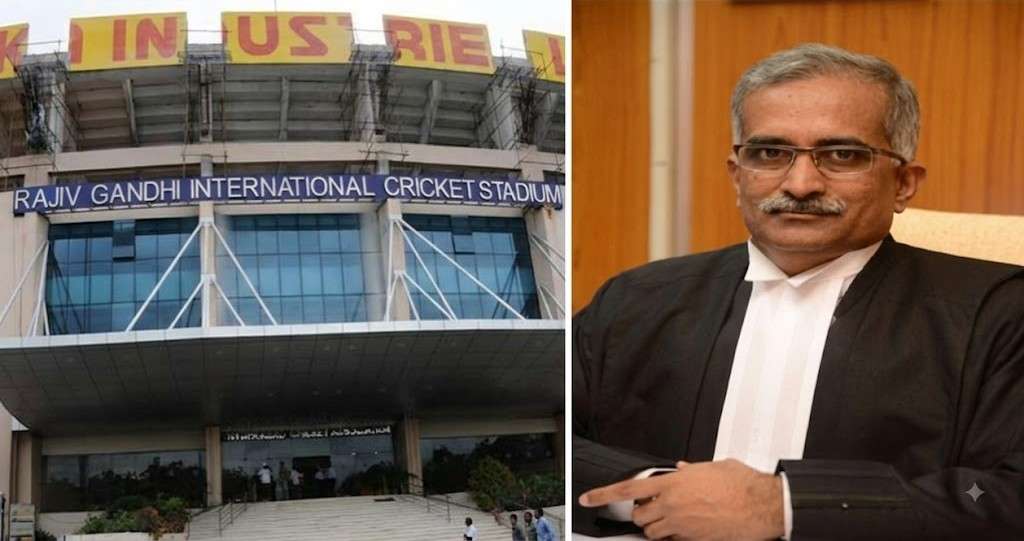
This is the history that accompanies the May 22 fixture. And it is the history that HCA’s present administration — operating under the oversight associated with Justice Naveen Rao — must now consciously choose to break.
The former cricketers who built Hyderabad cricket should not have to plead for complimentary access while politically connected operators move around the stadium carrying bundles of credentials. Genuine journalists covering the match should not discover press facilities occupied by individuals with no media role except proximity to power. Honest club officials entitled to quota allocations for legitimate members should not find portions diverted before they even receive them. Above all, a genuine paying fan should not have to sit beside someone who obtained the same seat through a touting network operating under institutional protection.
For years, the genuine stakeholders of Hyderabad cricket — players, supporters, honest administrators, journalists, and paying spectators — have consistently been the losers in this ecosystem. Every major match has served as a reminder of who the system actually rewards.
What would reform look like on May 22? It is not complicated.
Every ticket block, complimentary pass, and accreditation card issued must be entered contemporaneously and transparently into the allocation register, including the recipient’s name, role, and quantity received. The number of media accreditation cards printed should correspond strictly to the number of working journalists and essential staff required for the match — not one more. Club allocations must be verified against authentic membership records instead of functioning as discretionary political currency for secretaries. Most importantly, the allocation register should remain available for independent post-match scrutiny.
The Anti-Corruption Unit also faces a defining opportunity. Cases involving black marketeers previously caught with HCA-issued tickets are not dead ends; they are investigative starting points. Those tickets have origins. Those origins connect to allocation entries. Following that trail is not sophisticated detective work — it is basic administrative accountability. Visible action in even one case before or after the May 22 match would send a powerful message that the era of consequence-free misuse may finally be nearing its end.
Judicial oversight has undeniably created pressure for structural reform within HCA. But oversight that does not reach the match-day economy — the most visible, brazen, and publicly experienced aspect of HCA’s dysfunction — risks becoming cosmetic. The May 22 fixture is therefore not merely a cricket match. Under present circumstances, it is a test of whether reform genuinely reaches the ground.
The system already exists. The allocation register exists. Previous incidents are on record. The mechanisms for transparency are already available. Everything required to conduct this match honestly is already in place.
The only remaining question is whether those running the administration possess the will to enforce it — or whether Hyderabad cricket’s most predictable scandal will once again unfold exactly on schedule.
Serve the genuine stakeholders.
Or explain, under scrutiny, why you chose not to.