



Peepleshwar Hanuman Temple is located in Churuwa village in Raebareli district of Uttar Pradesh. The temple is situated in a calm rural area and is built around a sacred Peepal tree, which is considered highly holy in Hindu tradition.The name “Peepleshwar” is believed to be connected with a sacred Peepal (Pipal) tree, which is traditionally associated with divine presence in Hindu belief.
The exact age of the temple is not known, as there are no inscriptions or historical records available. It is believed to be an old local shrine that has existed for many years through continuous worship. The temple likely developed gradually over time, starting as a small place of worship and later becoming a recognized religious spot due to growing faith among devotees
The main deity of the temple is Lord Hanuman, also known as Bajrangbali. He is worshipped here as a powerful protector who removes fear, obstacles, and negative energies. Devotees believe that Hanuman at this temple listens to prayers quickly and blesses people with strength, courage, and success. The idol is simple but powerful in presence, and is often covered with sindoor and oil, which are traditional offerings to Hanuman
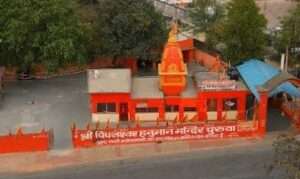
The temple has a simple village-style structure without large towers or complex carvings. The most important part of the temple is the sacred Peepal tree, around which the shrine is formed. The Hanuman idol is placed near or under this tree, making nature an integral part of the temple. The surroundings are peaceful and natural, creating a strong spiritual atmosphere. The temple reflects devotion and faith rather than grand architectural design.
The history of the temple is based mainly on local tradition rather than written records. It is said that the place was originally just a sacred Peepal tree where people used to offer prayers. Over time, a Hanuman idol was either discovered or installed at this spot. As devotion increased, a small temple structure was built around the tree. The temple gained importance as more people started visiting and sharing their experiences of prayers being answered.
According to local belief, the temple is considered Swayambhu, meaning self-manifested. It is believed that Lord Hanuman’s divine presence was felt near the Peepal tree, making the place sacred. Some devotees say that the idol appeared naturally or was found at this location, which led to the start of regular worship. The Peepal tree plays a very important role, as it is believed to be a place where divine energies reside. Worshipping both the tree and Lord Hanuman together is said to increase spiritual benefits.
In the early days, there was no temple structure, and people simply prayed near the tree. Gradually, as more devotees experienced relief from their problems and believed their wishes were fulfilled, the place became known as a powerful spiritual center. Many people visit this temple seeking solutions to personal, mental, or financial problems. Because of these strong beliefs, the temple is considered a Siddh Sthal, or a place where wishes come true.
It is important to note that no ancient scriptures or official historical documents describe this temple. The Sthalapurana is based on oral traditions and the faith of local devotees. Like many Hanuman temples in India, its importance has grown through belief, experience, and continuous worship.
Hanuman Jayanti is the most important festival celebrated at the temple, attracting a large number of devotees who come to offer special prayers and seek blessings. Ram Navami is also celebrated with devotion, as Lord Hanuman is closely associated with Lord Rama. On these occasions, the temple becomes vibrant with religious activities, prayers, and gatherings of devotees.

