Our Business Desk
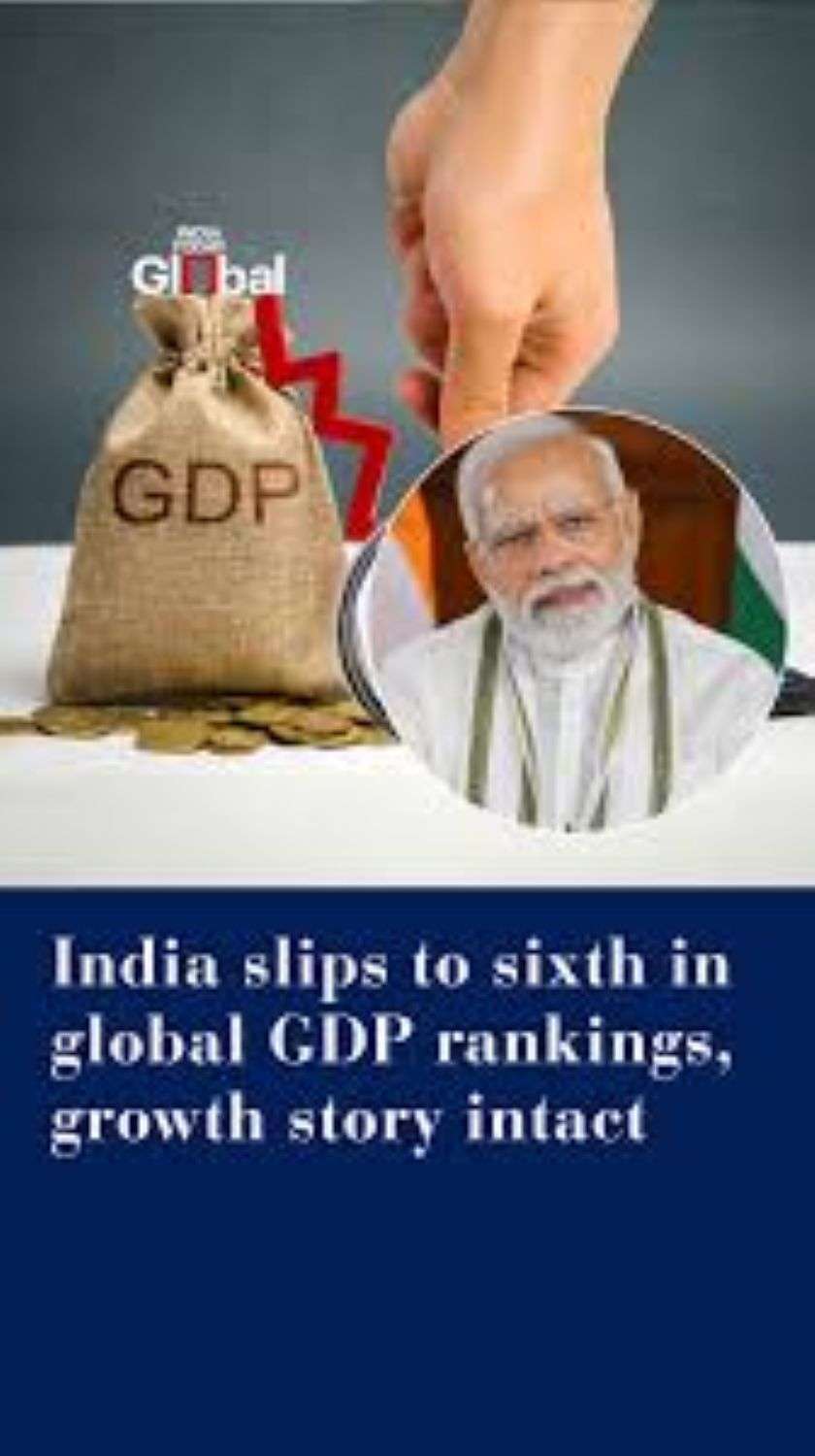
India has slipped to the sixth position among the world’s largest economies in nominal GDP terms, according to the International Monetary Fund’s April 2026 estimates, sparking debate over the country’s economic trajectory. Economists, however, maintain that the decline is largely technical and does not reflect a structural slowdown in the Indian economy.”
Based on the IMF’s updated projections, India’s nominal Gross Domestic Product (GDP) stands at approximately $4.15 trillion, marginally behind the United Kingdom’s estimated $4.26 trillion. The latest rankings place the United States and China firmly in the top two positions, followed by Germany, Japan, the United Kingdom, and India.
Currency Movement and Statistical Revision Behind the Change
Economists point out that the decline in ranking has been driven primarily by two factors — the depreciation of the Indian Rupee against the US Dollar and a revision in GDP base-year calculations.
Since global nominal GDP comparisons are measured in US dollar terms, fluctuations in exchange rates can significantly impact rankings even if domestic economic activity remains strong. A weaker rupee effectively reduces the dollar value of India’s GDP despite continued expansion in real output.
Experts also note that statistical adjustments made during GDP base-year revisions may temporarily alter economic estimates without fundamentally changing underlying growth trends. Such revisions are standard international practice and are intended to better reflect changing consumption patterns, productivity trends, and sectoral contributions.
India Still Among Fastest-Growing Major Economies
Despite the slip in rankings, India continues to remain one of the fastest-growing major economies globally. The country has consistently recorded higher growth rates than most advanced economies, supported by robust domestic demand, infrastructure spending, digital expansion, and manufacturing growth.
India’s economy has shown resilience amid global geopolitical uncertainties, supply-chain disruptions, and slowing growth in several Western economies. Government-led capital expenditure, growth in services exports, and rising formalisation of the economy have continued to support economic momentum.
Analysts caution against reading too much into nominal GDP rankings alone, arguing that they often fluctuate due to exchange-rate volatility rather than actual economic deterioration.
“Nominal GDP rankings are important symbolically, but they do not necessarily capture the real strength or long-term potential of an economy,” economists observe. “India’s growth fundamentals remain relatively strong compared to many developed economies facing stagnation or demographic decline.”
Per Capita Income Still a Major Challenge
While India’s aggregate economic size continues to expand, experts stress that per capita income remains a critical challenge. India’s large population means that despite becoming one of the world’s biggest economies, average income levels remain significantly below those of advanced economies.
Economists argue that sustaining high growth rates over the next decade will depend on job creation, manufacturing competitiveness, productivity improvements, skilling, and continued reforms in agriculture, labour, and logistics sectors.
The services sector, particularly information technology and digital services, continues to be a major contributor to growth. At the same time, policymakers are increasingly focusing on boosting domestic manufacturing through initiatives linked to electronics, semiconductors, renewable energy, and defence production.
Long-Term Outlook Remains Optimistic
Despite the latest ranking adjustment, global financial institutions and economic observers continue to project India as one of the strongest long-term growth stories in the world economy.
Several forecasts suggest India could regain higher rankings in the coming years and potentially emerge as the third-largest economy globally before the end of the decade if current growth trends continue.
India’s relatively young demographic profile, expanding middle class, rising urbanisation, and increasing infrastructure investments are viewed as long-term advantages compared to ageing developed economies.
Analysts say the current shift serves more as a reminder of the importance of currency stability and sustained reforms rather than an indication of economic weakness.
For policymakers, the challenge ahead will be to convert headline growth into broad-based prosperity while ensuring macroeconomic stability, investment confidence, and employment generation in an increasingly uncertain global environment.Top of Form