


N Nagarajan
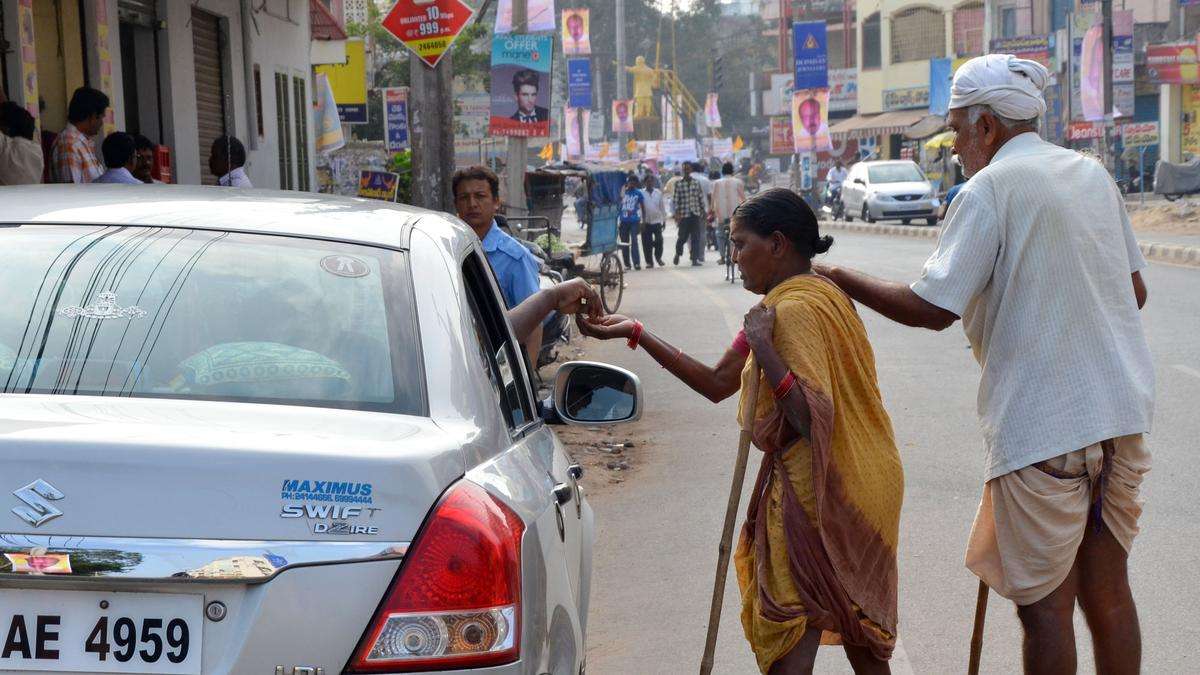
India stands at a moral crossroads when it comes to the care of its senior citizens. In recent years, both the Centre and State governments have stepped in with legal safeguards to protect the elderly from neglect and abuse—an intervention that, in itself, reflects a worrying social decline. That such laws are even necessary in a culture that once revered parents as living deities is a sobering reality.
The Maintenance and Welfare of Parents and Senior Citizens Act, 2007 was enacted precisely to address this erosion of responsibility. It legally obligates children and heirs to provide for the basic needs of their parents, with provisions for maintenance tribunals and penalties for abandonment. Building on this, the Telangana government has introduced stricter measures aimed at ensuring financial accountability. These include mandates requiring employees—across public and private sectors, as well as elected representatives—to support their parents. The provision allowing up to a 15% salary deduction (capped at ₹10,000) in proven cases of neglect is both bold and necessary.
Yet, the critical question remains: will parents ever drag their own children to court? In a society where emotional bonds often outweigh legal rights, many elderly individuals suffer in silence rather than expose their children to public scrutiny. Laws can deter, but they cannot replace conscience.
What is equally striking is the collapse of long-held social assumptions. For generations, families placed unquestioned faith in sons—the so-called “Raja Beta”—believing they would be the natural caregivers in old age. Daughters, conditioned by the notion that they “belong to another family,” were rarely seen as primary sources of support. Today, reality tells a different story. Increasingly, it is daughters who step forward to care for ageing parents, often going against social expectations and even resistance within their marital homes. Cases of daughters abandoning parents for property or personal gain are rare, while disputes involving sons over inheritance are far more common. This inversion of roles demands a serious rethinking of entrenched biases.
However, the conversation cannot be one-sided. While condemning neglect, it is equally important to recognise the pressures faced by the present generation. The world of work has undergone a dramatic transformation. Unlike earlier decades, where job security and predictable routines were the norm, today’s professionals operate in an environment defined by relentless competition, long hours, and constant uncertainty. Careers are shorter, peaks come earlier, and the fear of redundancy looms large.
When elderly parents dismiss these realities with comparisons such as “we managed with less,” they unintentionally widen the generational divide. Emotional expectations, when disconnected from present-day challenges, can strain even well-meaning relationships.
There are also uncomfortable truths that must be acknowledged. Some elderly individuals, despite good intentions, demand constant attention without recognising their children’s constraints. Others neglect their own health—ignoring medical advice or failing to follow treatment regimens—only to later hold their children responsible. Such patterns often lead to avoidable friction, turning care into conflict.
The answer, therefore, lies not merely in legislation but in recalibrating relationships. Laws such as the Maintenance and Welfare of Parents and Senior Citizens Act, 2007, and state-level enforcement mechanisms are essential as deterrents. But they are, at best, corrective tools—not substitutes for familial responsibility.
Elderly parents must adapt to changing times, maintain a degree of financial and emotional independence where possible, and take ownership of their health and well-being. At the same time, the younger generation must resist the dangerous temptation to equate success with detachment. Professional ambition cannot become an excuse for moral abdication. Abandoning parents—emotionally or physically—is not a mark of modernity; it is a failure of character.
Ultimately, no legal framework can manufacture compassion. The true measure of a society lies in how it treats its most vulnerable. If India is to retain its civilisational ethos, it must ensure that progress does not come at the cost of humanity. Empathy, respect, and shared responsibility—not coercion—are what will keep families, and society at large, intact.



Thank you for the space provided for such an interesting article, very relevant to the present times. The thoughtful views provoke the readers to draw attention to the issue and help in taking corrective measures, if needed, on self introspection. The article to me is very well written highlighting the responsibilities of an individual for the senior citizens. I sincerely hope the central and state government’s initiative in protecting the interest of senior citizens goes a long way and this article stands as a reminder to every citizen of their responsibilities towards the senior citizens. Regards, Murali
Thank you very much for sharing this article at just the right time. I have been reflecting on these thoughts for several days now, and your article has truly resonated with me. It has captured and articulated so many important aspects that our society needs to pause and reflect upon.
I particularly appreciate the clarity and depth with which you have presented the ideas, making the piece both insightful and relatable. Articles like these not only create awareness but also encourage meaningful conversations and, hopefully, positive change.
Thank you once again for such a timely and impactful piece.
A very good eyeopener.Whatever the conditions may be it is the duty to look after the parents the way one looks after his children.
The law should be enforced strictly not simply framing.
The daughters may not take care inspite of taking the share in the property due to in laws and husband,spressure.But they have to fight out the cause when it is needed as their responsibility also.
Due to effect of Western culture also Indian families are degrading.
This article is an exposure of the present conditions.Very good 👍
The article hits the nail on the head. But parents and their children are in a tragi-comic situation. Case to case, there may be variation but the article in general is acceptable by both the generations for whatever good or bad they are. There is a systemic change on the mindset of the younger generations and they may not be totally wrong as much as the older generation. Both generations have to empathise with each other as the younger has to be in elder one’s position unavoidably.