Lakshman Rao
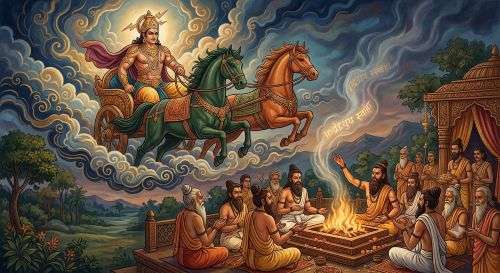
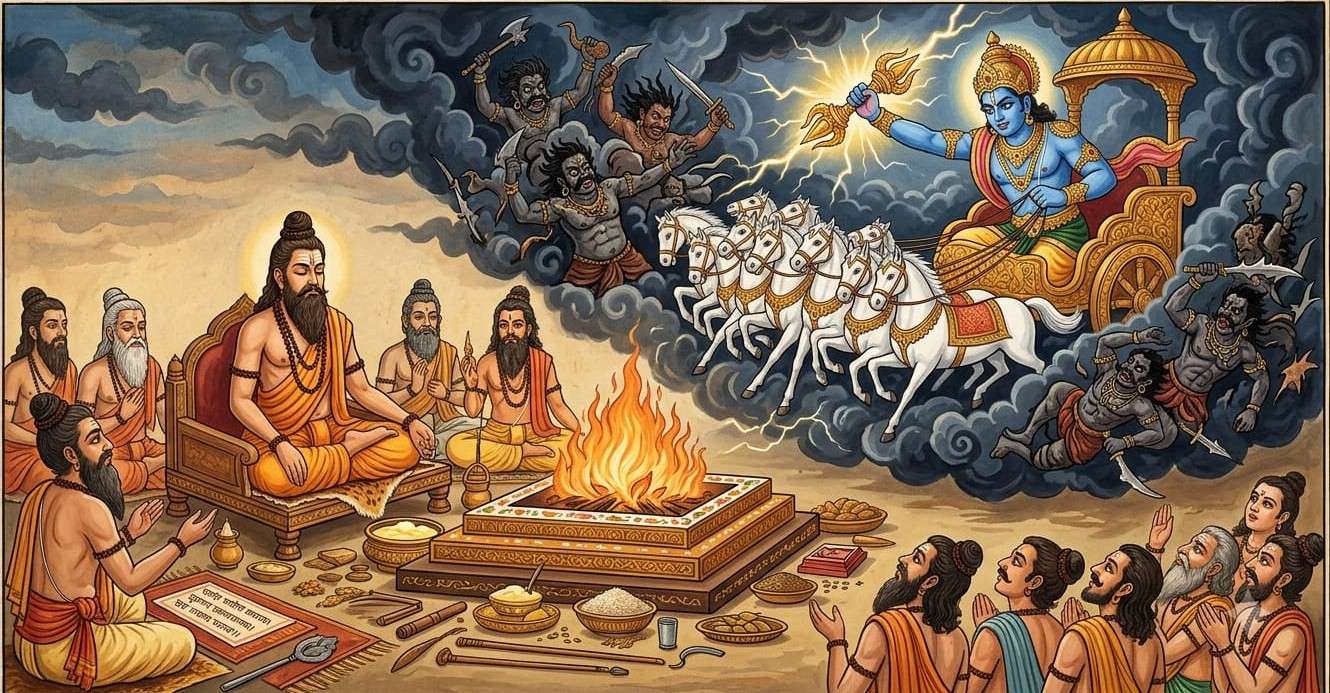
The sage Kakshivantha, born of the lineage of Uśij, raises his solemn invocation to the Vishvedevas in the dignified cadence of Trishtubh metre, as preserved within the sacred corpus of the Rigveda. Addressing the Ritvijas, the officiating priests, he exhorts them to perform the sacrificial rites with precision and reverence, offering oblations to Rudra, the bestower of the fruits of action. Rudra, accompanied by the fierce Maruts, who are likened to arrows in his quiver, stands as a formidable force who dispels malevolent energies across the three realms. Thus, the sage invokes him in the vast expanse between earth and heaven, seeking protection and harmony.
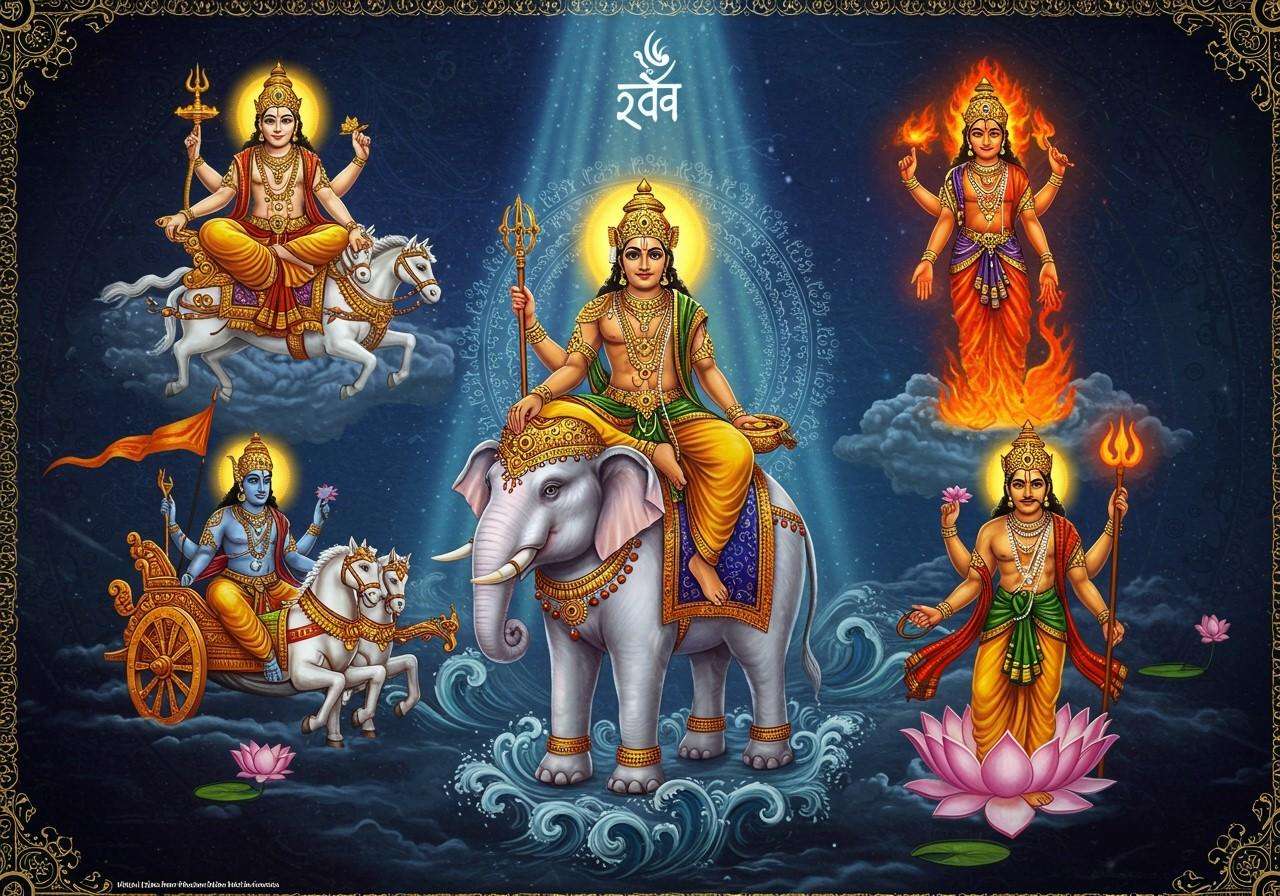
The eternal rhythm of time is poetically invoked, where day and night are envisioned as devoted consorts, ever ready to serve the cosmic order, humbly responding to the call of sacrifice. The radiant dawn, Usha, adorned with the golden brilliance of the rising sun, is entreated to honor the earlier invocation, while the Sun himself is invoked as the source of satisfaction and illumination. The wind, the unseen cause of rain and movement, is revered as a vital sustaining force, while Indra and Parjanya are invoked to purify the mind and nurture life through their divine influences.
The hymn extends its reverence to the nourishing and sustaining aspects of existence, wherein all the gods are implored to grant abundant food and vitality. The twin deities Ashvins, radiant and swift, are praised as the partakers of sanctified offerings and drinkers of the Soma elixir, symbolizing rejuvenation and healing. At the break of dawn, Kakshivantha humbly calls upon them to grace the ritual. He further directs the priests to invoke Agni, the grandson of the waters, through sacred hymns. This profound imagery reflects an early scientific insight: vegetation arises from water, and from wood, Agni is kindled; thus, fire is metaphorically the offspring of wood and the grandchild of water, revealing an intuitive understanding of natural processes.
With deep humility, Kakshivantha aligns his devotion with that of Ghosha, the Brahmavadini, who sought divine grace for relief from illness. In this continuity of faith, he invokes the gods to respond to his sincere prayers. He acknowledges Pushan as the true bestower of the fruits of rituals and calls for his praise in hymns. The benevolence of Agni is again extolled, while Mitra and Varuna are invoked as guardians of cosmic law and sacred waters, requested to sanctify the ritual space with their grace and to listen attentively to the hymns offered in proper Vedic order.
The sage prays that Mitra and Varuna bestow upon him wealth in the form of cattle, strength, and the capacity to sustain the cycle of sacrifice that nourishes all beings. Their divine chariot, radiant like the sun, symbolizes the movement of cosmic law across the universe. He seeks not only material prosperity but also harmonious relationships, aspiring for children, grandchildren, mutual affection, understanding, and respect within the community. The blessings of the gods are envisioned as fostering courage, generosity, and fearlessness, shaping an individual who stands firm against injustice and remains unshaken by adversaries.
In a tone of existential humility, the sage acknowledges his mortal nature, declaring himself a creator of hymns yet devoid of worldly protectors. He looks upward to the gods who traverse the heavens, inviting them to descend and partake in the sacred offering, to hear and appreciate the sincerity of his praise. He emphasizes that divine grace must manifest as nourishment that sustains not only the patron but also the wider community, reflecting a deeply ethical and collective vision of prosperity.
The prayer culminates in a symbolic appeal to the tenfold invocation by groups of priests, representing the nourishment of the ten senses and the holistic development of human faculties. Under the divine governance of the gods, the sage affirms that no hostile force can overshadow the devotees. The revered deities are invited to partake in offerings of milk and sweet rice, symbols of purity and sustenance, and in return, to bless the worshippers with ornaments, wealth, and noble progeny endowed with beauty and strength.
Yet, the hymn does not remain detached from earthly struggles. Kakshivantha candidly expresses his distress caused by the sons of King Masarmara and King Avayasu, whose ignorance and hostility disturb his peace. In this context, the invocation of Mitra and Varuna gains a deeper dimension, as he seeks not only prosperity but also justice and protection. Their resplendent chariot, shining like the sun, becomes a symbol of divine intervention that restores order and righteousness.
Thus, this hymn stands as a profound confluence of spirituality and early scientific temperament, where natural phenomena are interpreted through sacred symbolism, and human aspirations are harmonized with cosmic principles. It reflects a worldview in which devotion, ethics, ecology, and social order are interwoven into a unified vision of existence, guided by the eternal rhythm of the Vedic truth.