



Kamalambika Temple is located inside the large and famous Thyagaraja Temple in Tiruvarur which lies about 60 km from Thanjavur in Tamil Nadu.
The temple is very ancient and is believed to be more than 1000 years old, dating back to the Chola period (around 9th century CE). Over time, it was expanded and maintained by the Nayak and Maratha rulers, which added to its grandeur and importance.
The main deity is Goddess Kamalambika, a divine form of Parvati. She is uniquely seated in a Padmasana (lotus posture), which is very rare in temples, showing her as a Yogini and the embodiment of supreme knowledge.
Lord Shiva is worshipped here as Thyagaraja along with Somaskanda. The Goddess here represents *Lalita Tripura Sundari*, the supreme cosmic energy in the Sri Vidya tradition.
The temple is built in Dravidian style architecture and is part of one of the largest temple complexes in India. It has massive gopurams (towering gateways), wide corridors, large prakarams, and beautifully carved mandapams.
The temple also has a very large sacred tank called *Kamalalayam*, which is one of the biggest temple tanks in Tamil Nadu and adds to the spiritual beauty of the temple.
The temple has a rich history from the time of the Cholas, who were great builders of temples. It is also one of the Paadal Petra Sthalams, meaning it was praised in sacred hymns by the Nayanmars.
The temple is closely associated with the great Carnatic composer Muthuswami Dikshitar, who composed the famous *Kamalamba Navavarana Kritis*, dedicated to the worship of Goddess Kamalambika and Sri Chakra. This makes the temple very important not only spiritually but also culturally.
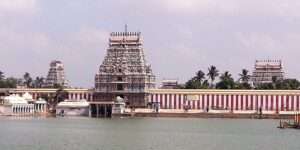
According to traditional temple legends, Goddess Kamalambika came to this sacred place to perform deep penance in order to unite with Lord Shiva. She sat in meditation in the lotus posture near the sacred tank, which later came to be known as Kamalalayam.
Her penance was very intense and was not only for her union with Lord Shiva but also for the welfare of the world. Because of this, she is worshipped here as a *Yogini and Jnana Shakti (power of wisdom)*.
Unlike many temples where the marriage of Shiva and Parvati is celebrated, here the legend explains a deeper spiritual meaning. The Goddess remains in a meditative state, symbolizing detachment from worldly desires and focusing on higher spiritual truth.
This temple is also considered a powerful Sri Chakra Peetha, where the Goddess resides as Lalita Tripura Sundari, representing the entire universe. The shrine itself is believed to represent the Navavarana (nine layers of Sri Chakra), and worship here is equal to performing complete Sri Chakra puja.
Devotees believe that praying here removes obstacles, gives knowledge, brings prosperity, and helps in attaining peace and spiritual liberation.
The temple celebrates many grand festivals throughout the year. The most important is the Panguni Brahmotsavam, which is conducted with great devotion and attracts thousands of devotees.
Navaratri is very special for Goddess Kamalambika, with elaborate decorations and special poojas.
Arudra Darshan, dedicated to Lord Shiva, is also celebrated in a grand manner.
The Float Festival (Teppotsavam) held in the Kamalalayam tank is another major attraction, where the deities are taken in a decorated float.

