Upadhyayula Lakshman Rao
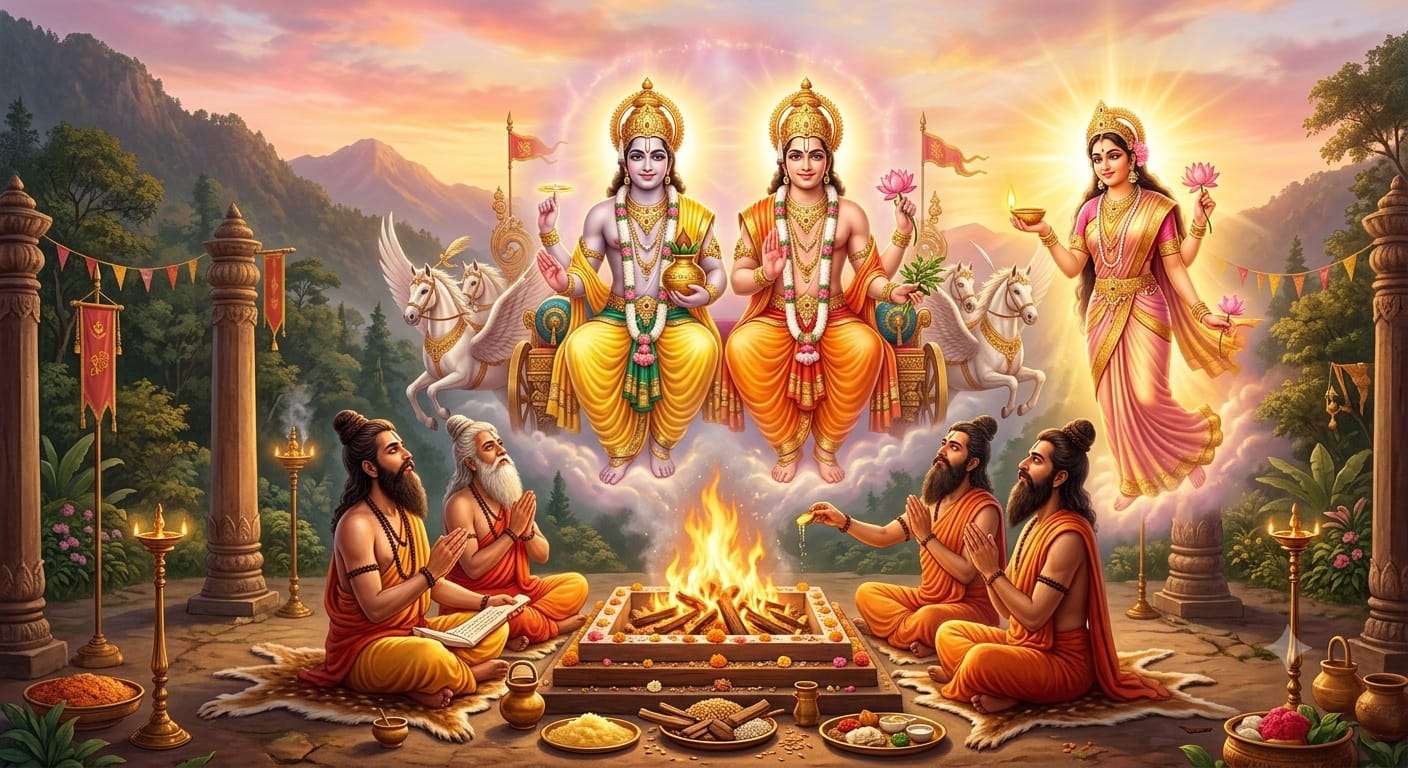
In the sacred cadence of the Rigveda, the venerable sage Kakṣīvanta, son of Uśijā, raises his voice in the stately Jagatī metre, invoking the twin deities known as the Ashvins—the luminous harbingers of dawn, healers of the afflicted, and swift responders to the call of devotion. Their chariot, wondrous and resplendent, is described as moving with the speed of the mind itself, symbolizing not merely physical velocity but the subtle and instantaneous reach of divine consciousness. Adorned with many flags bearing varied emblems, and drawn by steeds unmatched in vigor, this celestial vehicle stands as a metaphor for the integration of power, knowledge, and purposeful motion, fully aligned with the sanctity of high rituals.
The sage, with reverence and longing for longevity, invites the Aśvins to partake in the oblations prepared with utmost care. Clarified butter, purified through sacred rites, enriches the offerings, while learned priests refine and elevate them through precise invocations. As the dawn unfolds, the Aśvins are envisioned commencing their journey, drawn toward those who uphold yajña with progressive vision and disciplined fervor. In this, the hymn subtly reflects a scientific temperament—where order, preparation, and intention converge to produce harmonious outcomes, much like the principles governing natural phenomena.
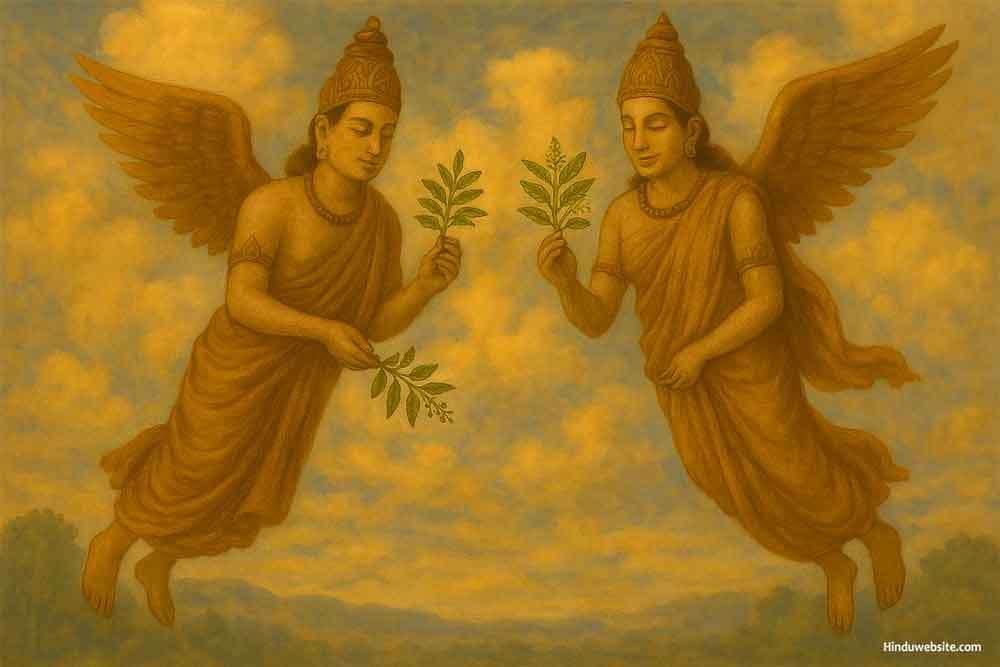
The hymns recall with clarity the divine interventions of the Aśvins in the lives of seekers and kings. When Bhujyu was cast helplessly into the ocean’s vastness, it was the self-yoking chariot of the Aśvins that rescued him, restoring him to his lineage. Likewise, Divodasa was preserved through their grace, affirming their role as protectors of dharma. Their deeds extend to restoring the sage Rebha from peril, and to aiding Atri by subduing the hidden fire, thus preserving life and balance. These acts, while divine in narration, echo an underlying rationality—an understanding of forces, healing, and restoration that aligns with early scientific inquiry.
Their benevolence is further seen in their transformation of the Sayu’s cow into a source of abundance, and in the revival of the sage Nanda from a state of decay to one of flourishing vitality. Such restoration is likened to the repair of a finely crafted chariot, indicating a deep knowledge of structure, function, and renewal. The sage Vamadeva, it is said, invoked them even from within the womb, and by their grace emerged with brilliance and insight. Here, the narrative touches upon the continuity of consciousness and the potential of life even before birth, a theme that resonates with both spiritual and philosophical depth.
The Aśvins are also revered for their transmission of knowledge. When the sage Dadhichi imparted the secret of Madhu-vidyā—the science of honey and essence—it was through a remarkable act wherein the Aśvins restored his head with that of a horse, enabling the continuity of wisdom. Even the humble honeybee is said to have sought their guidance, symbolizing the universality of learning and the accessibility of divine knowledge to all seekers. This interplay of myth and method reflects a culture where observation, transformation, and transmission of knowledge were deeply valued.
In the closing invocation, Kakṣīvanta extols the gift bestowed upon the royal sage Veda—a sanctified horse of unmatched purity and strength, radiant like Indra, and capable of fulfilling all tasks. This horse, invincible and resplendent, is not merely a material gift but a symbol of empowered action and divine favor. Through such imagery, the hymn encapsulates the essence of Vedic thought—where devotion is intertwined with discernment, and where the divine is both a source of inspiration and a reflection of the laws that govern the cosmos.