



The Subrahmanya Swamy Temple is located in the sacred village of Kaleshwaram in Jayashankar Bhupalpally district-Telangana. This village is an important pilgrimage center, often called Dakshina Kashi. The temple is situated close to the famous Kaleshwaram Mukteswara Swamy Temple and near the holy confluence of the Godavari River and Pranahita River. Devotees usually include this temple as part of their Kaleshwaram pilgrimage.
The exact age of the temple is not clearly documented, but it is believed to be several centuries old. It is associated with the ancient Kaleshwaram temple tradition, which dates back to the Kakatiya period around the 11th–12th century CE. The Subrahmanya shrine is thought to have developed alongside or after the main temple as part of the growing pilgrimage practices in the region.
The main deity of the temple is Lord Subrahmanya, also known as Kartikeya or Murugan, the son of Lord Shiva and Goddess Parvati. He is worshipped here as a powerful deity who removes obstacles and protects devotees from negative energies. He is also closely associated with serpent energy, and devotees pray here for relief from Naga Dosha and Sarpa Dosha. It is believed that he blesses devotees with courage, success, good health, and family well-being.
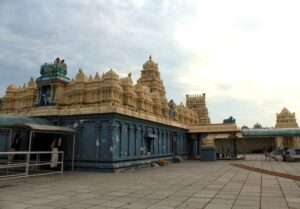
The temple is built in a simple South Indian architectural style. It is not very large, but it has a strong spiritual presence. The sanctum houses the idol of Lord Subrahmanya in a calm and divine form. The temple surroundings are peaceful and close to nature, especially due to its location near the riverbanks. Though modest in structure, the temple is spiritually powerful and attracts many devotees.
Kaleshwaram has been an important Shaivite pilgrimage center for many centuries due to the presence of the sacred river confluence. Over time, along with the worship of Lord Shiva at the Mukteswara temple, the worship of Lord Subrahmanya also became significant. Devotees visiting for rituals and spiritual cleansing began praying to Subrahmanya Swamy for the removal of doshas and personal difficulties. Gradually, this temple became an integral part of the Kaleshwaram pilgrimage tradition.
The Sthalapurana of this temple is deeply connected with the greatness of the Kaleshwaram kshetra. According to traditional belief, Lord Shiva manifested here as Kaleshwara and Mukteshwara, symbolizing both life and liberation. The confluence of the Godavari and Pranahita rivers is believed to have the power to cleanse sins and grant moksha. Many sages and devotees are said to have performed penance here and attained spiritual upliftment.
In this spiritually powerful region, Lord Subrahmanya is believed to have his presence to help devotees overcome karmic obstacles and serpent-related doshas. As the son of Lord Shiva and a deity associated with divine energy and serpents, Subrahmanya Swamy plays an important role in balancing spiritual and worldly aspects of life. Over time, devotees developed the practice of worshipping him after taking a holy bath and visiting Lord Shiva.
It is believed that worshipping Lord Shiva here grants liberation, while worshipping Lord Subrahmanya removes obstacles, doshas, and difficulties in life. Thus, visiting both temples is considered essential for complete spiritual benefit. The temple does not have a single mythological story of origin but is rooted in long-standing pilgrimage traditions and strong devotional beliefs.
The temple celebrates several important festivals with devotion. The most significant is Subrahmanya Shashti, dedicated to Lord Subrahmanya, which attracts many devotees. The month of Karthika Masam is also very special, during which many pilgrims visit the temple and perform deepam and special poojas. Festivals like Nagula Chavithi and Naga Panchami are important for serpent worship and dosha remedies. Mahashivaratri is also celebrated with great devotion due to the nearby Mukteswara temple, and the entire Kaleshwaram area becomes vibrant with spiritual activities.

