



Maa Baglamukhi Temple Bankhandi is located in Bankhandi village in Kangra district of Himachal Pradesh. It lies along the Ranital–Dehra road (NH503) in the foothills of the Dhauladhar mountain range. The temple is surrounded by a calm natural environment, making it both a spiritual and scenic destination.
The exact construction date of the temple is not historically documented, but it is widely believed to be *very ancient, with origins linked to the time of the epics. Temple traditions associate it with the **Dwapara Yuga*, suggesting that it has existed in some form for thousands of years. Over time, the structure has been renovated, but the spiritual significance and sacred location have remained unchanged.
The temple is dedicated to Goddess *Baglamukhi*, one of the ten Mahavidyas in Hindu tradition. She is also known as Pitambara Devi, meaning “the goddess who wears yellow.” She is depicted seated on a throne, dressed in yellow garments, holding a club in one hand and pulling the tongue of a demon with the other. This unique form symbolizes her power to control speech, silence negativity, and defeat enemies. She represents the divine force that can stop harmful actions and protect devotees from danger.
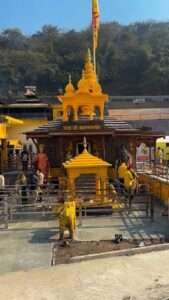
The temple has a simple yet spiritually powerful North Indian style of architecture. The structure is prominently painted in yellow, which is considered the favorite color of the goddess. Inside the sanctum, the idol is placed on a decorated pedestal, and the atmosphere is designed to focus on pooja and spiritual energy rather than elaborate ornamentation. In front of the temple is a sacred havan kund, where fire rituals are regularly performed. The temple complex also includes open spaces for devotees to participate in rituals and prayers.
The temple is considered one of the most important centers of Baglamukhi worship in India and is regarded as a *Siddha Peeth*, a place where spiritual practices yield powerful results. For centuries, sages, saints, and tantric practitioners have performed rituals and meditation here. The temple has been an important site for devotees seeking victory, protection, and relief from obstacles. Its importance has continued through generations, and it remains a major pilgrimage destination in North India.
According to temple tradition and regional belief, the origin of this sacred place is connected with divine intervention during times of crisis. One legend states that during a great cosmic disturbance, a powerful storm threatened to destroy the balance of the universe. At that time, the divine energy manifested as Goddess Baglamukhi from a sacred source, and she used her stambhana power to stop the destructive forces and restore order. This established her as the goddess who can control and neutralize negativity.
Another important tradition connects the temple to *Pandavas* from the Mahabharata. It is believed that during their exile, the Pandavas built this temple in a single night and performed intense worship here to gain strength and victory over their enemies. This association gives the temple a strong connection to the epic period and enhances its spiritual importance.
A widely narrated local belief also connects this place with *Rama* from the Ramayana. It is said that Rama, on the advice of Hanuman, performed worship of the Goddess Baglamukhi at this location before his battle with Ravana. Through this worship, he is believed to have gained divine strength and blessings that helped him achieve victory. Though these stories are based on tradition rather than historical records, they are deeply respected by devotees and form an important part of the temple’s sacred identity.
The temple celebrates major Hindu festivals with great devotion. *Navratri* is the most important festival, during which thousands of devotees visit the temple and special pujas and havans are performed throughout the nine days. Baglamukhi Jayanti is also celebrated as the appearance day of the goddess, marked by special rituals and prayers. Fridays are considered especially auspicious for worship, and many devotees choose this day to perform pujas and seek the blessings of the goddess.


