



If there is one constant in India’s political theatre, it is this: corruption scandals erupt with thunder, dominate headlines with moral outrage, and then quietly dissolve into procedural fog. The Kaleshwaram project—once showcased as an engineering triumph and later exposed as a multi-crore controversy—now risks becoming another case study in how India’s political class and institutions collectively fail to pursue accountability to its logical end. The script is depressingly familiar. In the run-up to the 2023 Telangana Assembly elections, Kaleshwaram became political ammunition of the highest order. Senior BJP leaders branded it an “ATM,” alleging it was a cash conduit for the then ruling establishment. The Congress, not to be outdone, sharpened the attack. A Revanth Reddy promised decisive action—vowing to hand over the probe to central agencies and ensure that those responsible, including the powerful Kalvakuntla family, would face the full force of law. But power, it seems, changes priorities faster than it change governments. Once in office, the promised urgency gave way to calibrated hesitation. Instead of a time-bound, legally potent investigation, the government opted for a commission headed by a retired judge—an instrument that, more often than not, signals delay rather than determination. In India’s political grammar, commissions have become synonymous with deferral, not justice. They stretch timelines, diffuse focus, and gradually numb public outrage. Then came the institutional blow that further weakened the case—the Telangana High Court’s relief to K. Chandrasekhar Rao and his family. While legally tenable within the framework of due process, the verdict has had a chilling effect on the momentum of the probe. It has not only slowed the investigative tempo but also reinforced a long-standing public perception: that in high-stakes political corruption cases, the system often tilts in favour of those with power, influence, and time on their side. This is not an isolated episode. From the National Herald case to telecom allocation controversies, from defence procurement questions to allegations surrounding various state governments, the pattern remains strikingly consistent. Big-ticket corruption cases begin with dramatic exposure, descend into partisan slugfests, and eventually get trapped in a labyrinth of legal technicalities and institutional inertia. The result? Delay, dilution, and in many cases, quiet burial.
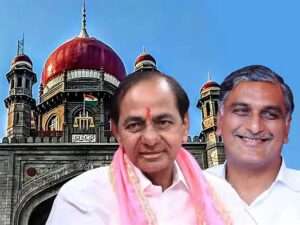
The judiciary, ideally the last option (final refuge) for accountability, cannot be entirely absolved either. An overburdened system, frequent adjournments, and prolonged timelines have ensured that justice in such cases moves at a glacial pace. When cases involving thousands of crores fail to reach closure within a reasonable timeframe, the message to the public is unmistakable: the bigger the scam, the longer the escape route. What makes the Kaleshwaram episode particularly troubling is the unmistakable whiff of political convenience. The Opposition’s charge—that the current regime lacks seriousness and may be engaging in tacit political adjustments—gains traction precisely because of visible inaction. Had the government moved swiftly with a central probe and allowed the chips to fall where they may, it would have retained the moral high ground. Instead, the hesitation has fuelled suspicion. Equally damaging is the culture of selective outrage. Parties that thunder against corruption in opposition often discover strategic silence once in power. Yesterday’s charge of allegation become today’s “complex legal matters.” This elasticity of principle corrodes public trust far more deeply than any individual scam. The real casualty in all this is not just public money—it is public faith. When citizens begin to see corruption cases as electoral tools rather than instruments of justice, democracy itself is weakened. Accountability becomes episodic, not institutional. Kaleshwaram is no longer just about a project or alleged financial irregularities. It is a litmus test—of political will, institutional integrity, and judicial urgency. So far, it is a test India’s system appears reluctant to pass. Until there is a genuine, non-partisan resolve to pursue corruption relentlessly—irrespective of who is in power or who stands accused—the cycle will continue: massive scandals, louder promises, and eventual, convenient collapse.



Very correctly said. Your editorial rightfully points to the fact that only 5% is the conviction rate in India. People are not really serious about corruption because they are also stakeholders in normalising corruption which ironically becomes hardly an issue in elections when politicians seek votes. So, the genuine and honest majority satisfy themselves by electing the less corrupt governments helplessly amongst the other thieves.