Our Businessdesk
India’s economic growth story over the past decade has quietly achieved an important structural milestone — the country is becoming significantly less oil-intensive. That means the economy today requires far less petroleum consumption to generate the same level of GDP compared to a decade ago.
Oil intensity refers to the amount of oil or petroleum products an economy uses to produce one unit of GDP. Lower oil intensity indicates greater efficiency, while higher oil intensity makes an economy more vulnerable to crude oil price shocks, imported inflation, trade deficits and currency pressure.
India’s current oil intensity stands at roughly 0.7 grams per rupee of GDP, based on consumption of nearly 243 million metric tonnes of petroleum products against a nominal GDP of around ₹346 trillion. In simple terms, India now consumes nearly 0.7 kilograms of petroleum products for every ₹1,000 of GDP generated.
What makes this significant is the sharp decline over the years.
| Financial Year | Oil Intensity (g/₹ of GDP) |
|---|---|
| FY12 | 1.70 |
| FY15 | 1.32 |
| FY18 | 1.21 |
| FY21 | 0.98 |
| FY24 | 0.78 |
| FY26 | 0.70 |
The numbers reveal a major transformation in the Indian economy. A rupee of GDP today requires far less petroleum than it did in 2011-12.
Several factors explain this improvement. India’s economy has increasingly shifted toward services, digital businesses and higher-value sectors that consume relatively less energy. Better fuel efficiency, expanding metro rail systems, greater use of renewable energy, ethanol blending and the gradual rise of electric mobility have also reduced incremental oil demand.
The result is a more efficient economy capable of generating stronger growth with comparatively lower petroleum dependence.
This decline in oil intensity provides India with an important macroeconomic cushion. In earlier decades, every spike in crude oil prices would severely impact inflation, government finances, trade balances and the rupee. Since oil is a critical input for transport, manufacturing and logistics, rising crude prices quickly transmitted inflation across the economy.
Today, the damage from crude price spikes is relatively lower because each additional unit of GDP growth requires less petroleum consumption than before.
That is the comfort.
But there is also a caveat.
India still imports nearly 88 per cent of its crude oil requirement. This remains one of the country’s biggest economic vulnerabilities. Even though oil intensity has declined sharply, the economy is still exposed to global energy market disruptions.
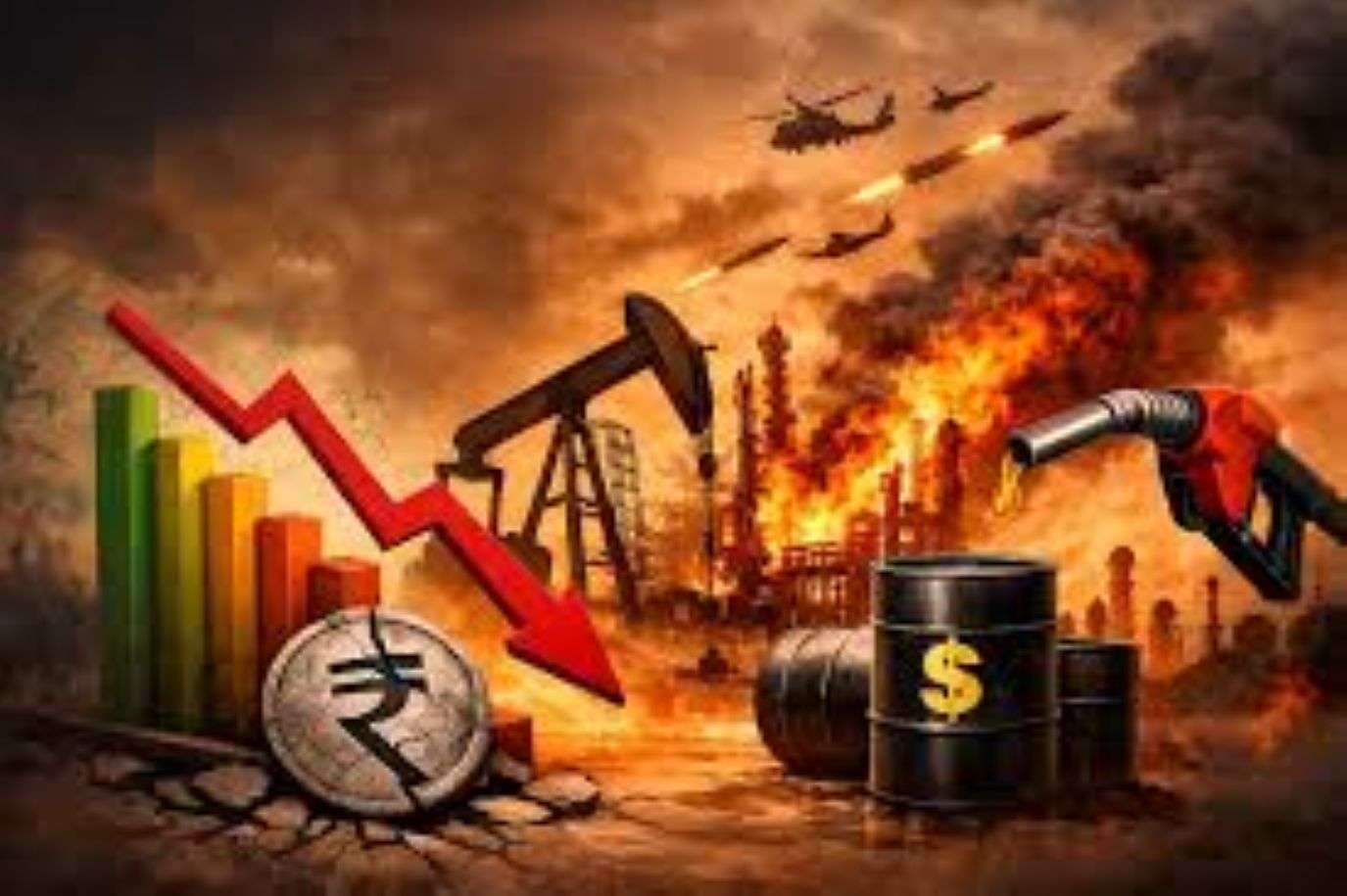
If crude prices surge sharply due to geopolitical tensions or supply disruptions, India’s import bill rises immediately. That widens the current account deficit, weakens the rupee and increases inflationary pressures. Businesses face higher transportation and input costs, while consumers ultimately pay more for goods and services.
Therefore, lower oil intensity does not mean immunity from oil shocks. It simply means the economy is better positioned to absorb them than it was a decade ago.
This distinction is crucial.
India today is structurally stronger and less fragile in the face of crude volatility. But as long as the country remains heavily dependent on imported oil, energy security will continue to influence inflation, currency stability and economic policy.
The way forward is clear. India must continue reducing oil intensity while simultaneously lowering import dependence through renewable energy, electric vehicles, ethanol blending, green hydrogen and domestic exploration.
India’s declining oil intensity is undoubtedly a positive sign of economic maturity and efficiency. Yet the larger reality remains unchanged — crude oil still matters deeply to India’s macroeconomic stability.
The country is less vulnerable than before.
But it is not invulnerable.