


Vinay Rao
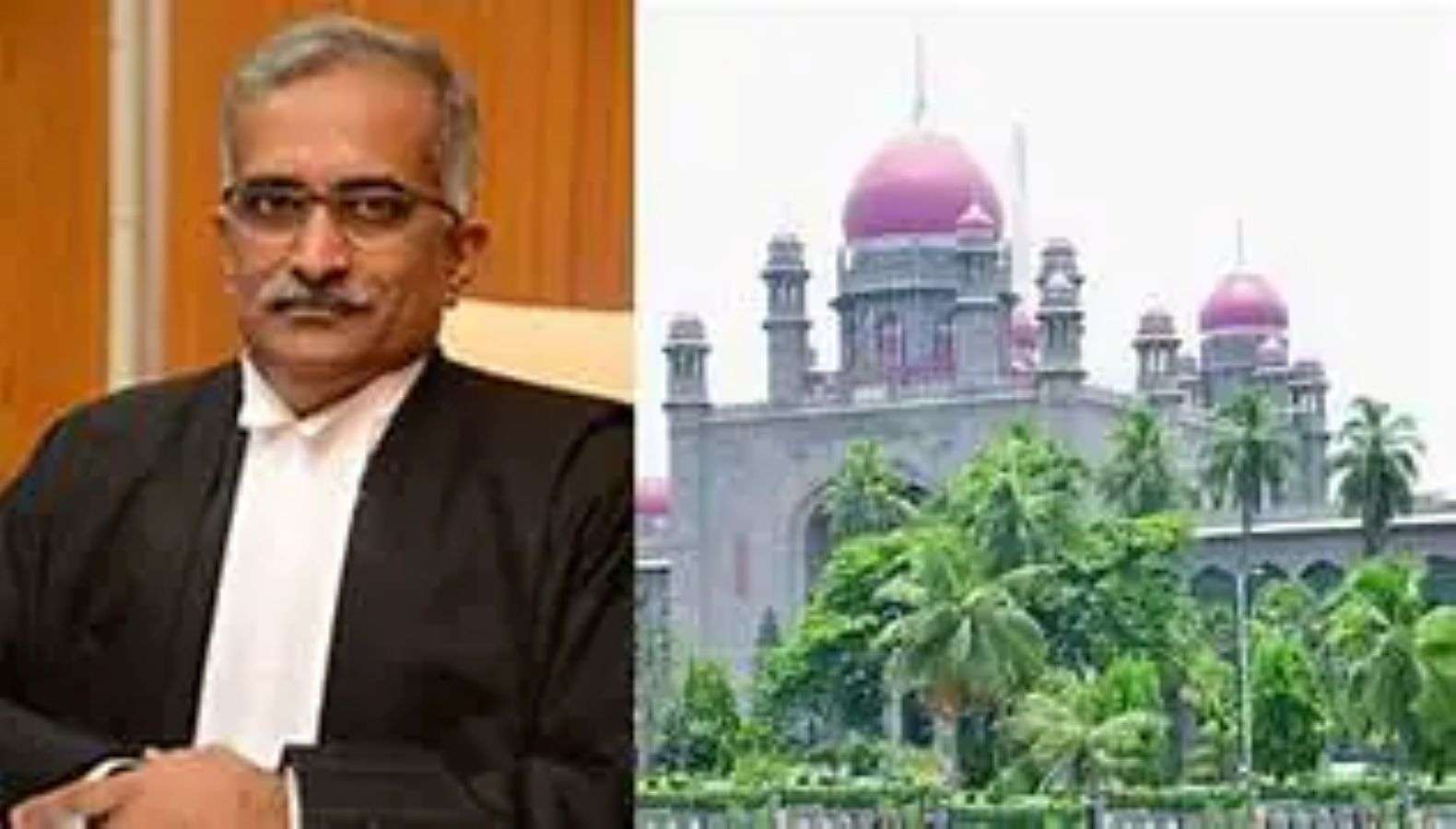
For years, Hyderabad cricket didn’t run a selection system — it ran a quiet, well-oiled arrangement. Performance was the brochure; access was the currency. Now, with the Telangana High Court stepping in and calling out a “disturbing state of affairs,” the pretence has finally cracked. Justice Nagesh Bheemapaka’s order for a Special Investigation Team and the installation of a Single Member Committee under Justice P. Naveen Rao is not just an intervention — it is a public acknowledgement that the system had stopped policing itself long ago.
But let’s not celebrate too early. Committees don’t clean systems — consequences do. And if this exercise reduces itself to paperwork and polite restructuring, Hyderabad cricket will remain exactly where it has been: compromised at its core.
Because the real story here is not about accounts or governance. It is about selection — the one process that decides who gets a future and who doesn’t. And that process, if the record is to be believed, has been anything but fair.
Take FIR No. 1199/2025, registered at Uppal Police Station on October 14 last year. It names the sitting chairman of the HCA Junior Selection Panel, Sudeep Tyagi, along with two others, under serious charges including cheating and criminal conspiracy. In any functioning institution, that alone would have triggered immediate suspension and internal review. Here, it triggered silence. Six months on, there is no visible action, no urgency, no discomfort. The season moved forward; the allegations stayed behind.
That silence is not administrative delay — it is a message. A message that allegations, however serious, are manageable. That accountability is negotiable.
The complaint itself is damning. Filed by the father of an Under-19 bowler, it alleges that over multiple seasons, selection into probables’ lists depended not on performance but on payment and “clearance.” His son, he claims, was excluded in consecutive seasons — not because he failed on the field, but because the family refused to play along off it. Two crucial years lost, not to competition, but to a system that allegedly priced opportunity.
It doesn’t stop there. The complaint also flags alleged manipulation of age eligibility through fake documentation — a convenient distortion in a structure already bending to preference. This is not dressing-room gossip; this is a registered criminal complaint invoking conspiracy provisions. Yet, it sat in a police station while cricket carried on, untouched.
If the FIR is the headline, the process is the story. Selection meetings reportedly held outside official premises, away from scrutiny. No recorded minutes. No transparent reasoning. Trial matches are allegedly shaped to suit pre-decided outcomes rather than test ability. Add to that a formal petition alleging disproportionate selection of players linked to a selector’s own academy — Adnan Cricket Academy — and the line between conflict of interest and operational model begins to blur uncomfortably.
Then comes the question no one seems eager to answer: how do players banned for age fraud by the Board of Control for Cricket in India find their way back into squads? Oversight is one thing. Quiet re-entry despite sanctions is something else entirely.
If junior cricket shows strain, women’s cricket reveals absence. No publicly accessible scorecards, no performance databases, no transparent trial records. Decisions without documentation, outcomes without evidence. In such a vacuum, merit doesn’t lose — it simply never enters the room. What isn’t recorded cannot be questioned, and what cannot be questioned becomes convenient.
Behind all of this are not files or findings, but players. A young bowler who did everything right and still missed out — twice. Young women whose performances were never formally captured, let alone evaluated. These are not administrative lapses; they are lost trajectories.
So what now? The answer cannot be another round of observation. It has to be action — visible, immediate, and uncomfortable. Anyone named in FIR No. 1199/2025 must be removed from selection roles pending investigation. Not eventually, but now. Selection panels must be structurally insulated from private academies — no overlap, no exceptions. Every selection meeting must be documented, minuted, and conducted within official premises. Every match, whether junior or women’s, must produce a publicly accessible scorecard. If it isn’t recorded, it shouldn’t count. And bans imposed by the BCCI must mean exactly that — bans, not suggestions.
These are not ambitious reforms. They are the baseline for credibility.
The High Court has done its part by stepping in where the system failed. But orders don’t rebuild trust — enforcement does. As things stand, the FIR remains without consequence, the individuals named face no visible professional fallout, women’s cricket continues without a paper trail, and another season quietly progresses.
That is not reform. That is a pause.
The SIT probe is a beginning, not a resolution. The real test lies in whether selection — the gateway to every cricketing career — is restored to something resembling fairness. Because that is where the future of Hyderabad cricket will be decided.
And for far too long, that future hasn’t been selected. It has been decided elsewhere.



Super article, Sir,
With your article, a boy got all these opportunities within a few months, and he proved himself in all formats.
For white-ball cricket, this U19 player was not selected initially. After that, he got selected for U19 red-ball matches. Later, he progressed to U23, and then for the Viji Trophy, selectors from the South Zone picked him.
After that, Chennai Super Kings selected him as a travelling net bowler. Also, MRF Pace Foundation shortlisted 14 players from across India, and he was one among them.
All this happened after your article.
Now, he has also been selected for the ZCA camp (from Board of Control for Cricket in India) and will be going to Puducherry from the 10th of next month.
This is a strong and informative article. It clearly shows how a talented player lost nearly three crucial years of his career after missing the Under-19 World Cup because his parents refused to pay a bribe.
Despite being selected for Chennai Super Kings net bowling, MRF Pace Foundation, Under-23 level, and even the National Cricket Academy, he was still denied fair opportunities. It’s painful to see talent suffer in a system where “pay and play” still exists.
The article is truly worth reading—it exposes the issue and reminds us why a fair, merit-based system is needed.
Great Article,Hats Up To Orange News Staff and management
Due to this corruptive selectors so many talented players are not coming from HCA
Am very happy to hear that one of the boy got very big help from the articles of Orangenews9. whereas in Women’s Cricket from last year people from other state are controlling Selections, few players have been selected just because they practices at their compound.System have evolved very much with them. How can other state persons control whole system here…without proper Aadhar Card and without address proof when players cant play in other state ..how can one runs entire system here. if someone dare to question then their children will be targeted. Only God can Save Hyderabad Women’s Cricket.
⸻
Thank you sir for grate news
The newly appointed SIT committee by the Honourable High Court must treat this matter with utmost seriousness and urgency. There are serious concerns regarding the conduct of the Junior Selection Chairman and his committee, which cannot be ignored any longer. A thorough and impartial investigation is required, and strict, exemplary action must be taken against all those found guilty.
Any involvement in malpractice, corruption, or misuse of authority should lead to immediate suspension and appropriate punishment. Such decisive action is necessary to restore integrity, transparency, and trust in the selection process.
This is not just a single isolated case—it reflects a larger, deeply concerning pattern. Many talented and deserving players have suffered due to the actions of the Junior Selection Chairman and his committee. Such repeated injustice cannot be overlooked or treated lightly.
The SIT committee appointed by the Honourable High Court must conduct a thorough and uncompromising investigation into all instances of misconduct. If these allegations are proven, strict and exemplary punishment must be imposed on those responsible.
It is absolutely essential to hold them accountable, not only to deliver justice in this case but also to protect the future of countless young cricketers and restore fairness, transparency, and credibility in the selection process.