



In Indian politics, tremors rarely arrive without warning, but when they do, they expose far more than just a momentary rupture. The latest move by Raghav Chadha to break ranks within the Aam Aadmi Party and align with the Bharatiya Janata Party, along with a cluster of Rajya Sabha MPs, is being projected as one such political earthquake. Whether it ultimately legal battles like in Telangana and elsewhere in the past, the political signal it sends is unmistakable: India’s Opposition is no longer merely divided—it is visibly unsettled.
Chadha, long seen as a trusted lieutenant of Arvind Kejriwal, has built his image as a polished, articulate face of AAP’s national ambitions. His removal as floor leader in the Rajya Sabha had already hinted at internal recalibration. But a move of this magnitude—if it translates into a formal split—would not just be a personal rebellion; it would represent a structural weakening of a party that once claimed to redefine Indian politics.
Yet, political drama does not unfold in isolation. The timing of this development is crucial. The BJP, led by Narendra Modi and strategically steered by Amit Shah, has been projecting confidence in key electoral battlegrounds such as West Bengal and Tamil Nadu. High voter turnout and aggressive campaign messaging have reinforced the perception that the ruling party at the Centre is not merely competing—it is expanding.
In that context, any sign of disintegration within Opposition ranks acquires amplified significance. If leaders within parties begin to feel that their political futures are constrained by ideological rigidity, leadership bottlenecks, or electoral stagnation, realignments become inevitable. Indian politics has seen this before—from the Congress splits of the past to the steady rise of regional parties. What may now be unfolding is a reverse consolidation.
However, the legal and constitutional framework cannot be ignored. Under the Anti-Defection Law, a split is recognized only when at least two-thirds of a legislature party breaks away. Anything short of that invites disqualification. This raises a critical question: is this a legally sustainable factional shift or merely a political statement designed to test the waters?
Even the optics of such a move present a dilemma for the BJP. Should it welcome leaders elected on rival party symbols without hesitation? While political pragmatism often dictates expansion, there is a reputational cost in appearing to encourage opportunistic defections. The BJP has long positioned itself as ideologically distinct; absorbing defectors without a structured, lawful merger could dilute that claim.
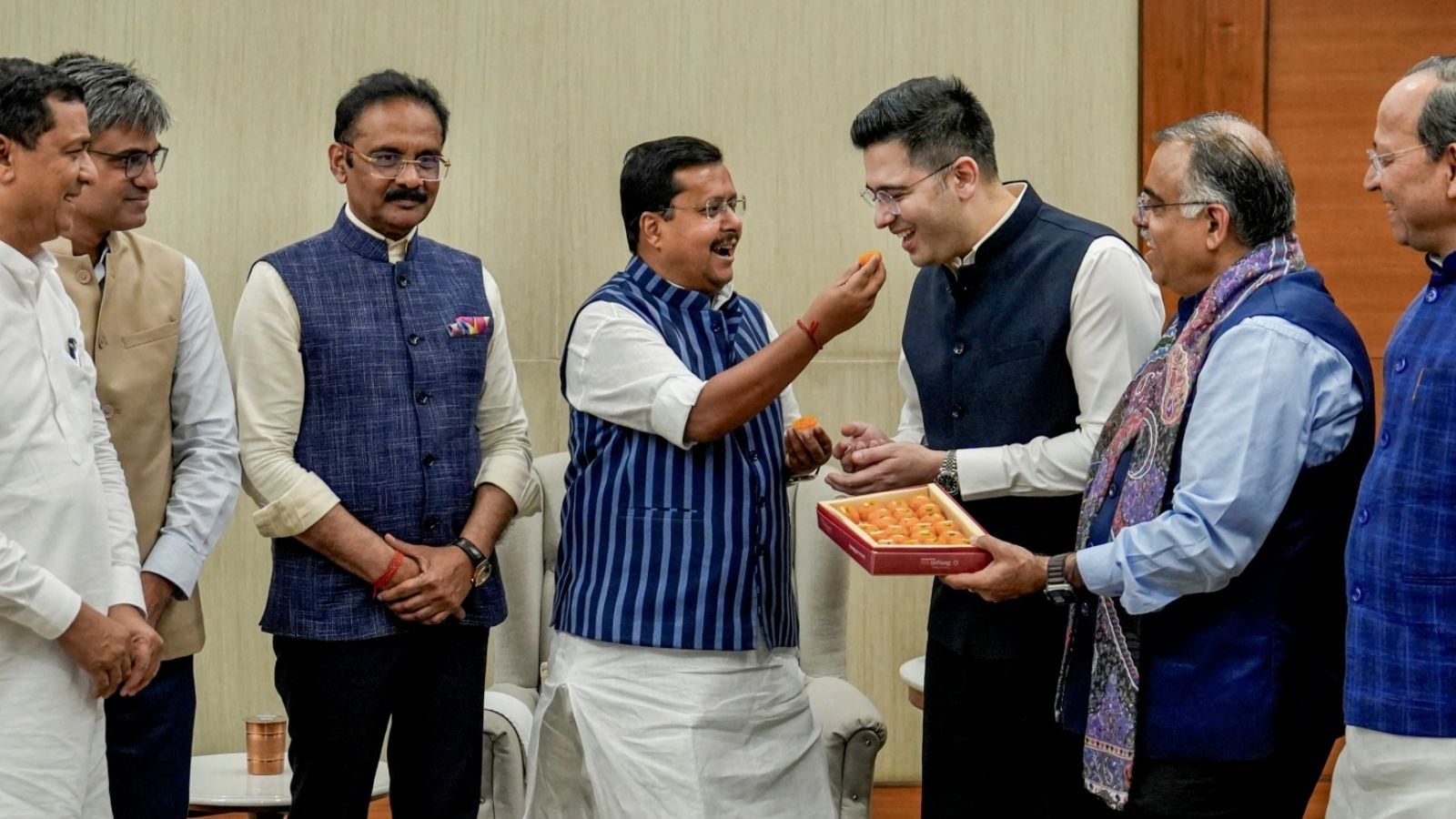
Yet, realpolitik operates on arithmetic as much as ideology. In the Rajya Sabha, where numbers often dictate legislative momentum, even incremental gains matter. A strengthened position could ease the passage of long-pending structural reforms—be it discussions around “One Nation, One Election” or the Uniform Civil Code. These are not merely legislative items; they are political markers of the BJP’s long-term agenda.
Beyond AAP, the ripple effects could be far more consequential. The Congress, already grappling with leadership questions and regional assertiveness, faces the risk of internal fractures if electoral setbacks persist. Leaders like Shashi Tharoor or DK Shivakumar represent different strands within the party—aspirational, regional, and often impatient. A weak electoral showing could embolden such leaders to chart independent courses.
Regional parties—from the Samajwadi Party to the Trinamool Congress—are not immune either. Their strength has traditionally rested on strong leadership and localized narratives. But if the national political discourse increasingly tilts toward a single dominant pole, maintaining cohesion within diverse Opposition coalitions becomes an uphill task.
At its core, what we are witnessing—or being asked to consider—is not just a party split. It is a test of the Opposition’s ideological coherence, leadership resilience, and electoral viability. The BJP’s rise has not merely been about its own expansion; it has also been enabled by the Opposition’s inability to present a united, credible alternative.
If leaders across parties begin to prioritize political survival over party loyalty, the consequences will extend beyond individual careers. It will reshape parliamentary dynamics, redefine alliances, and potentially alter the trajectory of governance itself.
The real question, therefore, is not whether one leader walks away with a handful of MPs. It is whether India is entering a phase where Opposition politics becomes increasingly fragmented, reactive, and vulnerable to internal dissent.
Because once cracks stop being whispers and start becoming headlines, the battle is no longer just electoral—it is existential.


