


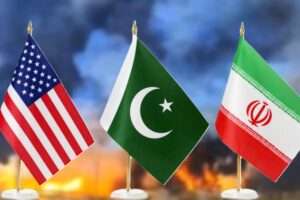
Pakistan is once again attempting its favourite geopolitical performance – presenting itself as an indispensable mediator in conflicts where almost every participant privately distrusts it.
Reports and diplomatic chatter suggest Islamabad has been trying to position itself as a channel between the United States and Iran at a time when tensions in West Asia remain high. Simultaneously, Pakistan continues cultivating close ties with Saudi Arabia and other Gulf monarchies, even while maintaining working relations with Tehran. For Islamabad, this is not contradiction. It is strategy.
The Pakistani establishment has always believed it can stand in multiple camps at once – Washington’s security partner, Beijing’s “iron brother”, Riyadh’s military associate and Tehran’s neighbourly friend – while convincing each side that the relationship is uniquely special. That confidence is impressive. So is the global willingness to repeatedly indulge it.
Nobel dreams and Operation Sindoor
Pakistan’s political and military leadership have also been unusually generous in praising Donald Trump in recent months, particularly over his claims regarding efforts to reduce India-Pakistan tensions during Operation Sindoor.
Trump, as always, has spoken of his own role in dramatic terms. Pakistan’s establishment, never known to waste an opportunity for strategic flattery, has amplified those claims enthusiastically.
At this rate, one half-expects next year’s Nobel Peace Prize conversation to feature a joint diplomatic fairy tale involving Shehbaz Sharif, Pakistan Army chief Asim Munir and Trump himself – united by the noble cause of self-congratulation.
The Nobel Committee may need a new citation category: ‘For services to peace through press statements.’
The Abottabad shadow
Unfortunately, Pakistan carries one burden that no amount of diplomatic choreography can erase – credibility.
For years, Islamabad publicly maintained that Osama Bin Laden was not on Pakistani soil. Then, in May 2011, American Navy SEALs conducted a covert raid in Abottabad and killed him in a compound located not in some remote mountain cave, but in a garrison town that hosts the Pakistan Military Academy.
The episode permanently damaged Pakistan’s claims of innocence, competence or transparency in matters involving terrorism. Either the Pakistani state did not know the world’s most wanted terrorist was living there, which was alarming, or somebody knew and chose silence, which was worse. Neither possibility inspired confidence.
Everybody’s partner, nobody’s certainty
Pakistan’s foreign policy has long operated on strategic elasticity. It cooperates with the United States on security matters while nurturing anti-American rhetoric domestically. It depends heavily on Chinese economic and military support while simultaneously seeking engagement with Western institutions. It maintains close defence ties with Gulf nations while avoiding direct confrontation with Iran. Islamabad calls this balance but critics call it hedging with exceptional opportunism.
The pattern, however, remains consistent. Pakistan seeks to remain perpetually relevant to every major power bloc by ensuring nobody can entirely ignore it.
The profitable art of instability
The deeper reality is that Pakistan’s establishment has historically drawn strategic value from instability itself.
A calm and economically self-sufficient Pakistan would simply be another developing nation competing for investment and trade. But a volatile Pakistan – nuclear-armed, strategically located and constantly described as ‘too important to fail’ – attracts military aid, diplomatic attention and periodic financial rescue packages. Crisis, therefore, becomes currency.
Regional tension enhances leverage. Security anxieties generate engagement. Geopolitical uncertainty produces relevance. And relevance, in Islamabad’s worldview, often matters more than consistency.
Peace broker or strategic survivor?
None of this means Pakistan cannot occasionally play a constructive diplomatic role. States often deal with rivals and contradictory partners simultaneously. That is not unusual in international relations.
What makes Pakistan different is the enormous trust deficit accumulated over decades – from terror safe haven allegations to contradictory security policies to the lingering memory of Abottabad itself.
That is why every new Pakistani attempt at global mediation is received with equal parts curiosity, caution and disbelief.
Islamabad wants to be seen as a bridge between adversaries. The problem is that too many countries suspect the bridge may be collecting toll from both sides while quietly selling maps to everyone else.


The CBS story on Pak sheltering Iran aircraft seems to have punched a hole in the assiduously cultivated narrative. The Deep State is clearly rattled. They raised questions about the guy who broke the story. He was reportedly sacked by AP for filing a speculative story.