


Special Correspondent
For months now, this publication’s relentless exposés on the murky functioning of the Hyderabad Cricket Association have consistently flagged deep-rooted concerns—ranging from opaque administration to alleged manipulation of opportunities. Those concerns have now found a powerful, if unusual, reinforcement in a series of anonymous whistleblower emails sent under the name “Robo Run” to club secretaries, administrators, and key stakeholders across the Hyderabad cricketing ecosystem.
The convergence of sustained media scrutiny and these detailed communications has pushed the issue beyond internal debate into the domain of judicial intervention. Acting on the gravity of the situation, the Telangana High Court has directed the constitution of a Special Investigative Team (SIT), to function under the supervision of former judge Justice Naveen Rao—a development that could prove to be a turning point in the long-troubled history of the association.
The “Robo Run” emails, while anonymous and yet to be independently verified, are notable for their specificity and consistency. They allege the existence of a structured “pay-to-play” ecosystem within Hyderabad’s league cricket—one in which aspiring players are purportedly required to pay substantial sums, ranging from ₹70,000 to upwards of ₹3 lakh, for entry into teams, preferred roles, or assured opportunities.
The blunt assertion contained in these communications is as stark as it is disturbing: “This is not cricket. This is business.”
What gives these allegations weight is not merely their tone, but the pattern they attempt to describe. The emails refer to division-wise pricing structures, the alleged leasing of teams for amounts between ₹3 lakh and ₹10 lakh, and the growing role of intermediaries—particularly private academies—in facilitating player entry and placement. If true, this would indicate a systemic shift where traditional club-based meritocracy has been replaced, at least in part, by a transactional model.
The whistleblower goes further, raising questions about the role of influential individuals—former players, administrators, and long-standing power brokers—who are alleged, in public discourse, to wield significant influence over team selection, league functioning, and administrative decisions. Names such as Arshad Ayub, John Manoj, Vijay Anand, Syed Moinuddin, Basavaraju, Naresh and Adnan Bafna, besides others have surfaced in these communications. It must be clearly stated that these references remain allegations, unverified at this stage, and are cited here solely in the context of the claims made in the whistleblower emails and wider public discussion.
Equally troubling are claims that players from districts may be at a disadvantage unless they align themselves with city-based academies, often at considerable financial cost. Such a scenario, if established, would undermine not just competitive fairness but also the very foundation of grassroots cricket development.
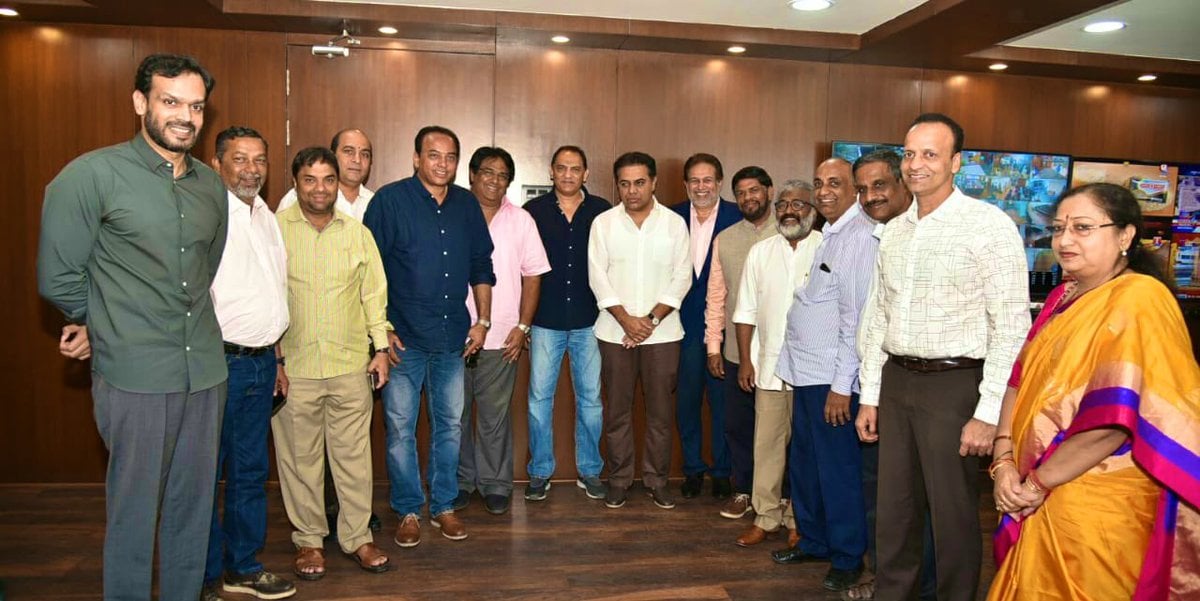
At the heart of these allegations lies a deeper institutional question: have the lines between governance and participation blurred to the point of conflict of interest? The emails suggest overlaps between administrative authority and team operations—situations that would run contrary to governance norms associated with bodies like the Board of Control for Cricket in India, where safeguards exist to preserve the integrity of competition.
The scope of the issue, however, is not limited to current league structures. The High Court’s directive reportedly extends to examining irregularities over several decades—covering areas such as stadium construction, leasing arrangements, club functioning, and broader administrative practices. This expansive mandate underscores the seriousness with which the judiciary is viewing the matter.
Yet, one of the most challenging aspects of the allegations is the nature of evidence itself. As indicated in the whistleblower communications, direct proof may be difficult to obtain in a system where transactions, if any, are informal and undocumented. In such circumstances, the emphasis inevitably shifts to identifying patterns—financial, operational, and behavioural—that can either substantiate or disprove the claims.
Silence, at this stage, is no longer tenable. The allegations have not been confined to private whispers; they have been formally communicated to those in positions of authority. Whether they are ultimately proven or disproven, the absence of a visible, credible response only deepens uncertainty and erodes trust.

There is also an inherent contradiction that cannot be ignored. Some individuals who are, in sections of public discourse, associated with past administrative decisions are also among those calling for reforms. While reformist intent is welcome, it inevitably invites scrutiny—making an independent, court-monitored investigation all the more necessary.
This is no longer merely about cricket administration. If opportunities in sport are perceived to be influenced by financial considerations rather than merit, the consequences ripple outward—discouraging genuine talent, disillusioning families, and damaging institutional credibility.
The formation of the SIT, therefore, represents more than a procedural response—it is a moment of reckoning.
Justice Naveen Rao, entrusted with overseeing this process, now carries a mandate that is both clear and consequential. The investigation must be thorough, impartial, and unafraid—examining every aspect that has been brought into question, whether through media reports or whistleblower accounts.
There can be no selective inquiry, no partial truths, and no reluctance to pursue uncomfortable leads.
If the allegations are unfounded, a transparent probe will restore reputations and reaffirm institutional integrity. But if they hold substance, then decisive action will be essential to dismantle any entrenched practices that compromise the spirit of the game.
Hyderabad has never lacked cricketing talent. What it risks losing is credibility.
And that is precisely why the SIT must go all the way.
In conclusion, the court-appointed authority must not hesitate to act decisively. Every issue highlighted over time—by sustained media scrutiny and now reinforced by whistleblower communications—must be investigated in full. The state police-led SIT, under judicial supervision, must probe every layer, every financial trail, every administrative decision, and every structural anomaly that has come under doubt. Only a comprehensive, no-holds-barred investigation can ensure accountability, establish the truth, and restore faith in Hyderabad cricket.
(Disclaimer: This report is based on prior media coverage and anonymous whistleblower communications. All allegations remain unverified and are subject to investigation. Individuals named are presumed innocent unless proven otherwise.)




When will any investigation and results be seen. we have been hearing these for a few years now. the corrupt are becoming more powerful while all other watch silently as they too get indirect benefits. remover all club Secretaries. then they will know silence is not right