


As a responsible citizen and Editor of this e-paper, I felt deeply disturbed by certain observations made during the hearing on petitions related to women’s entry into the Sabarimala Temple, particularly remarks describing Hinduism merely as a “way of life” and suggesting there is no compulsion to visit temples. For millions of devotees, temples are sacred centres of faith, tradition, and spiritual discipline — not optional institutions. As a member of the majority Hindu faith in this democracy, I believed it was necessary to raise questions that many ordinary devotees discuss openly, but which much of the mainstream discourse often avoids. This is not about disrespecting institutions, but about asserting the democratic right of citizens to express concerns over matters affecting faith and civilisational identity. I invite readers to join this debate responsibly and share their views in the comments section. — Editor
India has once again arrived at a familiar crossroads — where the faith and traditions of the majority community are subjected to endless intellectual dissection, legal reinterpretation, and philosophical experimentation, while similar scrutiny of other religions remains almost unthinkable in public discourse.
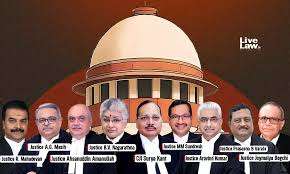
The latest trigger is the observation made by the one of the nine-judge Constitution Bench of the Supreme Court of India while hearing matters connected to the Sabarimala Temple issue and other questions concerning religious freedoms. During the hearing, one of the observations reiterated an old formulation — that Hinduism is “a way of life” and not necessarily a religion in the rigid doctrinal sense.
Justice B V Nagarathna observed that a Hindu need not compulsorily visit temples or perform rituals to remain Hindu. Lighting a lamp at home, the Bench remarked, may itself reflect faith. The Chief Justice reportedly echoed similar sentiments.
At one level, the observation may appear inclusive, philosophical, even liberating. After all, former President and philosopher Sarvepalli Radhakrishnan too had famously described Hinduism as a “way of life.” But when such remarks emerge repeatedly in constitutional and judicial settings, uncomfortable questions naturally arise.
If Hinduism is merely a “way of life,” then why does the Indian Constitution recognize it as a religion? Why do government forms, census documents, educational certificates, reservation policies, minority-majority classifications, marriage laws, inheritance laws, and temple administration statutes officially categorize “Hindu” under religion?
Can a constitutional democracy selectively dilute only the majority faith into a philosophical abstraction while continuing to treat all other faiths as organized religions entitled to specific protections?
And more importantly, would similar observations ever be casually made about Islam, Christianity, Judaism, or Sikhism in the highest constitutional courts of the land?
That is the real debate.
For decades, Hindus have been repeatedly told that theirs is not merely a religion but a civilization, a culture, a philosophy, a tradition, a spiritual ecosystem, and now once again, a “way of life.” Admirable as these descriptions may sound, many ordinary Hindus increasingly ask whether this intellectual romanticism has slowly reduced Hinduism into the only faith that can be endlessly questioned, regulated, reformed, mocked, dissected, and legally overridden.
When politicians from parties like Dravida Munnetra Kazhagam openly speak about “eradicating सनातन Dharma,” defenders of the statement often hide behind the argument that Hinduism is merely a social construct or a way of living. But if Hinduism is not treated as a religion in equal terms, does that not inadvertently provide ideological ammunition to those seeking to delegitimize it?
This is precisely where millions of Hindus feel uneasy.
Because if Hinduism is only a way of life, then what exactly are the Vedas? What are the Upanishads? What is the Bhagavad Gita? What are the Agamas, Puranas, Smritis, and centuries of philosophical schools from Advaita to Dvaita? Were Adi Shankaracharya, Ramanujacharya, Madhvacharya, Swami Vivekananda, and countless saints merely cultural influencers and not religious thinkers?
Did Hinduism become a “way of life” only after the arrival of Abrahamic faiths into India?
The irony is impossible to ignore. The same ecosystem that insists Hinduism is not rigidly religious also invokes “Hindu religious practices” whenever temple entry, rituals, festivals, customs, priesthood, or pilgrimages become matters of litigation.
One cannot have it both ways.
Either Hinduism is a religion entitled to the same constitutional respect, restraint, and non-interference accorded to every other faith — or India must honestly debate whether the religious column itself requires redefinition.
Why should only the majority faith be philosophically deconstructed while minorities are institutionally protected through clearly demarcated religious identities?
If Hinduism is officially downgraded into merely a “way of life,” then within constitutional limits and democratic debate, many may legitimately ask whether references to religion in administrative systems, laws, and public policies should also be revisited uniformly for everyone.
This is not a call for confrontation. Nor is it an argument against judicial interpretation. Courts have every right to examine constitutional morality and equality. But constitutional wisdom also demands sensitivity toward civilizational continuity and equal standards.
India’s judiciary must recognize that repeated selective reinterpretation of Hindu traditions creates a perception — fair or unfair — that only the majority faith is perpetually available for experimentation.
A civilization that survived invasions, colonialism, partitions, forced conversions, and ideological assaults cannot suddenly be told that its sacred foundations are merely optional lifestyle choices with no binding religious core.
Hinduism may indeed be more than a religion. It may be a civilization, a philosophy, and a way of life. But it is also unquestionably a faith — deeply sacred to billions.
And in a secular democracy, equality begins when every faith is treated with the same intellectual caution, constitutional restraint, and civilizational respect.


Today every Hindu need to stop these repeated false propaganda and attack by people at the helm. Let them dare to make such derogatory and damaging comments and share their ideological and philosophical outbursts to any other religions. The next moment a fatwa / order will be issued to physically eliminate the person.
Unfortunately they can do this nonsense with Hindu religion only. It is high time that every Hindu should come out openly to condemn these attempts.
The editor deserves applause as he showed his “spine” to speak out as the so called mainstream media preferred to ignore.
Really, it is very sad to note this state of affairs that too when Hinduism awakened and the majority states/UTs are ruled by a Hindu party.