



Navilu Basadi also known as Chandranatha Swamy Basadi, is located in Vitla town near Puttur in Bantwal taluk of Karnataka. Surrounded by lush greenery, this peaceful and spiritually powerful temple lies about 40 km from Mangalore. The area was historically known as “Jain Pete”, reflecting its deep-rooted connection with the Jain community of Tulu Nadu.
This basadi has a history of over 800 years, dating back to the period when Jainism flourished across coastal Karnataka. The original temple existed during the medieval Jain era and later underwent a major reconstruction in 1940 under the guidance of Dharmasthala authorities. In recent years, the temple has been completely rebuilt in stone, preserving its heritage while enhancing its architectural beauty.
The temple is dedicated to Chandraprabha, locally worshipped as Chandranatha Swamy. He symbolizes purity, truth, and spiritual discipline. The idol is placed in a meditative posture, creating a calm and powerful presence within the sanctum. Along with the main deity, devotees also worship Mahavira, Goddess Padmavati, and Goddess Jwalamalini, making the temple an important spiritual center for Jain traditions.
One of the most striking features of this temple is its *rare peacock-shaped design, which gives it the name “Navilu Basadi” (“Navilu” means peacock). The sanctum represents the body of the peacock, while the structure spreads outward like its feathers. The temple has been constructed entirely using **interlocking stone techniques without cement or mortar*, reflecting traditional craftsmanship and symbolic stability. The structure beautifully blends artistic creativity with Jain architectural principles, making it unique in the region.
Tulu Nadu was once a major center of Jain culture, with Jain rulers and communities contributing significantly to the region’s social, cultural, and religious life. Many places in this region carried names linked to Jain settlements, such as Jain Pete, Jain Beedi, and Jain Keri. Vitla itself was once under Jain influence and had a thriving Jain population, with this basadi serving as a key spiritual hub.
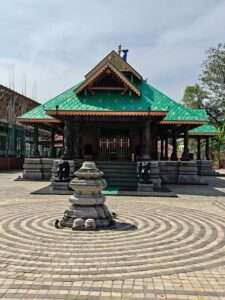
Over time, with the decline of the Jain rule and the impact of political changes and land reforms, the Jain population in the region decreased significantly, and much of their land was lost. Today, it is notable that there are no Jain families remaining in the original Jain Pete area of Vitla. Despite these changes, the temple survived and was revived through the efforts of devotees and administrators, continuing its legacy.
It is believed that Jain monks once used this temple as a place for deep meditation (tapasya), filling the space with a strong spiritual presence. The temple follows the Jain tradition of silence, with no bells or loud rituals, encouraging inner reflection and calmness.
Devotees visit this temple seeking mental peace, clarity, and emotional balance. Walking around the sanctum in silence is a common practice believed to help focus the mind and bring a sense of inner stability. The temple stands as a symbol of the Jain path of self-discipline, non-violence, and inner transformation.
An important cultural aspect of this basadi is its connection with the nearby Vitla Panchalingeshwara Temple. During major festivals of the Shiva temple, this Jain basadi is given special honour, and several local religious processions traditionally begin here. This reflects the long-standing communal harmony and shared heritage between Jain and Hindu traditions in Tulu Nadu.
The temple is also known for its deep silence and meditative atmosphere, where devotees often experience a sense of calm and clarity. Its history as a center for tapasya and its unique architectural form make it a rare spiritual space.
The temple celebrates important Jain festivals with devotion and grandeur. The most significant is the *Panchakalyana Mahotsava*, which represents the five key life events of a Tirthankara. Other major observances include Mahavir Jayanti and Paryushana, during which devotees gather for prayers, rituals, and spiritual reflection.

