



Sri Rajarajeshwari Temple is located at Sandalli village in Kumta Taluk of Uttara Kannada district, Karnataka. Sri Rajarajeshwari Temple is traditionally associated with Shri Ramachandrapura Math through its spiritual and devotional practices. The temple follows worship traditions connected to the Rajarajeshwari and Sri Vidya sampradaya preserved by the Math.
The exact historical age of the temple is not clearly documented through inscriptions or archaeological records available in the public domain. However, the temple is believed by local devotees and villagers to be an old and traditionally worshipped shrine that has existed for several generations. Like many village Devi temples of coastal and Malnad Karnataka, the temple appears to have evolved gradually through continuous local worship and community patronage over many decades.
The main deity worshipped in the temple is Goddess Sri Rajarajeshwari, who is revered as a supreme form of Adi Shakti or the Universal Divine Mother. In Hindu tradition, Rajarajeshwari is considered a compassionate and powerful manifestation of Goddess Parvati and is also associated with Lalita Tripurasundari worship in the Sri Vidya tradition.
Devotees worship the Goddess seeking peace, prosperity, protection, good health, family welfare, and spiritual growth. The deity is regarded as a motherly protector who listens to the sincere prayers of devotees and removes obstacles from their lives.
The Goddess is usually decorated with traditional silk vastras, flowers, ornaments, kumkum, and lamps, giving the sanctum a spiritually vibrant appearance.
The temple follows a simple traditional Karnataka village temple architectural style. Unlike large royal temples with massive gopurams, this temple reflects the devotional simplicity commonly seen in ancient rural Devi temples of Uttara Kannada.
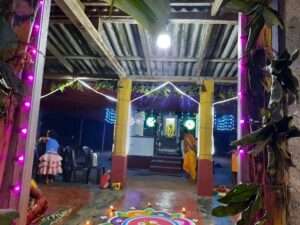
The sanctum sanctorum houses the sacred idol of Goddess Rajarajeshwari. The temple premises are designed to support regular pujas, devotional gatherings, and festival celebrations. The structure harmoniously blends with the natural surroundings of Sandalli village and maintains a peaceful spiritual environment.
During important festivals and special pujas, the temple is beautifully decorated with flowers, traditional lamps, rangolis, and colorful festoons, which enhance the divine atmosphere of the temple.
Sri Rajarajeshwari Temple has been an important center of Devi worship for the local communities of Sandalli and surrounding villages for many years. Coastal Karnataka and the Uttara Kannada region have a long-standing tradition of Shakti worship, where village deities are deeply connected to the cultural and spiritual life of the people.
Though detailed historical records about the temple are limited, local traditions strongly believe that the temple has protected the surrounding villages for generations. The temple has continued to survive and function mainly through the devotion and support of local villagers and devotees.
The temple is also spiritually connected with the broader Rajarajeshwari worship tradition seen across Karnataka, where the Divine Mother is worshipped as the source of strength, wisdom, prosperity, and protection.
According to local belief, the region around Sandalli was once covered with dense forests and isolated settlements. The villagers who lived there depended mainly on farming and forest resources for survival. During ancient times, the people are believed to have suffered from recurring hardships, including diseases, fear of wild animals, crop failures, and natural disturbances.
Unable to bear the difficulties, the villagers prayed sincerely to the Divine Mother seeking protection and relief. It is believed that one night, a spiritually devoted elder of the village received a divine vision of Goddess Rajarajeshwari. The Goddess appeared in a radiant form and instructed the villagers to establish her shrine at a sacred spot in Sandalli. She assured them that she would remain there permanently and protect the people of the region.
Following the divine vision, villagers located the sacred place indicated by the Goddess and began worshipping her with deep devotion. Over time, the villagers believed that peace and prosperity slowly returned to the area. Agricultural conditions improved, diseases reduced, and the people experienced spiritual confidence and protection.
From then onwards, the temple became an important center of faith for nearby villages. Even today, devotees believe that sincere prayers offered to Goddess Rajarajeshwari help in overcoming personal problems, financial struggles, family difficulties, and mental stress.
The temple is considered spiritually powerful by devotees of the Kumta region. Fridays, full moon days, Navaratri days, and special Devi worship occasions attract large numbers of devotees.
Many devotees believe that worshipping Goddess Rajarajeshwari at this temple helps in bringing:
* Peace and harmony in family life
* Mental strength and confidence
* Prosperity and financial stability
* Relief from fear and negativity
* Divine motherly blessings and protection
Special pujas, Lalita Sahasranama parayana, kumkum archana, and Devi homas are conducted regularly in the temple.
Navaratri is the most important festival celebrated in Sri Rajarajeshwari Temple. During the nine sacred days, the Goddess is decorated in various alankarams and special pujas, bhajans, homas, and devotional programs are conducted with great devotion and enthusiasm.
Other important festivals and rituals celebrated in the temple include Ashada Fridays, Lalita Panchami, Deepavali, special Devi homas, annual temple jatre, and full moon pujas.
During festival occasions, devotees from different parts of the Uttara Kannada district visit the temple to seek the blessings of Goddess Sri Rajarajeshwari and participate in the spiritual celebrations.
Local devotees believe that the Ramachandrapura Math has played an important role in supporting and preserving religious traditions and Devi worship in the Uttara Kannada region.


