


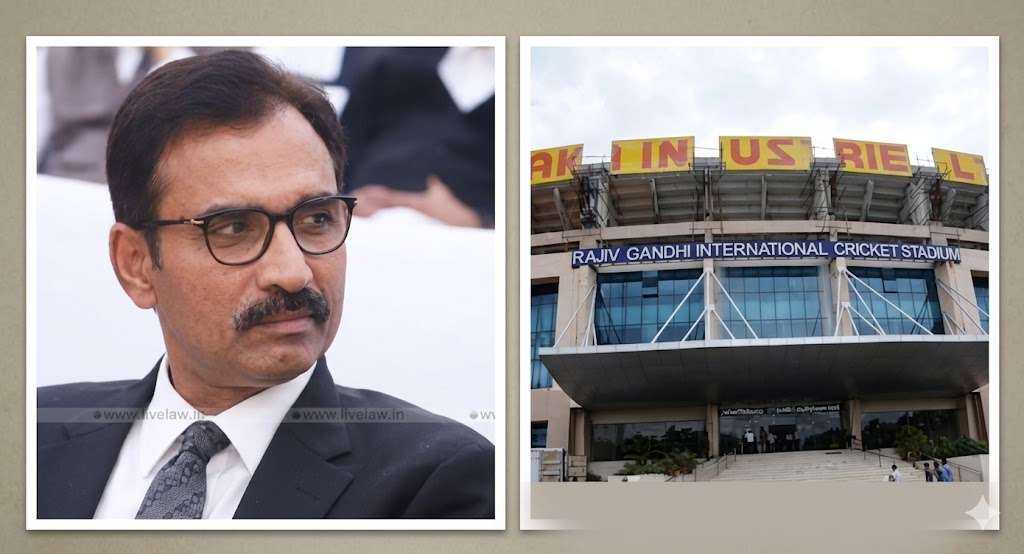
The rot was never limited to 57 clubs. The rot was the system itself.
Vinay Rao
The debate surrounding the infamous 57 disqualified clubs is once again being reduced to a dangerously simplistic argument. Some want Hyderabad cricket to believe this is merely a procedural issue — a technicality, a calendar dispute over whether the three-year restriction period imposed in July 2023 has expired. But that is not the real issue before the Hyderabad Cricket Association. The real question is far more uncomfortable: Did HCA ever complete the institutional cleansing that Justice L. Nageswara Rao initiated? Or did the system simply pause long enough to survive scrutiny before quietly reorganising itself again?
Because the July 2023 order was never an ordinary disciplinary action. It was a judicially supervised X-ray of HCA’s internal power structure. Acting under powers delegated by the Supreme Court, Justice L. Nageswara Rao examined the very architecture of HCA — club ownership patterns, executive committee structures, overlapping family control, voting blocs and financial influence networks across affiliated clubs. Notices were issued to 206 clubs. Hearings stretched over multiple days. What emerged from that exercise was not administrative irregularity but evidence of a deeply entrenched ecosystem of control.
The findings were explosive. The report concluded that nearly 80 clubs were effectively controlled by just 12 individuals and their families. In other words, Hyderabad cricket had ceased to function as a democratic sporting institution and had instead evolved into an electoral cartel masquerading as cricket administration. Justice Nageswara Rao did not mince words. The report spoke of a “coterie controlling elections to key posts to the Apex Council.” That single observation explained almost everything wrong with HCA — why the same power centres kept resurfacing, why reform repeatedly collapsed, why genuine cricketing voices remained marginalised, and why elections resembled political warfare rather than democratic representation.
The crisis, therefore, was never just about elections. Justice Nageswara Rao explicitly linked multiple-club control to conflict of interest, distortion of democratic functioning and even threats to the integrity of cricket competitions themselves. The order warned that concentration of influence across clubs exposed players, teams and tournaments to possible manipulation and corruption. That warning now appears frighteningly prophetic.
The 57 clubs became the visible face of the controversy only because those particular cases were documented in detail. But the report itself repeatedly indicated that the disease extended far beyond those clubs alone. One observation in particular now assumes enormous significance. Justice Nageswara Rao noted that multiple ownership structures and overlapping control mechanisms were “visibly rampant” within HCA. He further recorded that several individuals had already begun “adjusting their affairs” during the inquiry itself — reshuffling executive committees, altering formal structures and attempting cosmetic compliance in anticipation of scrutiny.
That sentence alone should alarm every stakeholder in Hyderabad cricket because it suggests the system had already begun adapting before the clean-up could be completed.
Which brings us to the uncomfortable reality confronting HCA today. The issue is no longer whether the 57 clubs should return. The issue is whether HCA can honestly certify that its present membership ecosystem is genuinely free from proxy control, concealed family influence, coordinated voting blocs and shadow management structures. Can it say with certainty that the original cartel networks no longer exist? Can it prove that “restructuring” was genuine and not merely paperwork designed to preserve effective control through proxies?
That verification process was supposed to happen after the 2023 order. It largely never happened. The incoming Apex Council was expected to undertake a serious institutional audit — verify whether restructuring by affected clubs was genuine, review unresolved conflict-of-interest concerns, investigate continuing overlaps and ensure that superficial changes were not being used to perpetuate old control structures under new names. Instead, HCA descended deeper into instability, litigation and administrative collapse.
Then came the Telangana High Court proceedings of April 2026. Those proceedings fundamentally changed the nature of the crisis. What was once viewed as a governance dispute suddenly acquired criminal overtones of extraordinary seriousness. The High Court recorded allegations involving obstruction of judicial supervision, disappearance of records, governance failures, administrative paralysis and continuing institutional dysfunction despite years of oversight. The problem was no longer merely bad administration. The problem had become possible systemic criminality.
Today, multiple FIRs are in motion. The Directorate of Enforcement has initiated proceedings under the Prevention of Money Laundering Act. A CBCID Special Investigation Team headed by a senior IPS officer is now probing HCA’s administrative and financial affairs. That is not routine scrutiny. That is the language of institutional breakdown.
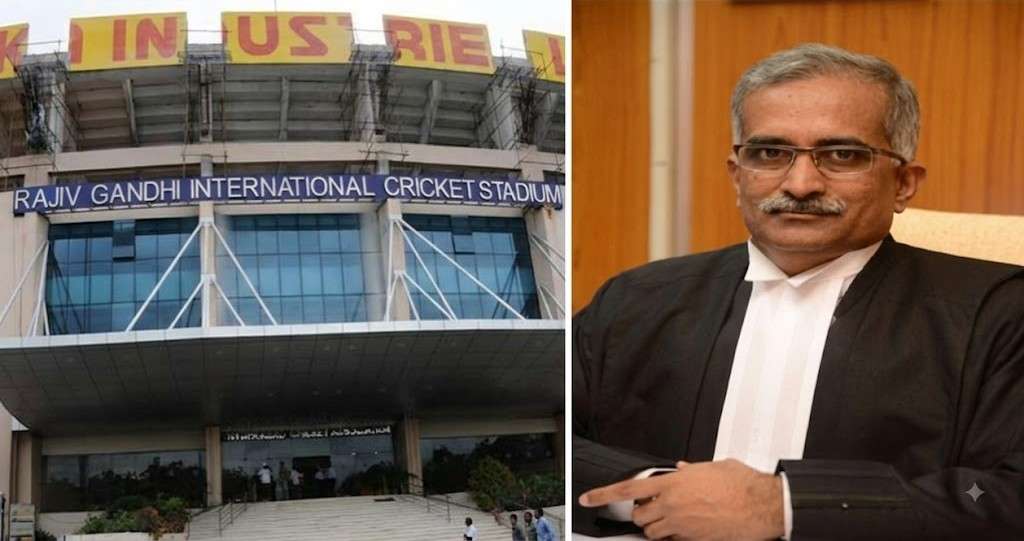
And it is precisely in this extraordinary background that Justice P. Naveen Rao’s role assumes historic significance. The High Court has effectively entrusted the Single Member Committee with sweeping supervisory authority over cricketing affairs, administration and financial functioning while criminal investigations continue.
This changes everything.
The present exercise cannot be reduced to a debate over reinstating clubs. This is now an institutional integrity review being conducted while HCA itself remains under criminal and judicial scrutiny. Which is exactly why limiting scrutiny only to the original 57 clubs may itself become inadequate.
Because if unresolved conflict-of-interest structures, proxy control systems and coordinated electoral manipulation continue elsewhere within HCA’s membership network, then the original problem identified in 2023 has not disappeared at all. It has merely evolved. Perhaps become smarter. Perhaps become harder to detect. But certainly not disappeared.
The real danger to HCA was never the existence of clubs. Cricket associations need clubs. Democracy needs representation. What destroys institutions is when clubs cease to function as independent cricket bodies and instead become instruments of coordinated political control — voting factories controlled by a handful of individuals operating through family networks, proxies and loyalists.
That was the core concern identified in 2023. And unless that concern is addressed comprehensively and honestly, Hyderabad cricket risks returning to the very ecosystem that nearly destroyed it.
The responsibility before the Single Member Committee, therefore, is not to prolong punishment indefinitely or indiscriminately target clubs. The responsibility is far greater. It is to finally complete the institutional cleansing that was interrupted, diluted and deferred after 2023.
Because Hyderabad cricket does not merely need elections. It needs credibility restored.


Shivlal
arshad
Prakash Chand jain
Moiz
purushottam agarwal
Surender Agarwal
vanka
Mansingh
the same names that control HCA. to clean they need to be kept aside.
also people with investigation should not be allowed to contest. justice sir should check
why did the ban not made on
Shivlal Yadav
Arjun Yadav
Rajesh Yadav
Veerendra Yadav
Shivaji Yadav
sister
the are biggest multiple vote.