MS Sparsha
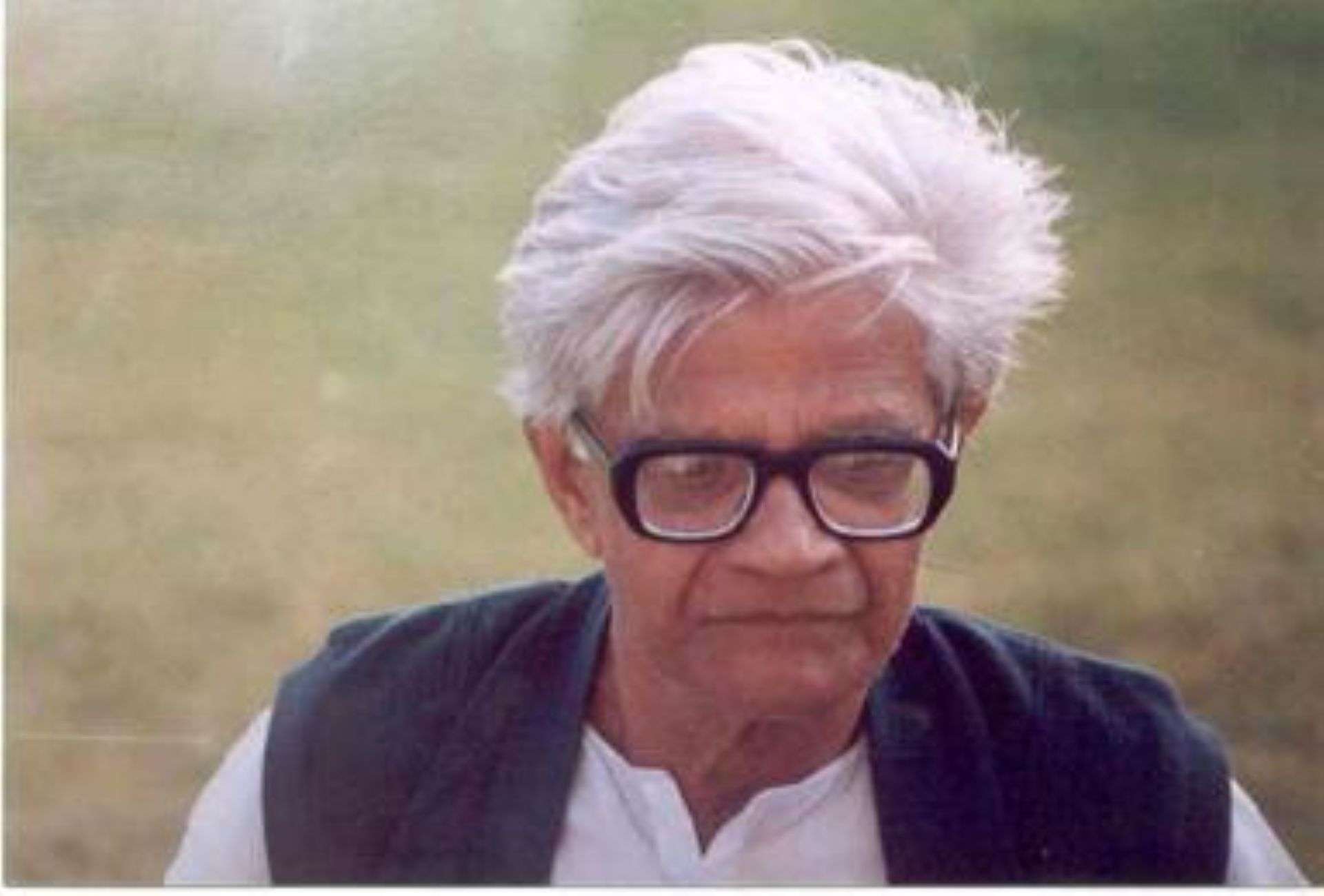
History remembers the visionaries. But often, it forgets the men who quietly built the machines that turned those visions into reality. One such forgotten titan of Indian science was Basanti Dulal Nagchaudhuri — a brilliant experimental physicist, institution builder, and one of the true architects of India’s nuclear age.
While names like Homi J. Bhabha and Meghnad Saha dominate public memory, Nagchaudhuri remains an unsung hero whose contributions fundamentally shaped India’s scientific destiny. If Bhabha dreamed of atomic India, Nagchaudhuri built the engine that made the dream operational.
The story of his perseverance reads almost like a scene from a wartime film.
Imagine standing at the docks of Calcutta during the chaos of the Second World War, staring at an empty horizon where a ship carrying vital scientific equipment was supposed to arrive. That ship carried the crucial parts for India’s first Cyclotron — the revolutionary particle accelerator that would open the doors to nuclear physics research. Instead, somewhere in the ocean, it had been destroyed by a Japanese submarine attack.
For most scientists, such a catastrophe would have ended the mission. For Nagchaudhuri, it was merely the beginning.
In the 1930s, the world of physics was undergoing a dramatic transformation. Theoretical equations were no longer enough; modern science increasingly depended on giant machines capable of probing the secrets of the atom. During this crucial period, Nagchaudhuri had the rare privilege of working at the University of California, Berkeley, under the legendary Ernest Lawrence, inventor of the Cyclotron and later Nobel laureate.
Nagchaudhuri was not merely observing history — he was learning how to build it.
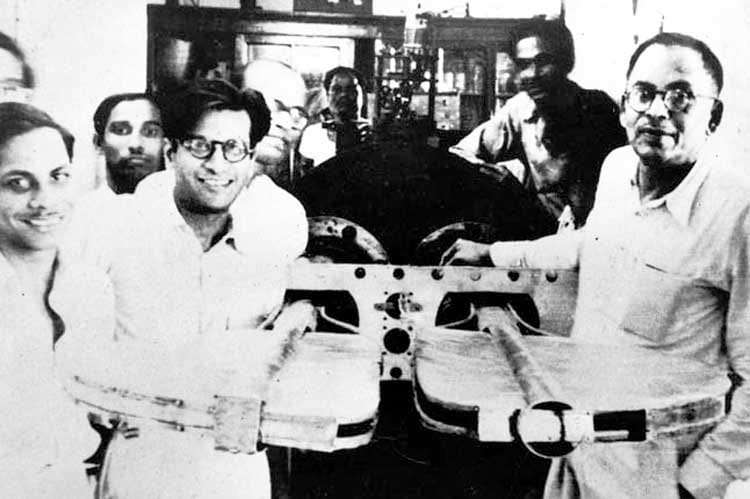
Along with Meghnad Saha, he helped secure the components for India’s first Cyclotron from the United States in 1941. It was a landmark moment. Colonial India, still under British rule, was preparing to enter the elite global club of advanced nuclear research.
Then came the disaster.
The ship carrying the vital magnets, vacuum pumps, and other equipment was sunk during wartime. Years of planning appeared lost at sea. But Nagchaudhuri refused to surrender to circumstances.
Instead of waiting endlessly for replacement equipment from abroad, he turned to the workshops, scrapyards, and small factories of Calcutta. In an era when India lacked advanced industrial infrastructure, he improvised sophisticated vacuum systems, transformers, and scientific instruments using locally available materials. Long before the term “jugaad” became fashionable, Nagchaudhuri embodied the spirit of scientific self-reliance.
Working under severe shortages and colonial limitations, he painstakingly rebuilt what the war had destroyed.
His determination finally paid off. By 1954, India’s first Cyclotron became fully operational at the Saha Institute of Nuclear Physics. It was among the earliest such machines in Asia and became the training ground for generations of Indian nuclear scientists.
That achievement was not merely symbolic. It laid the technical foundation for India’s future advancements in nuclear energy, radiation medicine, particle physics, and atomic research. Every Indian cancer hospital using radiation therapy and every nuclear reactor operating today carries, in some measure, the legacy of Nagchaudhuri’s pioneering work.
Yet, unlike many of his contemporaries, Nagchaudhuri never cultivated public fame. He sacrificed much of his personal research career to build institutions and mentor young scientists. His focus remained on strengthening India’s scientific ecosystem rather than promoting his own image.
Over the years, he went on to serve as Vice-Chancellor of Jawaharlal Nehru University and later became Scientific Advisor to India’s Ministry of Defence. Even in positions of power, colleagues remembered him as remarkably modest — more comfortable inside a laboratory than under public spotlight.
While others delivered speeches and occupied headlines, Nagchaudhuri remained the quiet experimentalist in the basement laboratory, ensuring the machines kept running.
That perhaps explains why history overlooked him.
But India’s scientific rise was not built only by celebrated visionaries. It was also built by grease-covered hands, sleepless nights in workshops, and stubborn determination against impossible odds. Basanti Dulal Nagchaudhuri represented that spirit.
He belonged to a rare generation of Indian scientists who built world-class science in a poor, colonized nation with almost no resources — only intellect, ingenuity, and national commitment.
Today, as India speaks confidently about nuclear technology, advanced research, and scientific self-reliance, it is worth remembering the forgotten genius who once stood at a Calcutta dockyard, watched his dream sink into the ocean, and decided to rebuild the future with scrap metal instead.