



In the theatre of modern warfare—where technology, sanctions, and shock-and-awe tactics are expected to deliver swift victories—one uncomfortable truth has resurfaced: nations with deep civilisational roots and hardened political will do not collapse on cue. If anything, the ongoing confrontation between Iran and the United States has once again exposed the limits of brute force, strategic arrogance, and misreading of a nation’s resilience.
The central question now being asked across geopolitical circles is simple yet unsettling—has Iran, battered and bruised, still managed to have the last laugh?
There is no denying the scale of losses Tehran has endured. Critical infrastructure has taken hits, key military installations have been targeted, and reports suggest that even the upper echelons of leadership, including figures close to Supreme Leader Ali Khamenei, have not been spared. Yet, despite these setbacks, Iran has not folded. Instead, it has dug in.
This is not new. Iran’s history is steeped in resistance—from the Iran–Iraq War to decades of sanctions and covert operations. What the current conflict underscores is that Iran’s strength lies not merely in its military capability, but in its societal resilience. The question, therefore, answers itself: invasions may wound Iran, but they do not break it.
Nowhere is this defiance more evident than in the Strait of Hormuz. This narrow maritime chokepoint—through which nearly a fifth of the world’s oil supply flows—remains Iran’s most potent strategic card. By holding its position and demonstrating its ability to disrupt global energy routes at will, Iran has effectively neutralized America’s overwhelming military superiority. In asymmetric warfare, leverage matters more than firepower—and Iran understands this better than most.
So why did Iran refuse to budge even after being handed a 48-hour ultimatum?
The answer lies in credibility. For Tehran, backing down under direct threat from Donald Trump would not just be a tactical retreat—it would be a strategic humiliation. It would signal weakness not only to Washington but also to regional rivals and internal dissenters. By standing firm, Iran sent a message: it will absorb pain, but it will not capitulate.
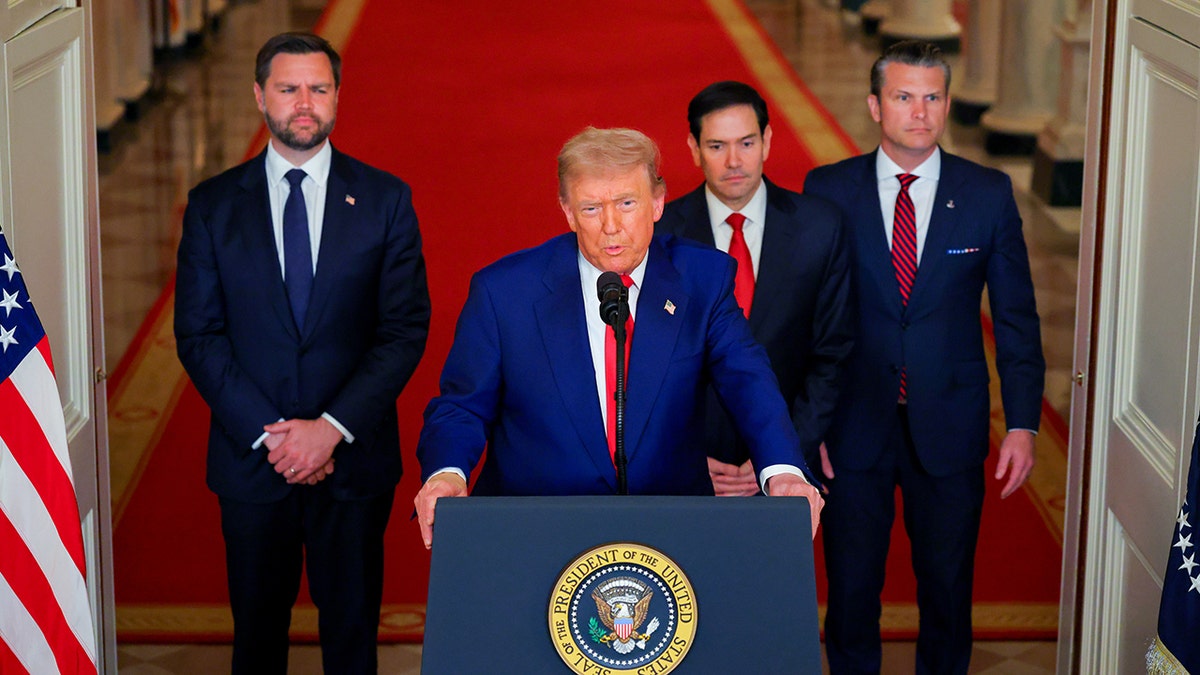
Equally telling is the shift in Washington’s tone. Trump, who once thundered about “obliterating” Iran and pushing it back by decades, now appears to be searching for an exit ramp. His earlier threats—targeting vital assets like Iran’s largest energy infrastructure or even seizing Kharg Island—have conspicuously softened. Why?
Part of the answer lies at home. War fatigue is real. The American public, already weary from prolonged military engagements in West Asia, has shown little appetite for another open-ended conflict. Political opposition has intensified, questioning both the rationale and the cost of escalation. Trump, a leader deeply attuned to domestic optics, cannot ignore this pressure.
But beyond public sentiment lies a harsher reality: the cost of war against Iran is not just high—it is unpredictable. Unlike previous conflicts, this is not a theatre where the US can dictate terms unilaterally. Iran’s network of regional proxies, its missile capabilities, and its strategic geography ensure that any prolonged war would spiral into a wider regional conflagration—one that could engulf allies like Israel and destabilize global markets.
What, then, has the United States achieved?
If the objective was to force Iran into submission, the answer is stark—very little. If the aim was to degrade its capabilities, that may have been partially achieved. But wars are not judged merely by destruction inflicted; they are measured by outcomes secured. And on that count, Washington’s position looks increasingly tenuous.
Trump’s recent address to the nation, laced with hints of de-escalation, is not a declaration of victory—it is an acknowledgment of limits. It suggests a recognition that the costs of continuing far outweigh the benefits of pressing on. More importantly, it signals a shift from confrontation to containment.
But this pivot raises an uncomfortable question: does this amount to abandoning Israel?
While it would be premature to suggest a complete withdrawal of support, any American scaling back inevitably alters the regional balance. Israel, long reliant on US backing as a strategic deterrent, could find itself exposed in a more volatile neighbourhood. The message is clear—alliances, too, have limits when national interests are at stake.
In the final analysis, this conflict may well be remembered not for who struck harder, but for who endured longer. Iran has suffered, yes—but it has not surrendered. It has absorbed the blows, leveraged its geography, and forced its adversary to reconsider.
And in war, sometimes, that is enough to claim the last laugh.


What one can learn from history is lessons so that they are not repeated.. yet the memory of Nations is also short lived .. they tend to forget! Iran Iraq war itself was a decennial war.. the First World War was a conventional war .. 1914-18 , the Second World War 1939-45 was brought to a final end through use of atomic power..actually the war was coming to an end , there was no need to use atomic bombs over Nagasaki and Hiroshima.. USA did it to demonstrate its nuclear superiority!
Since 1945 countries with their power positions have come long long way … in the process Obama being a student of international Relations was a cautious president contrary Trump proved without any doubt “ what a political illiterate he is “ .. Department of war is not a cup of instant tea .. it has different flavours.. it’s a lesson for Americans now .. to choose a president who atleast knows how to sip tea with strong taste! A president who knows how to enter a war but do not how to exit ! What a wonderful president! The biggest clown the legacy of American presidency has ever produced! Iranian resilience is exactly as you said .. the societal resilience..conventionally , culturally, historically evolved.