



Ullooru Sri Karthikeya Subrahmanya Swamy Temple is located in Kandavara village near Basrur in Kundapura Taluk of Udupi district, Karnataka. The temple is situated in a serene and spiritually vibrant region surrounded by greenery and ancient settlements of coastal Karnataka. It lies close to the historic port town of Basrur and has been an important center of Subrahmanya worship for centuries.
The temple is believed to be more than 1,100 to 1,200 years old. Based on the style of the idol, ancient temple remains, and inscriptions found within the premises, historians estimate that the shrine dates back to around the 8th–9th century CE. The earliest inscriptions available today belong to the 14th century, proving that the temple was already a well-established pilgrimage center during the Vijayanagara period. Ancient Naga stones and old sculptures found around the temple indicate that worship existed here even before the currently available inscriptions.
The presiding deity of the temple is Lord Sri Karthikeya Subrahmanya Swamy, the divine son of Lord Shiva and Goddess Parvati. He is worshipped here as Skanda, Kumara, Shanmukha, and Subrahmanya — the commander of the celestial armies and protector of dharma. Devotees pray to the Lord for courage, protection, relief from Sarpa Dosha, prosperity, family welfare, and blessings for children.
The main idol is beautifully carved and stands nearly one meter tall. Lord Subrahmanya appears in a youthful warrior form holding divine weapons, while the peacock vehicle beside him is artistically sculpted. The idol reflects ancient South Indian sculptural traditions influenced by early Chalukya and Pallava styles.
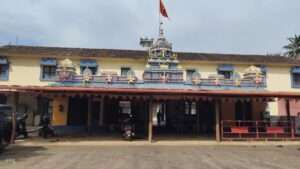
The temple follows the traditional coastal Karnataka style of architecture. The sanctum sanctorum houses the ancient idol of Sri Subrahmanya Swamy and preserves a strong spiritual atmosphere. Earlier, the temple complex had a large prakara, broad pathways, and protective outer structures, many of which were renovated over time.
Several ancient Naga stones are installed around the temple premises, reflecting the temple’s long association with serpent worship traditions. A shrine dedicated to Lord Ganesha is also situated within the complex. The temple surroundings provide ample space for pradakshina, rituals, and festival celebrations.
The history of the temple is deeply connected with the ancient settlement of Kandavara. Scholars believe that the original name of the region was “Skandhavara,” which in Sanskrit and Kannada refers to a military camp or cantonment. Over time, the name gradually transformed into Kandavara. Since Lord Skanda or Karthikeya was worshipped as the commander of divine armies, temples dedicated to him were often established near military settlements for divine protection and victory.
The nearby ancient port town of Basrur and the surrounding regions were historically important trade and administrative centers. Historians believe this area functioned as a strategic settlement requiring military protection, and the temple served as a guardian shrine for the region.
The temple gained prominence during the Vijayanagara Empire. Eight inscriptions discovered here mention grants and donations made during the reigns of rulers such as Bukka Raya, Devaraya, Mallikarjuna Raya, Virupaksha Raya, and Krishnadevaraya. These inscriptions record donations of land, paddy fields, oil for lamps, tax exemptions, and support for temple rituals and feeding devotees.
One inscription dated 1408 CE is especially important because it contains an early example of the Tulu script. These inscriptions are valuable records of the religious, cultural, and social life of coastal Karnataka during medieval times.
The temple is also regarded as the Kuladevaru shrine for several Vishwamitra Gotra Udupa and Hebbar families who have worshipped Lord Subrahmanya here for generations.
According to temple tradition, Lord Subrahmanya manifested at this sacred place to protect the region from negative forces and establish dharma. In ancient times, this area was believed to be an important military settlement where warriors and rulers prayed to Lord Skanda before battles seeking courage, strength, and victory. Because of the Lord’s divine presence, the place became spiritually powerful and later came to be associated with Skandhavara.
The Sthalapurana states that after destroying the demon Tarakasura, Lord Subrahmanya travelled across many sacred regions blessing sages, warriors, and devotees. During this journey, he arrived in the forested coastal region near present-day Kandavara. Pleased by the devotion of the local people and sages performing penance there, the Lord decided to remain in this sacred place in his youthful warrior form to protect devotees and uphold righteousness.
Another local belief says that the divine energy of Lord Subrahmanya attracted serpent deities to this region. Because of this, many ancient Naga stones were consecrated around the temple premises. Over centuries, the temple became an important center for Naga worship and remedies related to Sarpa Dosha. Devotees strongly believe that prayers offered here help remove obstacles related to marriage, childbirth, family issues, and ancestral doshas.
Temple traditions also connect the deity with the powerful Agni and Rudra aspects mentioned in ancient scriptures. Lord Subrahmanya is believed to embody divine courage, wisdom, discipline, and protection. Even today, devotees believe that Sri Karthikeya Subrahmanya Swamy continues to guard the region and bless sincere worshippers with strength and prosperity.
Champa Shashti is the most important festival celebrated in the temple and attracts large numbers of devotees from coastal Karnataka and nearby regions. The festival commemorates the victory of Lord Subrahmanya over the demon Tarakasura.
Special poojas, mahapoojas, alankarams, annadana, and temple processions are conducted during major festivals. Devotees also participate in Naga worship rituals and special sevas seeking blessings for health, prosperity, and family welfare.
Daily worship, mangalarathi, devotional singing, and annual religious celebrations continue to preserve the ancient spiritual traditions of this sacred Subrahmanya temple.

