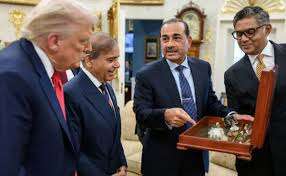
The world order is changing faster than many in Washington are willing to admit. The age when the United States could dictate terms to the world as the unquestioned “Big Brother” is steadily eroding. Ironically, the country that once projected itself as the defender of global order today appears increasingly desperate to preserve fading dominance. The tragedy for America is that much of this accelerated decline is self-inflicted — and no individual symbolizes this more dramatically than Donald Trump.
For decades, the US thrived not merely because of military power, but because allies trusted its stability, consistency, and institutional maturity. Today, that confidence is evaporating. The world no longer waits anxiously for American approval. Instead, Washington is the one scrambling to retain influence in a rapidly evolving multipolar world.
The biggest evidence lies in the shifting geopolitical equations involving Xi Jinping, Vladimir Putin, and Narendra Modi.
Trump’s aggressive posturing against Iran exposed the limits of American power. Washington perhaps assumed Iran would collapse under intimidation the way smaller nations in the past had been subdued. But geopolitics in 2026 is not the geopolitics of the unipolar 1990s. Iran is no isolated state. It sits within a complex web involving China, Russia, West Asia, energy routes, and strategic deterrence.
The rhetoric from Washington was loud. Threats of “wiping Iran off the map” dominated headlines. Yet when resistance hardened and the conflict became economically and militarily costly, the tone shifted. Suddenly, diplomacy became urgent. Suddenly, Beijing became indispensable.
That itself reveals the new reality: America now needs China more than China needs America.
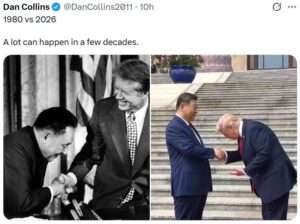
Trump’s much-hyped visit to Beijing exposed this imbalance. The optics were telling. No breakthrough agreements. No visible warmth. No strategic concessions from China on Taiwan. Equally, the US showed no willingness to dilute its Iran position. The much-publicized Western media narrative claiming China would cut logistical support to Iran quickly collapsed under Beijing’s subsequent statements reaffirming support for its West Asian partner.
Then came the real diplomatic message.
Soon after Trump returned to Washington almost empty-handed, Putin landed in Beijing. The visual contrast was impossible to ignore. While Trump appeared tense and transactional with Xi, the Chinese President looked far more comfortable alongside Putin. That symbolism mattered. Modern geopolitics is increasingly being shaped not by NATO press conferences or G7 declarations, but by strategic comfort levels among emerging power centres.
And where does India stand in this churn? Precisely where mature diplomacy should place it — independent, respected, and increasingly central.
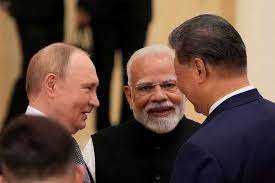
India today is no longer seen merely as a regional player. Under Modi, New Delhi has mastered strategic balancing with remarkable precision. It engages Washington without surrendering autonomy, works with Moscow without apology, and manages Beijing despite tensions. The bonhomie witnessed between Modi, Putin, and Xi at recent global platforms was enough to unsettle Western capitals because it signalled something deeper: the emergence of a non-Western power equilibrium.
Trump’s approach toward India has only complicated matters further. After India’s decisive military response against Pakistan following the Pahalgam killings under Operation Sindhoor, Washington’s attempts to appease Islamabad surprised many strategic observers. By appearing overly sympathetic toward Pakistan’s fragile establishment despite its repeated global credibility crises, the US risked alienating one of its most critical strategic partners — India.
Meanwhile, Trump’s domestic troubles continue mounting. His unilateral military adventurism, rising war expenditures, and increasingly inconsistent rhetoric have weakened his standing at home. The Republican establishment itself appears uncomfortable defending impulsive decisions that strain both the American economy and America’s global credibility.
What is emerging today is not merely America’s temporary weakness, but the collapse of the old psychological order where the US was viewed as the unquestioned center of global power.
The future may not belong entirely to Washington, Beijing, or Moscow alone. Instead, the coming decades may belong to flexible civilizational powers capable of strategic patience and long-term thinking. Right now, leaders like Modi, Xi, and Putin appear to understand this changing chessboard far better than many Western establishments trapped in outdated assumptions of permanent dominance.
History has always been unforgiving to empires that mistake arrogance for permanence. The British Empire learned it. The Soviet Union learned it. The United States may now be entering its own uncomfortable moment of reckoning.
Whether America adapts to the new multipolar reality or continues clinging to fading supremacy will determine not only its future, but the future balance of the entire world order.