U Lakshman Rao
In the cultural traditions of Andhra Pradesh, Telangana, and parts of Karnataka, Hanuman Jayanti is observed this year on 12 May, while in many northern regions of India the festival was celebrated in April. These variations arise from differences in regional calendrical traditions and methods of reckoning sacred lunar dates. Though the observances occur at different times, the reverence is directed to the same enduring ideal.
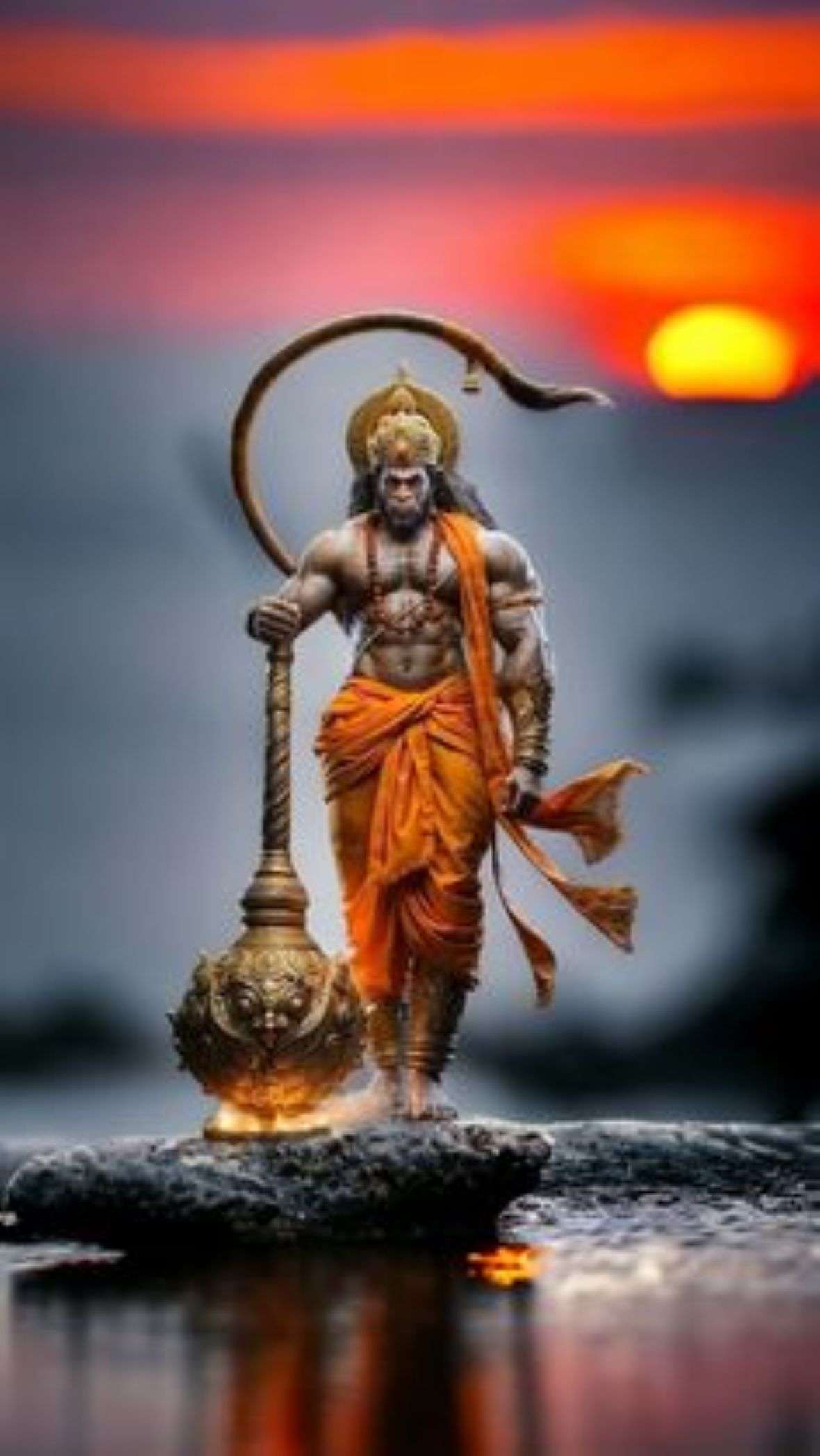
Hanuman occupies a distinctive place in the Indian imagination. He is remembered not only as the devoted servant of Lord Rama, but also as a figure in whom intelligence, strength, humility, and dedication are brought into rare harmony. His character illustrates how knowledge gains value when guided by discipline, and how power becomes…
The celebration of Hanuman Jayanti is not merely a ritual remembrance of Hanuman, but a call to realign one’s life with the profound virtues he embodied. It invites reflection on service without pride, humility without weakness, diplomacy without deceit, and concentration without distraction—qualities that were deeply cherished and openly praised by Rama. Hanuman stands not as a distant mythological figure, but as a universal archetype whose character resonates across every sphere of human endeavor, guiding both the inner and outer life with equal force.
Born to the celestial nymph Anjana, who by a divine curse took birth on earth and became the wife of Kesari, Hanuman’s origin is steeped in sacred purpose. He is revered as the son of Vayu and an incarnation of Shiva. His birth followed Anjana’s intense penance for a mighty child, culminating in the divine intervention where sacred payasam—originally part of the Putrakameshti yajna performed by Dasharatha under the guidance of Rishyasringa—was carried by Vayu and delivered to her. Thus, Hanuman’s very existence symbolizes a convergence of divine will, austerity, and cosmic design.
From childhood, Hanuman revealed himself as a being of boundless energy, curiosity, and immense power. In a moment of innocent wonder, he mistook the rising sun for a fruit and leapt skyward to seize it. This audacious act brought him into conflict with Indra, whose thunderbolt struck the child, injuring his jaw and rendering him unconscious. In grief and fury, Vayu withdrew air from the world, bringing existence to a standstill. To restore balance, the gods bestowed upon Hanuman extraordinary boons—immunity to weapons, unmatched strength, and mystical abilities—making him a being of immeasurable potential.
Yet, his early years were not without correction. His playful mischief often disrupted the meditations of sages, leading them to curse him to forget his divine powers until the moment they were truly needed. This curse, far from diminishing him, became a hidden blessing, instilling humility and ensuring that his strength would awaken only in service of a higher cause. As he matured, Hanuman approached Surya as his गुरु, and through perseverance and devotion, mastered the scriptures, becoming not only a warrior of unmatched prowess but also a scholar of deep wisdom.
In time, Hanuman emerged as the most trusted minister and companion of Sugriva, who lived in exile on the sacred Rishyamukha Mountain, fearing his brother Vali. Hanuman’s counsel, loyalty, and foresight sustained Sugriva through adversity. It was he who recognized the divine aura of Rama and Lakshmana, facilitated their meeting with Sugriva, and forged an alliance that would alter the course of destiny. His role was not merely that of a messenger, but of a strategist, mentor, and moral anchor, ensuring that duty was never overshadowed by fear or delay.
Hanuman’s intelligence shines most luminously in his role as a communicator and diplomat. His speech, as admired by Rama, was flawless in grammar, measured in tone, and rich in emotional intelligence. He possessed the rare ability to adapt his words to the listener—gentle and comforting when addressing Sita, firm and resolute before Ravana. His communication was never excessive nor deficient; it was precise, purposeful, and deeply impactful. He introduced himself not with pride, but as a humble messenger of Rama, demonstrating that true authority lies in purpose, not in proclamation.
Beyond intellect and speech, Hanuman’s physical prowess remains unparalleled. His combat style, rooted in agility, speed, and precision, reflects a synthesis of raw strength and refined technique. Yet, what elevates his strength is not its magnitude, but its restraint. He wielded his power only when aligned with dharma, never for self-glory. His mastery over the eight siddhis—Anima, Mahima, Laghima, Garima, Prapti, Prakamya, Ishitva, and Vashitva—symbolizes his command over both the material and subtle realms, making him a complete embodiment of disciplined power.
At the heart of Hanuman’s greatness lies his unwavering devotion. His service to Rama was absolute, free from expectation or desire for recognition. His identity dissolved into his purpose, and his strength found its meaning in surrender. When tasked with saving Lakshmana, he did not hesitate to carry an entire mountain to ensure success, demonstrating that true devotion transforms the impossible into the inevitable. His humility remained intact despite his might; he attributed every achievement to Rama, embodying the highest form of selflessness.
Hanuman’s life offers a timeless lesson: that strength must be guided by wisdom, action must be rooted in duty, and success must be tempered with humility. He conquered not only external adversaries but also the inner forces of ego and distraction, standing as a model of perfect self-mastery. His loyalty, discipline, and clarity of purpose created a legacy that transcends time, inspiring individuals to align their lives with higher ideals.
To celebrate Hanuman Jayanti in its truest sense is to internalize these values. It is to serve without expectation, to remain focused amidst distractions, to act with patience and discipline, and to uphold humility regardless of one’s achievements. Hanuman is not confined to the pages of the Ramayana; he lives in the spirit of every righteous action, in every act of courage guided by compassion, and in every moment where strength bows to wisdom.
Thus, Hanuman remains an eternal presence—a silent force in meditation, ever ready to assist the cause of truth and righteousness. His life stands as a radiant beacon, illuminating the path where power and character unite in service of a higher purpose.