



There is a difference between political criticism and political gutter-speech. Sadly, some Opposition leaders in India seem determined to erase that line.
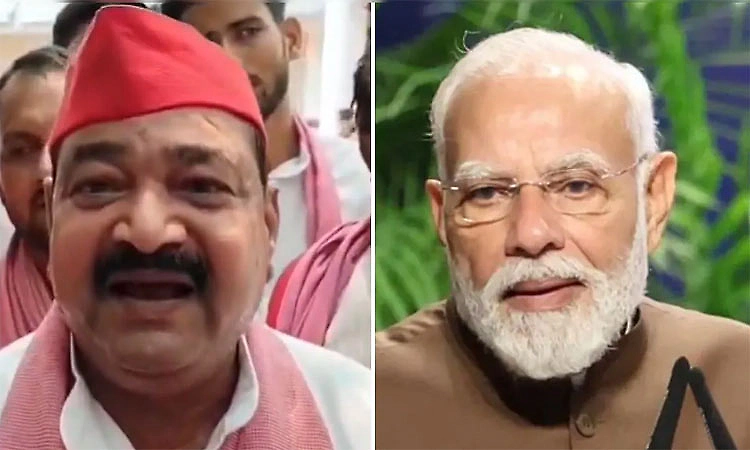
The latest abusive and unprintable remarks made against Prime Minister Narendra Modi by Ajendra Singh Lodhi are not merely “political statements.” They are a disgrace to parliamentary democracy and an insult to civilized public discourse itself.
One may oppose Modi politically. One may criticize his policies, question his governance model, debate his ideology or attack the BJP electorally. That is democracy. But descending into vulgar personal abuse only exposes the intellectual bankruptcy and frustration of those who no longer know how to fight politically.
And frustration indeed seems to be the driving force behind many Opposition parties today.
For over a decade now, the BJP under Modi has continued to dominate election after election. From national polls to state assemblies, the Opposition has repeatedly failed to present either a coherent alternative vision or credible leadership. Regional caste-driven formations that once looked invincible are shrinking. The Congress, which once ruled India unchallenged, is struggling for survival. Parties like the Samajwadi Party know that their old formulas no longer inspire confidence among large sections of voters, especially the youth and women.
When political arguments fail, abuse begins.
That is exactly what the country is witnessing now.
The Samajwadi Party MP’s comments are shameful not because Modi is beyond criticism, but because civilized societies cannot normalize verbal filth in public life. Parliamentarians are elected representatives, not street-corner hecklers. Their words carry weight. When MPs use language unfit for publication, they lower the dignity of the institutions they claim to defend.
Ironically, Opposition leaders never seem to learn from history.
The Indian electorate has repeatedly punished leaders who crossed the line into personal abuse against Modi. Congress veteran Mani Shankar Aiyar called Modi “neech.” Sonia Gandhi used the infamous “maut ka saudagar” remark years ago. Others mocked Modi’s background, his humble origins, even his personal life. Every single time, voters responded not with outrage against Modi, but with sympathy and support for him.
Why? Because Indians may tolerate sharp politics, but they dislike arrogance and personal vilification.
In fact, one major reason behind Modi’s enduring popularity—especially among women voters—is precisely this perception that he is unfairly and relentlessly targeted with abusive rhetoric. Many women voters who may not follow every policy debate closely can still distinguish between criticism and insult. They see who appears composed and who appears bitter.
West Bengal offered a telling example. Mamata Banerjee once enjoyed overwhelming support among women voters. But many believed that her increasingly shrill and personal attacks against Modi crossed the “Lakshman Rekha” of acceptable political conduct. Voters may disagree politically, but they do not necessarily admire constant hostility devoid of substance.
This is where the Opposition continues to misread India.
Abuse does not create credibility. Vulgarity is not ideology. Personal attacks are not governance agendas.
If anything, such language only strengthens Modi’s image as a leader constantly under attack from a desperate political class unable to defeat him democratically. It also raises a larger question: if elected representatives cannot maintain basic decency in speech, what moral authority do they have to lecture society about constitutional values and democratic culture?
India is the world’s largest democracy, not the world’s loudest television shouting match.
Political disagreements are healthy. Fierce debates are necessary. Governments must be questioned and challenged. But there must remain some minimum standards of civility and dignity in public discourse. Once abusive language becomes normalized, democratic debate itself degenerates into chaos.
The Samajwadi Party should introspect seriously instead of defending the indefensible. Leaders like Ajendra Singh Lodhi may momentarily grab headlines through sensational abuse, but such behaviour damages not Modi, but the credibility of their own party.
In the end, voters reward seriousness, not shouting. And they certainly do not reward shamelessness masquerading as opposition politics.


