



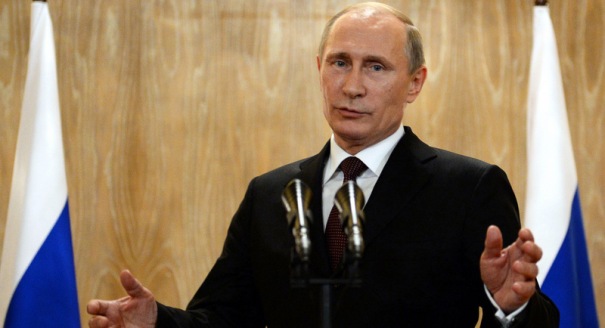
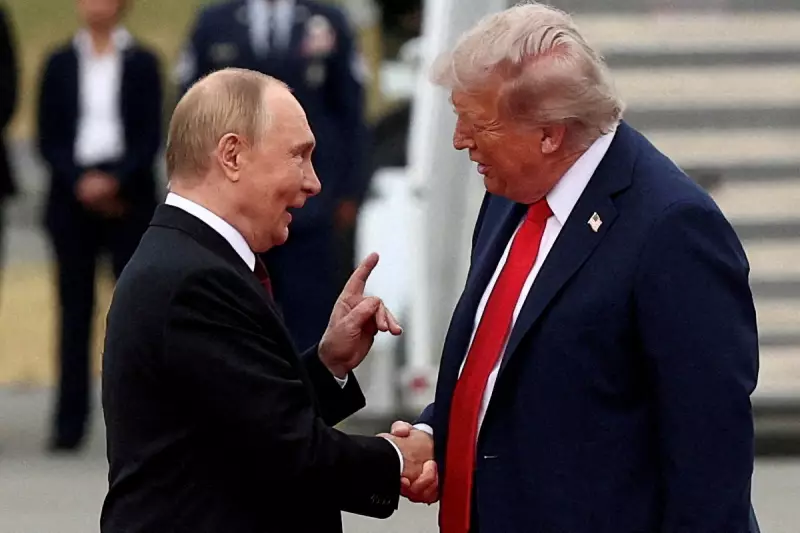
The world, exhausted by relentless conflicts and geopolitical brinkmanship, may finally be witnessing a faint glimmer of diplomacy. Reports emerging from global television networks suggest that Russian President Vladimir Putin held an hour-long telephone conversation with U.S. President Donald Trump, during which Moscow offered to mediate in the escalating West Asian crisis.
While the White House has yet to formally confirm the details, the mere possibility of mediation by a major power has sparked cautious optimism across diplomatic circles. At first glance, the development appears encouraging. The West Asia conflict, centred on tensions between Iran and Israel, has rapidly evolved into a wider geopolitical flashpoint. With missiles flying, air bases on alert and civilians living under the constant threat of bombardment, the region stands dangerously close to another catastrophic war. In such a volatile environment, even the hint of dialogue between two major powers cannot be dismissed lightly.
However, diplomacy in the modern world rarely comes without strategic calculations. President Trump, while signalling openness to ending the war, has also been unequivocal about Washington’s objectives. According to his statements, the mission of the United States and its ally Israel is far from complete. Their goal, he insists, is the total dismantling of Iran’s ballistic missile capabilities and nuclear infrastructure. Only after the complete neutralisation of these strategic assets, Trump argues, can the region move toward stability and a more democratic environment within Iran. This hardline stance is rooted in Washington’s longstanding suspicion that Iran’s military capabilities empower proxy groups and destabilise the broader region.
Critics, however, warn that attempts to impose disarmament through military pressure could further inflame tensions rather than resolve them. Complicating matters further is the internal political trajectory within Iran itself. Following the death of Supreme Leader Ali Khamenei, discussions over succession have intensified. Reports that elements within the ruling establishment might elevate his son to maintain continuity of clerical authority have triggered sharp reactions from Washington.
Trump has publicly described such a move as the continuation of what he labels a “terrorist regime,” even threatening that the next leadership could face the same fate. Such rhetoric may excite hawks in Washington and Tel Aviv, but it also underscores the deep ideological divide that diplomacy must bridge.
Meanwhile, Russia’s sudden willingness to mediate raises its own set of questions. Moscow has traditionally maintained strategic ties with Tehran, while simultaneously positioning itself as a global power capable of negotiating with all sides. By stepping forward as a potential mediator, Putin may be attempting to reinforce Russia’s image as a stabilising force in global geopolitics. Interestingly, Putin’s conversation with Trump reportedly extended beyond the Middle East.
The Russian leader also discussed the ongoing war in Ukraine, a conflict that has strained relations between Moscow and the West for years. Trump himself acknowledged that both leaders talked about ending “wars,” plural, indicating that the conversation might have been broader than initially assumed. If Moscow is indeed serious about mediation, it would face a delicate balancing act. Russia would need to persuade Iran to show restraint while simultaneously addressing the security concerns of Israel and the United States. Whether the Kremlin has the leverage to achieve this remains uncertain.
The geopolitical chessboard grows even more complex when one factors in the positions of China and several Middle Eastern nations. Both Beijing and Moscow have already called for restraint, warning against large-scale attacks that could devastate civilian populations in Iran. The spectre of strategic bombers and missile barrages targeting densely populated regions has alarmed humanitarian observers worldwide. At the same time, regional actors cannot escape scrutiny.
Oil-rich Gulf nations such as the United Arab Emirates and others must also recognise that long-term stability requires a firm rejection of any indirect support to extremist networks. Funding, ideological patronage, or political indulgence of radical groups has historically fuelled instability across West Asia and beyond. The ripple effects are felt far from the Middle East. In South Asia, Pakistan finds itself under mounting pressure from multiple fronts.
Already struggling with economic collapse and political instability, Islamabad faces threats from the Taliban regime in Afghanistan while simultaneously navigating tensions with Iran over potential military cooperation with the United States. The prospect of Iranian retaliation against Pakistani air bases, should they be used for American operations, only deepens Islamabad’s strategic dilemma.
Amid this turmoil, Russia has also maintained contact with Narendra Modi, India’s Prime Minister. Officially, the discussions centred on energy cooperation and ensuring stable supplies in uncertain times. Yet diplomatic conversations between major leaders often carry layers beyond the official readout. It would not be surprising if broader geopolitical developments were also discussed informally. India, as a rising economic and strategic power, occupies a unique position.
Maintaining balanced relations with the United States, Russia, Israel, and several Middle Eastern countries, New Delhi could potentially contribute to a more constructive global dialogue if the situation evolves toward multilateral negotiations. Ultimately, the world stands at a crossroads. The era of unilateral military dominance has repeatedly proven incapable of delivering lasting peace. Whether in Ukraine, West Asia, or elsewhere, wars increasingly risk spiralling into broader confrontations involving multiple nuclear-armed states.
If the reported Putin-Trump conversation indeed signals a willingness to explore diplomatic solutions, it should be welcomed. But mediation must not become another stage for power politics. Real peace demands something more fundamental — a commitment from major powers to prioritise global stability over geopolitical advantage. The responsibility lies not only with the United States and Russia, but also with China, India, and regional actors across the Middle East.
A new global order must emerge where security, development, and coexistence replace endless cycles of proxy wars. Only when the world’s major powers work together to reduce conflict rather than exploit it will they truly deserve to speak of peace — or claim the moral authority to accept honours such as the Nobel Peace Prize. Until then, every “peace initiative” will remain under the shadow of a troubling question: is it genuine diplomacy, or merely another move on the global chessboard?


