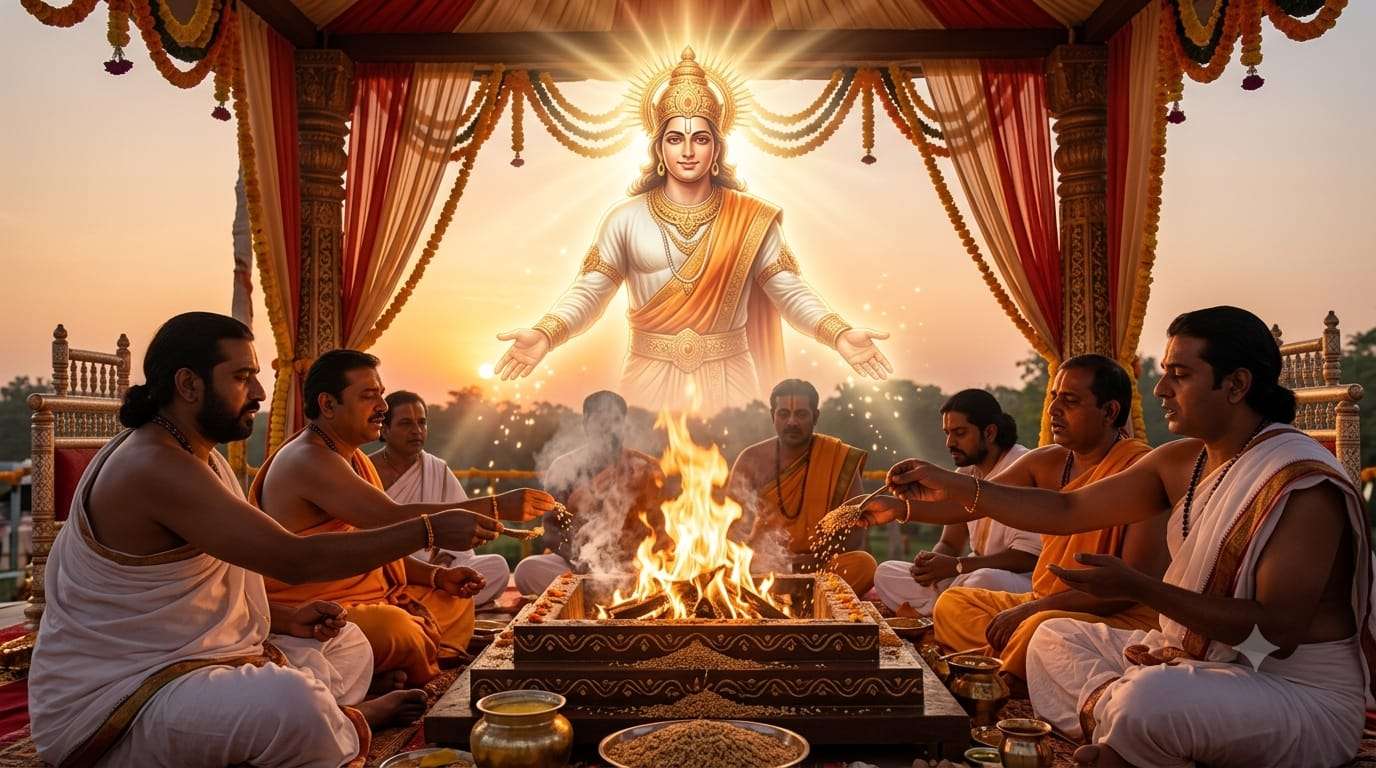
The Vedic seers perceived divinity not merely in distant heavens but in the luminous capacities of awakened human beings. Among the most striking illustrations of this spiritual vision is the praise of the Ribhus (also called Rubhavas), exalted in the hymns of the Rigveda. Sage Medhatithi, in a spirit of profound reverence, places these artisans on par with the gods themselves. This is no small elevation; it is a theological declaration that skill, discipline, and righteous action can raise mortals to immortality.
The Ribhus: From Mortality to Divinity
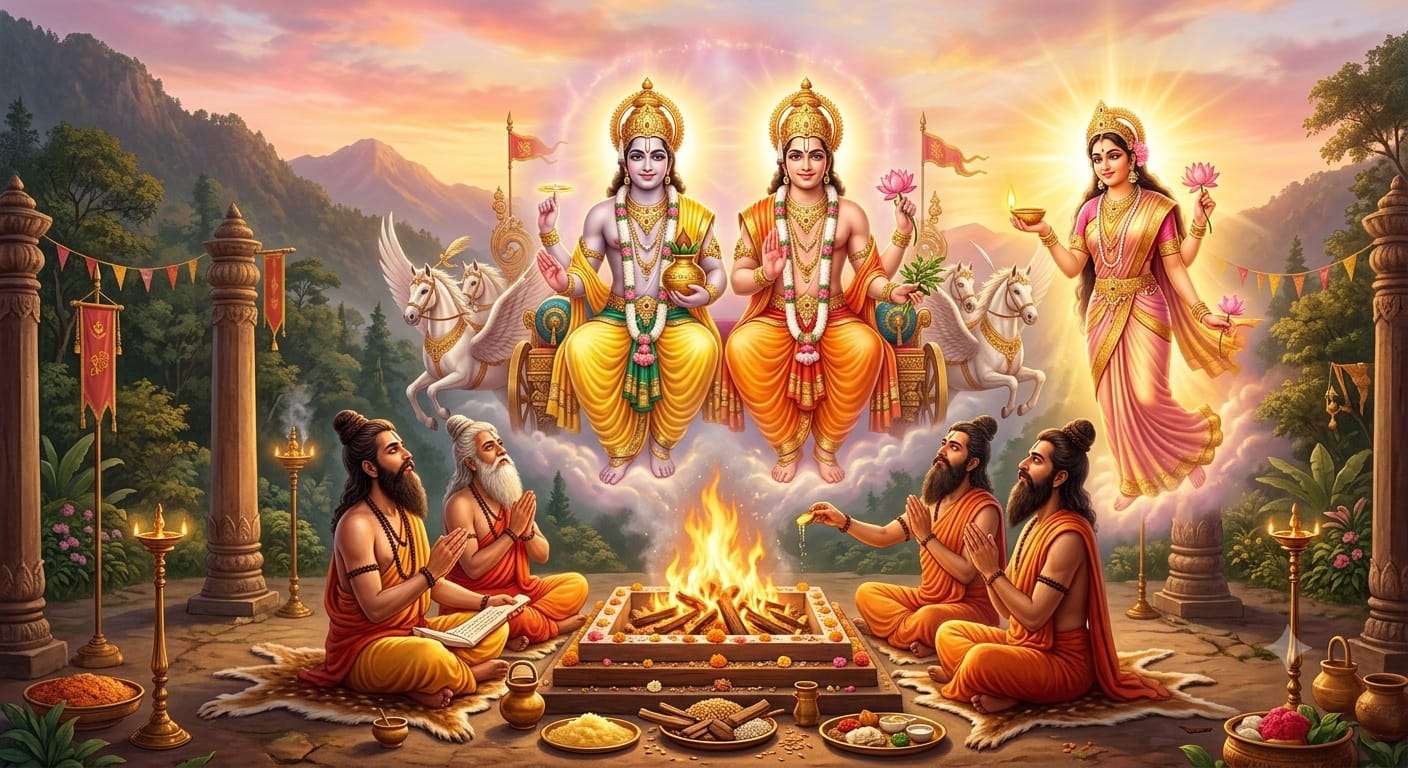
The Ribhus—named Ribhu, Vibhva (Vibhu), and Vaja—were sons of Sudhanvan of the lineage of the sage Angiras. Though born human, their excellence in craftsmanship, integrity, and contemplative service elevated them to celestial rank. The Veda boldly proclaims that through virtuous deeds and unwavering dedication, they earned an equal share of oblations alongside the gods. This transformation is one of the earliest affirmations of spiritual meritocracy in sacred literature.
Their feats are described with symbolic grandeur. They fashioned the steeds of Indra, the radiant Hari horses that move at the speed of thought and draw his chariot across cosmic realms. They prepared the wondrous chariot of the Ashvins, capable of traversing heaven, earth, and the intermediate regions. They arranged the divine cow, emblem of nourishment and abundance, symbolizing the ordering of natural prosperity for the benefit of all beings.
Most celebrated among their works is their transformation of the single sacrificial vessel crafted by Tvashtar into four identical cups. This act, described in the Rigveda, signifies the multiplication of resources through insight and dexterity. It is not merely an artisan’s trick; it is an allegory of spiritual expansion—how unity, when rightly understood, manifests as manifold blessing without losing its essence.
Craftsmanship as Sacred Contemplation
The Ribhus did not act from vanity or ambition. The hymns describe them as guileless, straightforward, and contemplative in yajña-related services. Their work was worship; their skill was meditation in action. In Vedic thought, yajna (sacrifice) is not restricted to ritual fire offerings but denotes harmonious participation in cosmic order (ṛta). The Ribhus’ craftsmanship aligned with this order, and thus their labour became sacred.
One hymn recount how they restored their aged parents to youth. This symbolic renewal suggests the rejuvenation of tradition through innovation—honouring ancestry while infusing it with new vitality. It also reflects the regenerative power of disciplined knowledge, capable of reversing decay both materially and spiritually.
Through their mastery of incantations and inner strength, they accessed what later traditions might call “sleight of the hand,” yet the Veda attributes their power not to deception but to purified intelligence. Their ingenuity was illumined by mantra; their hands moved with the precision of sacred sound.
Soma, Immortality, and Divine Fellowship
Central to the Vedic sacrificial vision is the Soma elixir, offered to gods such as Indra, the Maruts, the Aditya’s, and others. Soma symbolizes ecstasy, immortality, and the distilled essence of spiritual striving. The Ribhus, through their virtue, became worthy to partake in this divine delight.
When the sacrifice invites Indra and Agni to drink the prepared Soma, it is not a mere ritual formality. Agni represents the sacrificial fire and the mediating principle between heaven and earth; Indra embodies courage and victorious intelligence. Together they signify illumination and strength—necessary forces to dispel darkness and inertia.
The invocation in Gayatri metre and the singing of hymns from the Samaveda elevate the atmosphere of yajna into musical devotion. The Gayatri Chanda’s, revered for its rhythmic and spiritual potency, harmonizes speech, breath, and consciousness. Thus, the ritual becomes a symphony of sound, intention, and cosmic alignment.
Human Aspiration and Celestial Attainment
The Veda narrates that just as the Ribhus ascended through excellence, so too did Kakshivant and other sages join the ranks of the gods. This reveals a profound spiritual anthropology: humanity is not a fixed condition but a stage in an upward journey.
The Ribhus even excelled Tvashtar, the celestial sculptor. Symbolically, this teaches that divine potential lies latent in humanity. When awakened by self-confidence, integrity, and persistent effort, it surpasses inherited limitation. The message is revolutionary—mortals, through right action (karma), disciplined thought (manas), and sacred utterance (mantra), can transcend their condition.
The Spiritual Significance
The narrative of the Ribhus is not merely mythic history; it is a spiritual blueprint. It affirms:
- Dignity of Labor: Craftsmanship performed with devotion becomes divine service.
- Power of Mantra: True strength arises from alignment of speech and intention.
- Moral Integrity: Guilelessness and straightforwardness are prerequisites for elevation.
- Transformative Action: Even mortality can be transcended through virtuous deeds.
- Universal Accessibility: Celestial status is not confined to birth but is earned through merit.
When the sacrificer humbly invites Indra and Agni, seeking prosperity, protection, and removal of darkness, he echoes the universal human prayer for enlightenment and strength. The demons to be rendered bereft of progeny symbolize destructive tendencies within the psyche—ignorance, inertia, and hostility. Their defeat marks the triumph of luminous consciousness.
In honoring the Ribhus, the Veda proclaims an eternal truth: divinity is not distant but attainable. Through disciplined skill, moral rectitude, contemplative action, and inspired praise, human beings may rise to luminous heights. The artisans who once shaped chariots and vessels now stand as archetypes of spiritual craftsmanship—architects not only of earth, water, and sky routes, but of the ascent from mortality to immortality.
Thus, the hymns resound across ages, reminding us that honest activity, self-confidence, and devotion transform the ordinary into the divine, and that the fire of Agni and the thunder of Indra awaken truth in the shining realms of awakened humanity.