
In the sacred dawn of Vedic revelation, when the hymns of the seers rose like luminous flames toward the infinite, the figure of Indra stood resplendent as the sovereign of strength, rain, and awakened consciousness. The prayers you have composed echo the spirit of the ancient Ṛṣis, who invoked Indra not merely as a celestial warrior but as the dynamic force that nourishes life, protects righteousness, and empowers human aspiration.
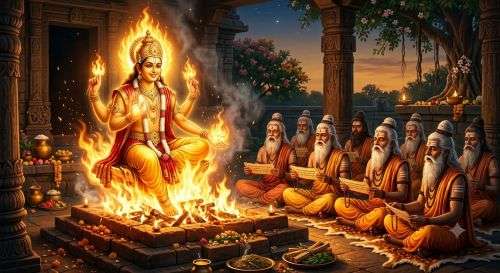
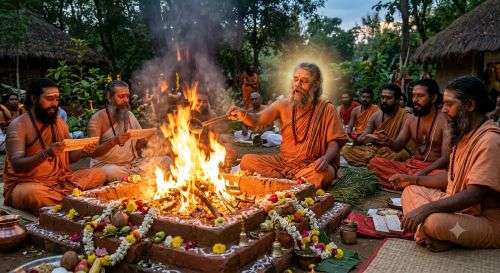
The Soma elixir—pressed, purified, and consecrated—stands at the heart of this invocation. In the sacrificial arena, the sacred yajna unfolds under the guidance of the priests of the Rigveda and the Samaveda. The Hotṛ chants the ṛks, the Udgātṛ sings the sāman melodies, and the Brahma oversees the rite in silent mastery. The Soma, drawn from the mysterious creeper of mountain forests, is filtered through wool, collected in shining vessels, and offered with mantras that resound like thunder across the subtle worlds.
To Indra, the lover of Soma, this offering is both nourishment and invocation. Soma is not merely a plant juice; it is the essence of inspiration, the elixir of immortality, the distilled light of consciousness. When Indra drinks Soma, he becomes unconquerable; when the aspirant partakes of Soma’s symbolism, he becomes inwardly illumined. Thus, the prayer “Come, O Indra, consume the Soma and become strong” signifies not a physical act alone, but the awakening of divine power within the cosmos and within the seeker.
Indra is celebrated as the breaker of mountains, the releaser of the cow-herds, and the slayer of obstructing forces. These are not merely mythic images. The mountains represent hardened ignorance; the cows signify rays of knowledge; the demons symbolize inertia and falsehood. In the Vedic vision, Indra’s thunderbolt shatters the cloud of obstruction and releases the rain of grace. Therefore, he is invoked as the giver of rain—rain that nourishes fields, sustains cattle, and ensures the prosperity of patrons who perform sacrifice with faith.
The Maruts, his radiant companions, move like storm-winds around him. His steeds, called Hari, swift and luminous, draw his chariot across heaven and earth. When the priests invite him to harness these steeds and journey toward their altar, they are summoning divine attention to human aspiration. “Hear our call,” they pray, “though you dwell among celestial friends.” In this plea is the humility of the devotee who seeks divine regard amidst cosmic vastness.
Indra is praised as the Lord of riches—the guardian of the divine treasury. Wealth in the Vedic sense is manifold: cattle, grain, rain, progeny, strength, longevity, fame, and above all, noble qualities. Thus, when the hymn asks for imperishable cow-herds and perfect health, it seeks both material stability and inner abundance. The riches granted by Indra are described as natural and growth-oriented, signifying prosperity that arises in harmony with ṛta—the cosmic order.
The repeated mention of a hundred yajñas recalls Indra’s epithet as the performer and patron of great sacrifices. The number one hundred symbolizes completeness and excellence. It also foreshadows the legend of King Kuśika. In ancient lore, Kuśika performed severe penance, desiring a son equal to Indra in might and brilliance. His austerity bore fruit in the birth of Viśvāmitra, who through tapas and wisdom rose to the stature of a Brahmarṣi, rivaling even Indra in spiritual splendor. Because of this association, Indra is sometimes linked with the Kuśika lineage. The hidden cow, whose invisible udder was milked and whose riches were brought to light, symbolizes concealed wisdom revealed through perseverance.
The narrative thus unites agriculture, sacrifice, and spirituality. The plougher of the field mirrors the plougher of consciousness. Rain from heaven corresponds to inspiration from the divine. Soma pressed in vessels corresponds to insight pressed from disciplined life. In calling Indra “Kauśika,” the hymn subtly affirms that divine power flows through lineage, effort, and realization.
Moreover, Indra’s role in battle signifies the eternal struggle within the human heart. He hears the call from the battlefield—not only the clash of arms, but the conflict between clarity and confusion, courage and fear. When invoked sincerely, he protects the gains already made and strengthens the seeker to overcome inner adversaries.
Thus, the hymn becomes more than a petition; it becomes a transformation. “Transform me into a sage useful to the cosmos,” you pray. This aspiration reflects the highest Vedic ideal: not mere acquisition of wealth, but participation in cosmic harmony. The Soma offered outwardly must be mirrored by purity inwardly; the rain requested from heaven must become compassion flowing from the heart.
In conclusion, this invocation portrays Indra as the dynamic bridge between earth and heaven, effort and grace, sacrifice and reward. Through Soma, yajña, mantra, and steadfast faith, the devotee aligns with cosmic forces. Rain descends, cows multiply, health endures, wisdom dawns, and the human being rises from petitioner to participant in divine order. Such is the profound spiritual significance of Indra—the thunder-wielding guardian of prosperity, the revealer of hidden light, and the eternal friend of those who call upon him with sincerity and strength.