



In the earliest dawn of Indian thought, the hymns of the Rigveda resound with a profound vision of cosmic harmony and ethical living. The sage-scholar Yaska, in his Nirukta, and the illustrious commentator Sāyaṇa carefully attached specific deities to each sūkta, not to multiply divinity, but to illuminate the manifold functions of the One Supreme Reality reflected through diverse cosmic powers. Their interpretative labor reveals that the Vedic seers perceived the universe not as a chaos of competing gods, but as an ordered expression of one universal authority manifesting through many names and forms.
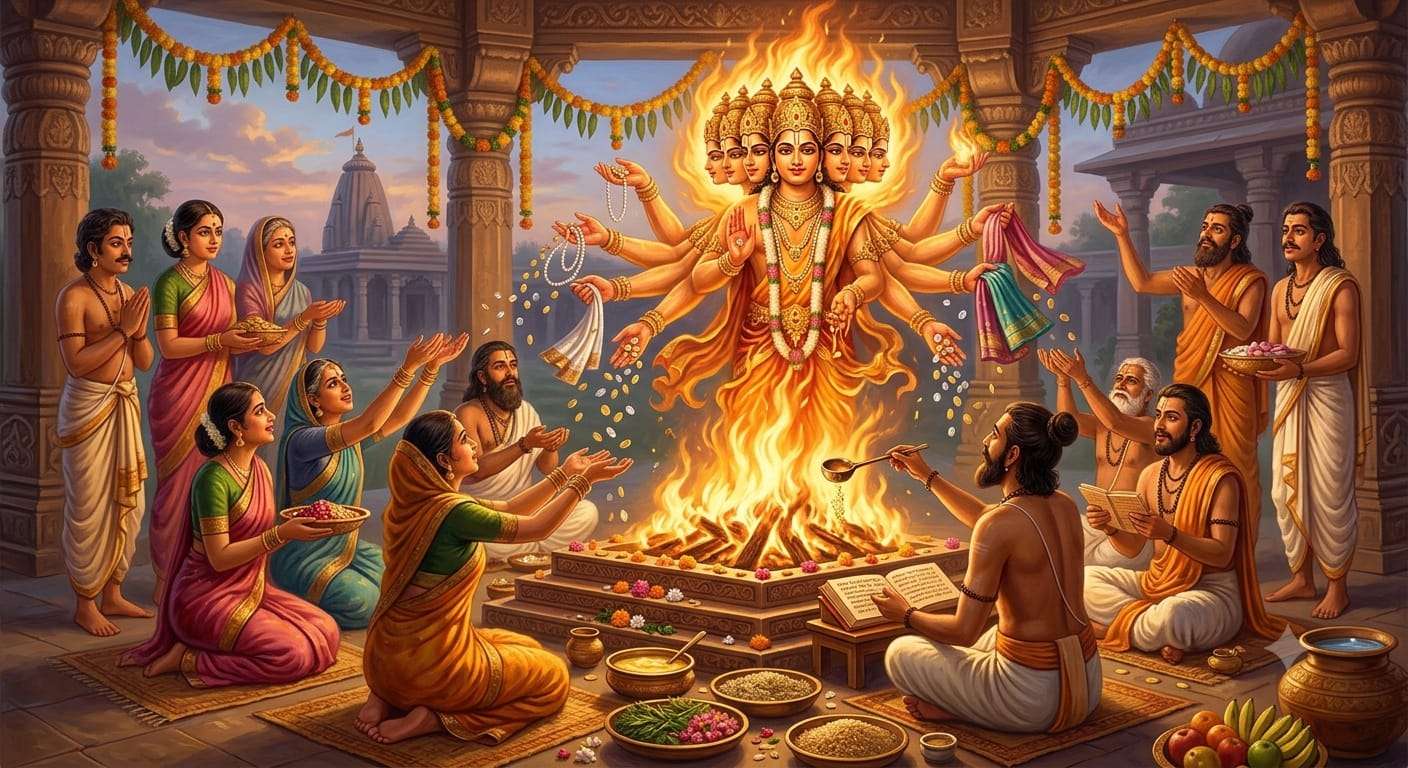
The Vedic gods are described as magnificent and eternal in spirit—immortal not in corporeal form, but in essence. They are called amṛta, the nectar of kindness and beneficence. Their immortality signifies their participation in the eternal law (ṛta), the cosmic order that sustains existence. In ordinary language, they are forces of welfare, guardians of harmony, and embodiments of moral and natural principles.
The Vedic tradition enumerates thirty-three principal deities: the eight Vasus, eleven Rudras, twelve Ādityas, along with Prajāpati and the Earth. The eight Vasus represent elemental and luminous principles that sustain physical existence. The eleven Rudras symbolize vital forces and transformative energies, often associated with life-breath and dissolution. The twelve Ādityas embody the solar principles governing time and moral order. Prajāpati stands as the creative principle, while Earth herself is revered as the nurturing mother. These thirty-three are neither higher nor lower in rivalry; each performs a specific function within the cosmic organism. None is superior in ego; all are subordinate to the Supreme Cause.
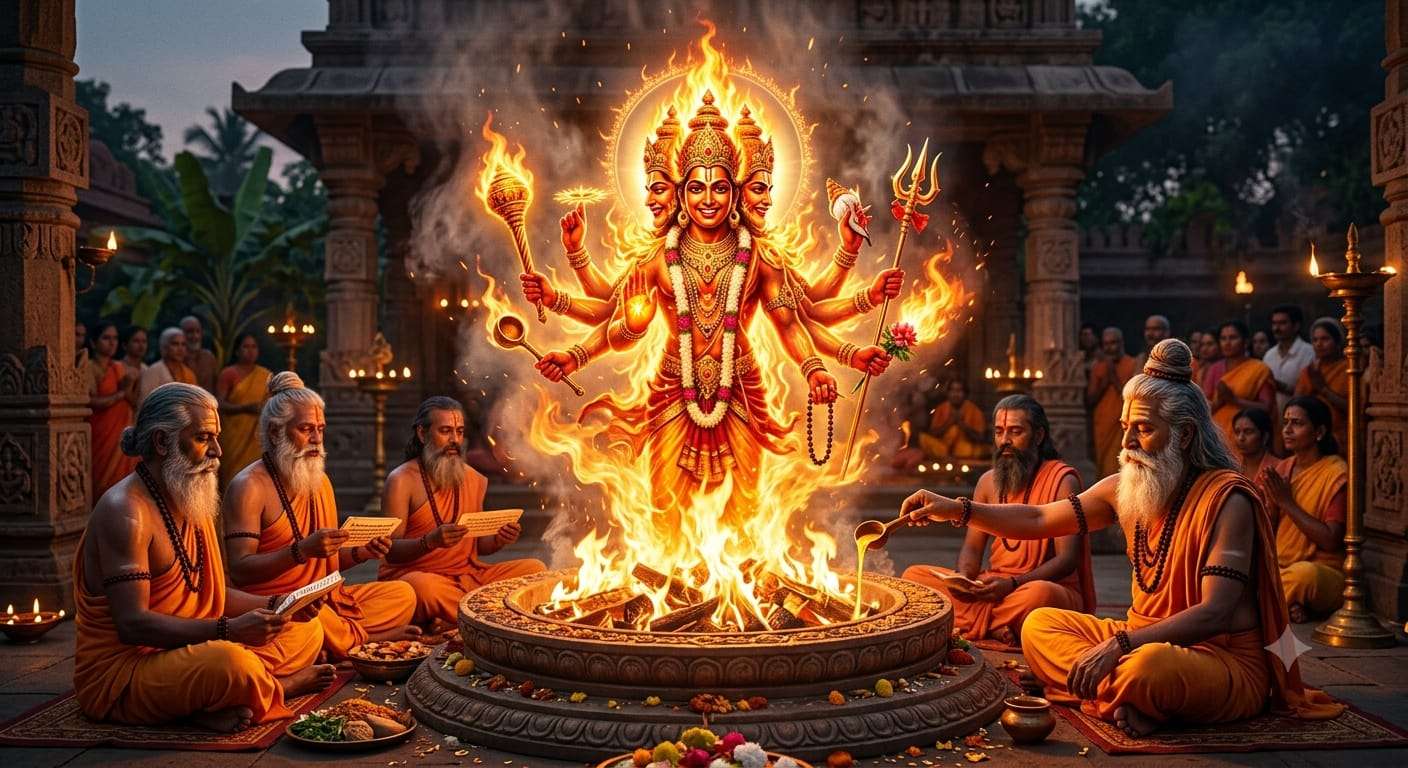
The very meaning of “deva” (god) in Vedic understanding is “that which shines” or “that which bestows good.” A deity is therefore not merely an anthropomorphic being but a luminous force working for the welfare of humanity. Earth, sky, sun, moon, fire, and wind are not inert matter; they are living presences supporting life. The hymns to Agni praise fire as the mediator between human aspiration and divine grace. The hymns to Indra celebrate courage and the triumph of order over chaos. The Ashvins are invoked as healers who rescue and restore. Even the Ribhus are said to have attained divine status through the strength of their merits and creative skill—demonstrating that divinity may be realized through righteous action.
The Veda proclaims a profound moral principle: cause and effect govern the destiny of beings. Righteous action yields beneficent results; unrighteous action brings suffering. This doctrine of moral causation precedes later philosophical elaborations and stands as a foundation of ethical responsibility. Though the Creator, Sustainer, and Redeemer cannot be perceived directly by the senses, the deities presiding over specific rituals are invoked as channels through which desired results are attained. Yet beneath ritual plurality, the spirit of the Veda directs all worship toward one universal authority. “Truth is one; sages call it by various names” — this celebrated declaration affirms unity within diversity.
The society reflected in the Rigvedic hymns appears pure, self-supporting, and harmonious. Agriculture, cattle wealth, and dwelling houses constitute prosperity. Wealth is not hoarded luxury but the means of sustenance and generosity. The land is tilled with reverence; cows are cherished as symbols of nourishment and abundance. The five elements—earth, water, fire, air, and space—are invoked as sustaining forces, forming a dynamic balance essential for survival.
The Rigvedic community is depicted as governed by stable administration and guided by wise counsel. Assemblies and gatherings (sabha and samiti) reveal participatory governance. Leadership is not tyranny but stewardship aligned with ṛta, the cosmic law. Social relationships are strengthened by affection, mutual assistance, and reverence for elders. The joint family system flourishes with cooperation and shared responsibility. Hospitality to guests is sacred; generosity to the needy is praised; truthfulness is extolled as the highest virtue.
One hymn prays, “May we move together, speak together, and let our minds be united.” This aspiration reflects the Vedic ideal of collective harmony. The seers envision a society in which none is deprived of dignity or honorable independence. Peace is not mere absence of conflict but the fruit of moral order and mutual respect. The entire world is wished to become a noble dwelling—where humanity thrives in justice, prosperity, and spiritual awareness.
Thus, Vedic culture stands as an immeasurable treasure of the human world. It unites cosmology with ethics, ritual with responsibility, and diversity with unity. The beauty of the Rigvedic vision lies in its universality: all beings are sustained by one supreme order; all actions bear consequence; all life deserves dignity. In this ancient yet ever-relevant wisdom, humanity is invited to cultivate harmony within, society without, and reverence toward the cosmos—so that the world may indeed become a peaceful and dignified abode for all.


I respond to some students who
really need me Shanker …my morning hours usually go for these , before i start daily routine. I have just read “ infinite flow..simplified and suitable for the present day thought nourishment. Very well written.
Shanker these writings of infinity flow are academically suitable for students appearing for UPSC competitive exams like civil services. Students who have chosen Cultural Anthropology, Sociology and History as their main papers will find these articles as value addition to their gamut of knowledge.