



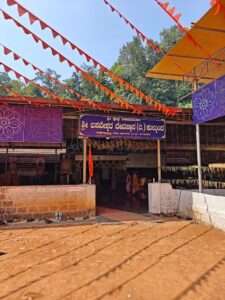
Shree Basaveshwara Temple is located at Basavanamoola, Kulkunda Post, Kadaba Taluk in the Dakshina Kannada district of Karnataka. The temple is situated about 3 km from Kukke Subramanya and is surrounded by dense forests, hills, and a calm natural environment. This peaceful setting enhances the spiritual experience of devotees visiting the temple.
The temple is believed to be around 800 years old, with its origins tracing back to the Hoysala period. It later received patronage from the Keladi Nayaka dynasty, which reflects its long historical and religious significance in the region.
The presiding deity of the temple is Lord Basaveshwara (Nandi) in a rare and unique form. A Shivalinga is present on the forehead of Nandi, and it is believed that Lord Shiva resides within the head of Nandi itself. Unlike most Shiva temples where Nandi is placed outside facing the sanctum, here Nandi is worshipped as the main deity inside the Garbhagudi. Devotees believe that sincere prayers offered here lead to the fulfilment of wishes and the removal of obstacles.
The temple follows traditional South Indian architectural style, simple in structure yet spiritually powerful. The sanctum houses the rare idol of Nandi with a Shivalinga on its forehead, which is considered one of the most unique representations in Hindu temples. The temple परिसर is surrounded by greenery, hills, and a tranquil atmosphere, making it ideal for meditation and devotion. Renovation works carried out in later years followed traditional Ashtamangala principles, preserving the sanctity and authenticity of the temple.
Historically, the temple dates back to the Hoysala dynasty around 800 years ago. Later, the region came under the rule of the Keladi Nayakas, including prominent rulers like Shivappa Nayaka and Queen Chennamma, who contributed to temple development and support. Over time, the region was affected by a severe smallpox epidemic, which led to the abandonment of the temple and surrounding settlements. The temple remained neglected for a long period until devotees rediscovered the deity in a forested area. Following this, worship was gradually revived, and the temple was reconstructed with proper rituals and guidance from scholars, restoring its spiritual prominence.
The Sthalapurana of Basavanamoola is closely associated with the Skanda Purana and the legend of the demon Tarakasura. Tarakasura performed intense penance and received a boon from Lord Brahma that made him nearly impossible to kill, as he would regain life even if destroyed. His growing power created fear among the Devas and disturbed the cosmic balance.
To defeat him, Lord Subramanya (Kartikeya) undertook deep penance, seeking guidance from Lord Shiva. Pleased with his devotion, Lord Shiva appeared in the form of Nandi (Basava) and imparted a powerful divine knowledge known as Nandi Vidya. This sacred knowledge contained the secret to destroying Tarakasura and restoring dharma.
Using this divine wisdom, Lord Subramanya was able to defeat and destroy Tarakasura. It is believed that after his destruction, parts of the demon’s body fell in two sacred places—Basavanamoola in Karnataka and Palani in Tamil Nadu. Basavanamoola became especially sacred because Lord Shiva manifested here in the form of Nandi, making it a powerful spiritual center.
The name “Basavanamoola” itself signifies the origin (Moola) of Basava (Nandi). After the destruction of Tarakasura, sages advised that the land be purified through Go Puja (cow worship) and by conducting cattle fairs as a form of atonement. These practices have continued over generations and remain an important tradition of the temple.
It is also believed that visiting Kukke Subramanya first and then Basavanamoola completes the spiritual journey and grants full blessings. Devotees consider this temple a place for the removal of sins, karmic cleansing, and fulfilment of desires, making it a powerful Prayaschitta Sthala.
The temple celebrates several important festivals with devotion and traditional rituals. Kartika Pournami is the most significant festival, during which a grand cattle fair and Go Puja are conducted. Champa Shasthi is observed with rituals connected to Lord Subramanya. The Annual Jatra Utsav is celebrated with great enthusiasm and attracts many devotees. Vasanta Pooja marks the arrival of spring with special prayers. Pallakki Utsava involves the ceremonial procession of the deity, while Ranga Pooja is offered as a devotional performance. Sarva Seva and Anna Dana are also conducted, where full-day poojas are performed and food is distributed to devotees.


