Upadhyayula Lakshan Rao
In the sacred hymns of the Rigveda, the sage Gautama, son of Rahugana, raises a profound and many-layered prayer to the Maruts, the radiant storm deities, in the majestic metres of Trishtubh and Jagati. His invocation is not merely a call to celestial beings, but a contemplative unfolding of cosmic principles, where natural forces and spiritual insight converge. The Maruts are envisioned as all-pervading, subtle yet powerful presences, embodiments of movement, vitality, and divine will, acting across the vast expanse of heaven and earth.
The Maruts, celebrated as the resplendent sons of Rudra, are described as pure in intent and fierce in action. Their adornment, likened poetically to women preparing for a sacred journey, reflects both beauty and readiness, a harmony of grace and strength. They expand and energize both the terrestrial and celestial realms, dispelling foes and overcoming even the mightiest of adversaries. In sacred rituals, they partake of Soma, the elixir of inspiration, symbolizing their participation in the cycle of cosmic renewal and divine communion.
These luminous beings are not merely warriors but discerning intelligences. They observe, analyze, and act with precision, guided by an innate awareness of cosmic order. The gods themselves anoint and honor them, recognizing their role as agents of transformation. Dwelling within the vastness of space, they attain reverence and glory, while offering worship to Indra, thereby strengthening the divine hierarchy. Their association with the Earth as mother, envisioned as a nourishing cow, underscores their role in sustaining life and prosperity.
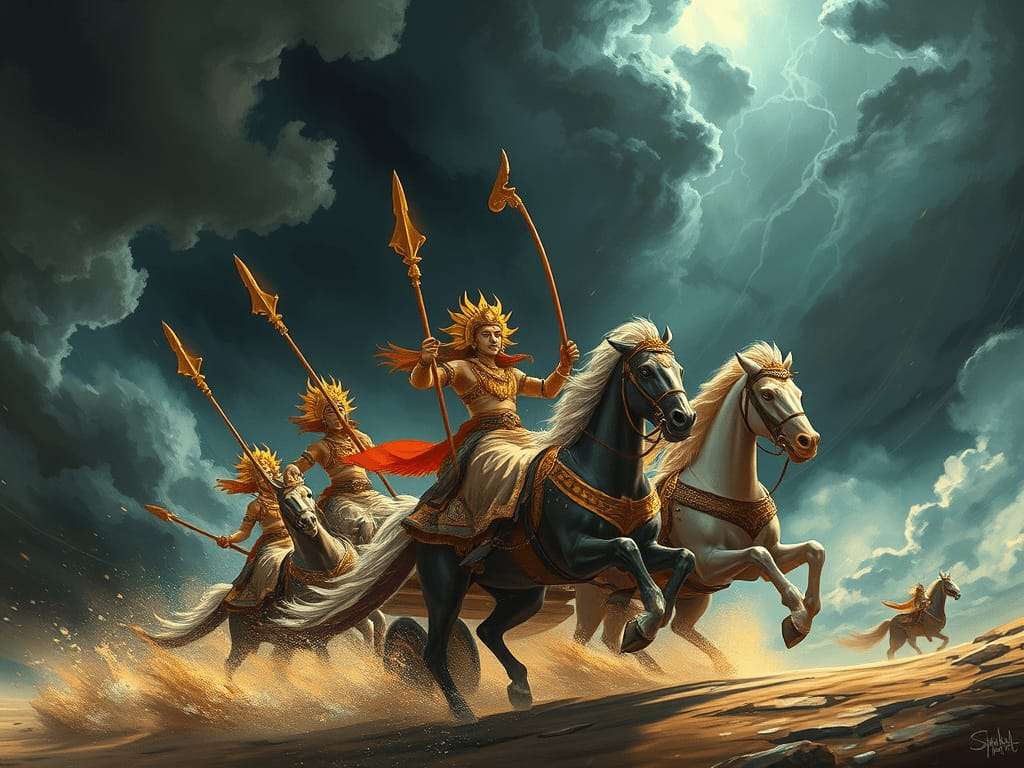
Adorned with brilliant ornaments and bearing radiant weapons, the Maruts shine with an irresistible splendor. They are swift as thought, their movements likened to the speed of the mind itself. Their chariots, yoked with graceful does, traverse the skies with such force that even the firmest structures tremble. Like the sun blazing across the heavens, they illuminate the firmament, gathering clouds and releasing rains that nourish the earth. These rains descend gently yet abundantly, like water sprinkled upon the skin, sustaining crops, life, and the rhythms of nature.
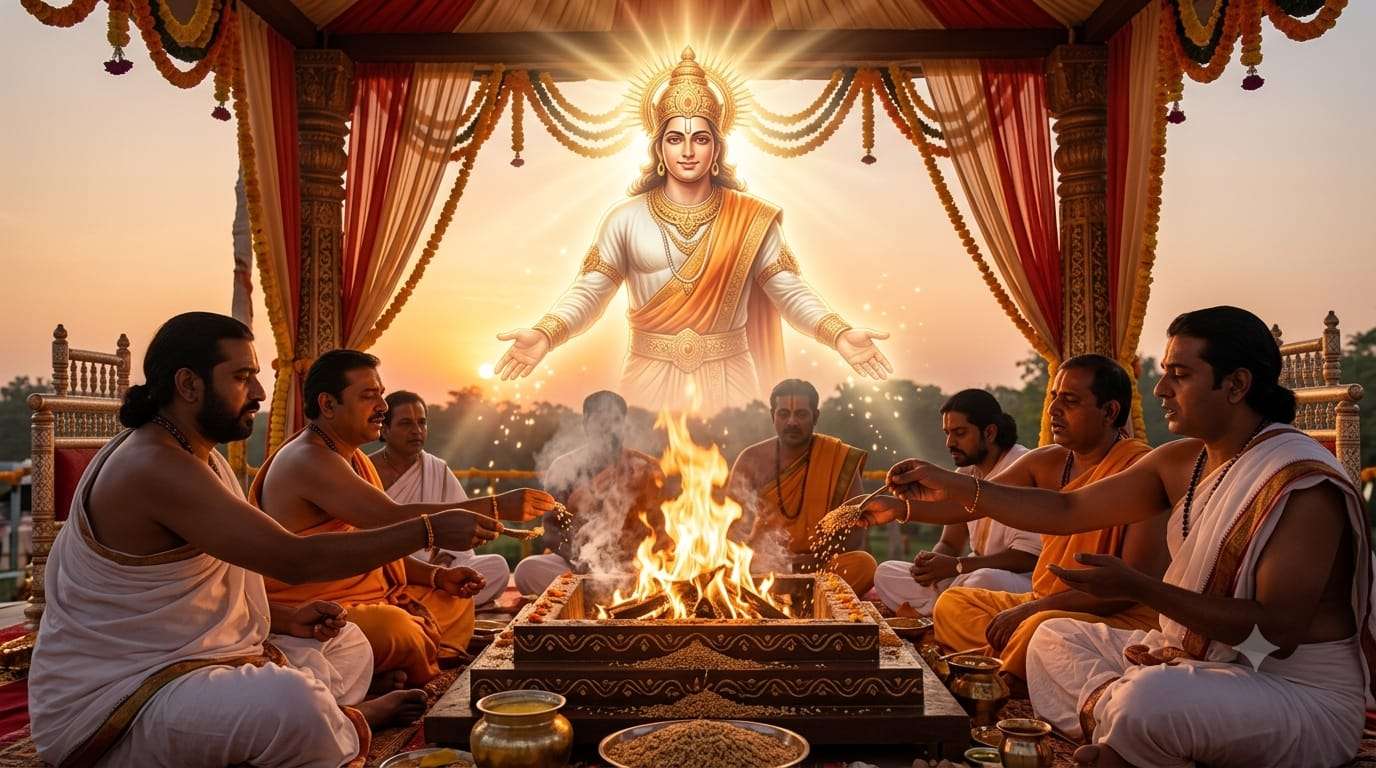
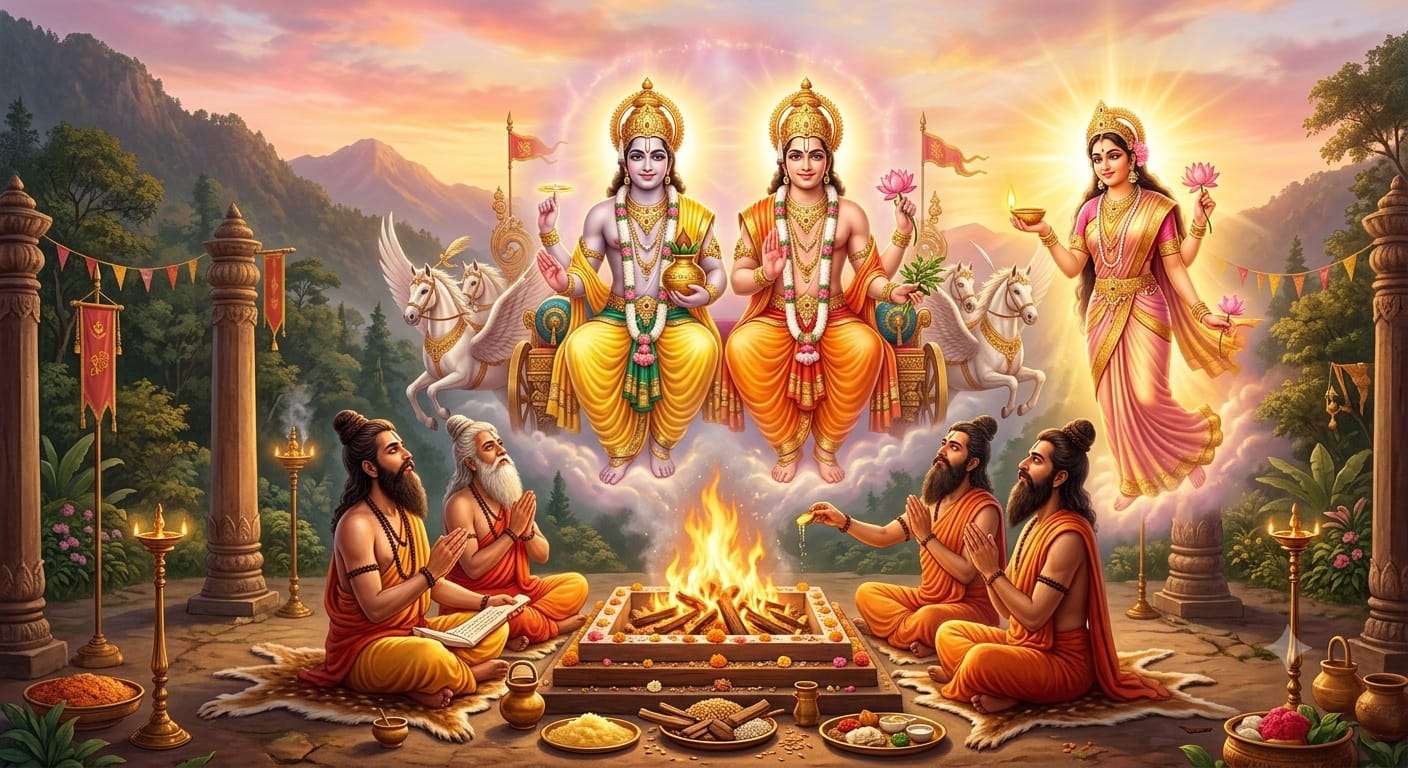
In the sacred setting of the yajna, the devotee prepares the holy ground, spreading the sacred grass and offering Soma for their delight. The Maruts are invited to partake, to sit, and to bless the ritual with their presence. They arrive bearing wealth and abundance, self-empowered and radiant with earned glory. Having reached the heights of heaven, they expand its bounds, symbolizing the ever-growing horizon of consciousness. Vishnu is invoked as their protector, the one who releases the cosmic waters and infuses existence with spiritual purpose and expansive energy.
The Maruts move like swift birds, assembling at the sacred altar, yet in battle they resemble disciplined warriors, advancing with precision and intensity. Their brilliance is kingly, and before their force, all elements tremble. The divine craftsman Tvastar is remembered for forging the thunderbolt, the Vajra, and bestowing it upon Indra. With this weapon, Indra vanquished the serpent Vritra, releasing the imprisoned waters. The Maruts, in harmony with this act, aided in lifting and channeling these waters, even breaking through mountains that obstructed their flow, revealing their role as liberators of hidden resources.
A striking episode in the hymn recounts how the Maruts, in response to the sage Gautama’s thirst, lifted an entire well and brought it to him. When a mountain blocked their path, they shattered the obstruction and delivered the life-giving water, quenching the sage’s thirst. This act transcends mere miracle; it symbolizes the uncovering of latent resources through effort, insight, and divine alignment. The well represents hidden knowledge or potential, the mountain the barriers of ignorance or limitation, and the Maruts the dynamic forces that enable breakthrough and revelation.
In a broader reflection, this narrative resonates with a scientific temperament embedded within Vedic thought. The Maruts personify natural forces—wind, storms, and atmospheric dynamics—yet they also serve as metaphors for intellectual vigor, innovation, and collective effort. Their actions mirror the processes of discovery, where obstacles are analyzed and overcome, and where hidden potentials are brought forth for the welfare of all. The breaking of the mountain to release water parallels humanity’s endeavor to harness nature responsibly, to explore, and to sustain.
Thus, the hymn becomes a bridge between spirituality and inquiry. It calls upon humanity to align with cosmic rhythms, to respect and conserve nature, and to pursue knowledge with humility and purpose. The Maruts inspire a unity between human aspiration and universal order, guiding seekers to navigate the vast, often incomprehensible, forces of existence. Through their example, the seers chart new paths of thought, blending devotion with discernment, and opening avenues into realms yet unexplored, where the human spirit moves in harmony with the infinite.