

The defeat of the Women’s Reservation Bill in the Lok Sabha on Friday was not merely a legislative setback—it was a revealing moment of political priorities, contradictions, and calculated posturing. When a Constitution Amendment Bill aimed at ensuring greater representation for nearly half of India’s population fails to secure the mandated two-thirds majority, it exposes not just a numbers game, but a deeper unwillingness to rise above partisan compulsions. The final tally—298 in favour and 230 against—tells a story far more complex than a simple win or loss. Despite a clear majority backing the bill, it fell short of the constitutional threshold required for such transformative legislation. This is the paradox of parliamentary democracy: even when the “ayes” have it in spirit, the arithmetic can still deny history its moment. The government, led by Prime Minister Narendra Modi, cannot claim to have been blindsided. It entered the debate aware of its numerical limitations, yet chose to push forward—perhaps hoping that political pressure, public sentiment, and moral accountability would compel sections of the Opposition to reconsider. That gamble did not pay off. Union Home Minister Amit Shah, in his closing remarks before the vote, delivered a forceful rebuttal to the Opposition’s resistance. He framed the bill not merely as a policy initiative, but as part of a broader ideological battle—one in which, he argued, progressive reforms have often been obstructed for political expediency. Drawing parallels with past flashpoints—from the abrogation of Article 370 to the abolition of triple talaq—he accused Opposition parties of consistently standing on the wrong side of transformative change. The rhetoric was sharp, the intent clear: to turn the defeat into a political indictment of the Opposition. And yet, beneath the fiery exchanges lies a more uncomfortable truth. If the government was convinced of the bill’s moral urgency, why was there no prior consensus-building effort robust enough to bridge the numbers gap? Constitutional amendments are not ordinary legislation; they demand negotiation, accommodation, and political craftsmanship beyond rhetorical appeals.
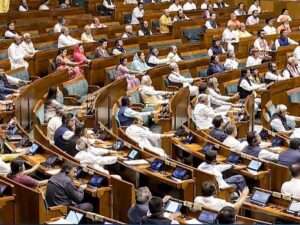
Speaker Om Birla’s formal announcement that the bill had failed to secure the required majority brought the curtains down on what could have been a landmark moment. Soon after, Parliamentary Affairs Minister Kirren Rijiju stated that the government would not proceed with the other two linked bills—on delimitation and Union Territories—effectively acknowledging that the legislative package had collapsed with the defeat of its central pillar. The Opposition, for its part, has offered a range of justifications—procedural concerns, timing issues, and alleged political motivations behind the bill’s introduction. But these arguments are unlikely to resonate beyond the walls of Parliament. To the average citizen, especially women voters, the optics are stark: a bill promising enhanced political representation has been voted down. This is where the political consequences begin to take shape. With crucial state elections underway in regions like Tamil Nadu and West Bengal, the fallout of this vote could extend well beyond parliamentary debate. The government has already signalled its intent to take the issue directly to the electorate, framing the Opposition as obstructing women’s empowerment. Whether that narrative holds, however, will depend on how effectively the Opposition counters it—and whether it can convincingly articulate an alternative vision. There is also a larger institutional question at play. The repeated failure of successive governments over decades to pass a Women’s Reservation Bill points to a systemic inability to build durable consensus on gender representation. This is not the first time such a bill has faltered, and unless political actors fundamentally rethink their approach, it may not be the last. In the end, Friday’s proceedings were less about a single bill and more about the state of India’s legislative politics. High-decibel debates, sharp accusations, and ideological grandstanding made for compelling theatre—but they did little to deliver substantive change. The real verdict now shifts from the Lok Sabha to the people. And if there is one constituency that will be watching closely, it is the women of India—whose representation remains, once again, a promise deferred.