MS Shanker
The dramatic political developments in West Bengal have triggered intense constitutional debate across the country. Television studios are overflowing with legal experts discussing whether Chief Minister Mamata Banerjee could continue in office after refusing to resign, and what options remain before the Governor and the Union government. Yet, amid all the noise, many appear to have overlooked the political realism and constitutional strategy often associated with Prime Minister Narendra Modi and Union Home Minister Amit Shah.
For years, the opposition repeatedly accused the Centre of preparing grounds to invoke Article 356 of the Constitution — the controversial provision that empowers the Union government to impose President’s Rule in a state in the event of a “failure of constitutional machinery.” During several phases of political violence, post-poll clashes, and law-and-order controversies in West Bengal over the last decade and a half, demands were repeatedly raised for dismissal of the Trinamool Congress government. Reports from Governors, political petitions, and even public campaigns often invoked the phrase “constitutional breakdown.”
However, what is politically significant here is that the Modi government, despite being accused of centralising power, largely avoided taking the Article 356 route against the Bengal government. That restraint itself now appears to have become part of a larger political calculation.
Under the Indian Constitution, the Governor is not merely a ceremonial figurehead. Articles 153 to 162 define the constitutional framework of the Governor’s office. More importantly, under Article 174, the Governor possesses the authority to summon, prorogue, and dissolve the Legislative Assembly, acting broadly within constitutional conventions. Once the tenure of an Assembly expires or a constitutional situation emerges where governance cannot continue in accordance with democratic mandate, the Governor can act within the scope of constitutional propriety.
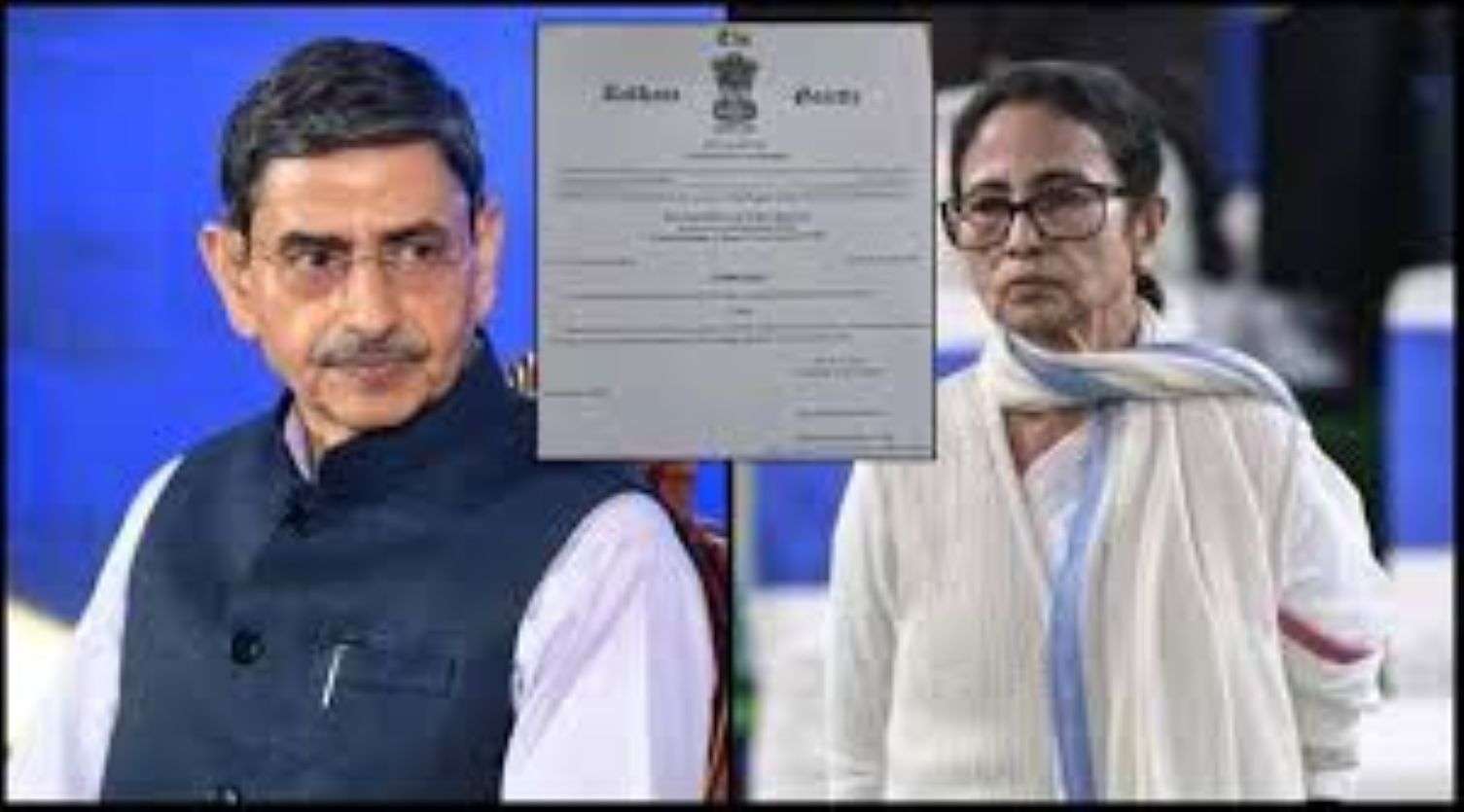
That is precisely why the reported decision of Governor N. Ravi to dissolve the Assembly assumes massive significance. The move fundamentally alters the political battlefield. The issue is no longer about whether Mamata Banerjee wishes to continue politically. The question now becomes whether she retains any constitutional legitimacy to do so.
Her refusal to resign may energise sections of her party cadre temporarily, but politically it risks creating the impression of defiance against democratic verdict rather than resistance for democratic principles. In parliamentary democracy, governments derive legitimacy from legislative majority and constitutional continuity — not emotional appeals or street mobilisation.
The Bharatiya Janata Party, having secured the people’s mandate, can now argue that the democratic process has spoken decisively. That narrative substantially weakens the Opposition’s ability to portray the Centre as authoritarian or anti-democratic. If the Assembly has been dissolved through a constitutional process rather than through abrupt invocation of Article 356, the BJP leadership gains both legal and political advantage.
This is where the political method of Modi and Amit Shah becomes evident. Their critics often accuse them of aggressive politics, but their supporters argue that they carefully operate within constitutional mechanisms while maximising political impact. Instead of risking national backlash through dismissal of an elected government under President’s Rule — something that would have instantly triggered allegations of “murder of democracy” — the route adopted appears institutionally cleaner and politically harder to challenge.
For Mamata Banerjee, therefore, the options appear rapidly shrinking. Continuing confrontation could expose her administration and party leadership to intensified legal, administrative, and political scrutiny. Graceful resignation may preserve some political dignity. Prolonged resistance, however, could further isolate her at a moment when public sentiment appears to have shifted decisively.
The larger message emerging from Bengal is equally important. In a democracy, political charisma can sustain governments for years, but eventually constitutional processes and electoral verdicts prevail. Street rhetoric cannot indefinitely override institutional reality.
West Bengal now stands at a turning point. The battle ahead will not merely be about one leader or one party. It will be about whether constitutional democracy ultimately rewards political entitlement or democratic accountability.