Upadhyayula Lakshman Rao
In the sacred cadence of the Trishtup metre, the sage Kutsa, son of Angirasa, raises a profound hymn to Indra, the luminous sovereign of the Vedic cosmos. The seers of old perceived Indra not merely as a deity of might, but as a dynamic principle manifest in the natural and spiritual order. His brilliance shines forth like the resplendent sun in the heavens and like the sacred fire upon the earth. These dual manifestations, like fluttering banners in the theatre of war, symbolize the union of celestial radiance and terrestrial शक्ति, revealing a harmony between the cosmic expanse and human experience.
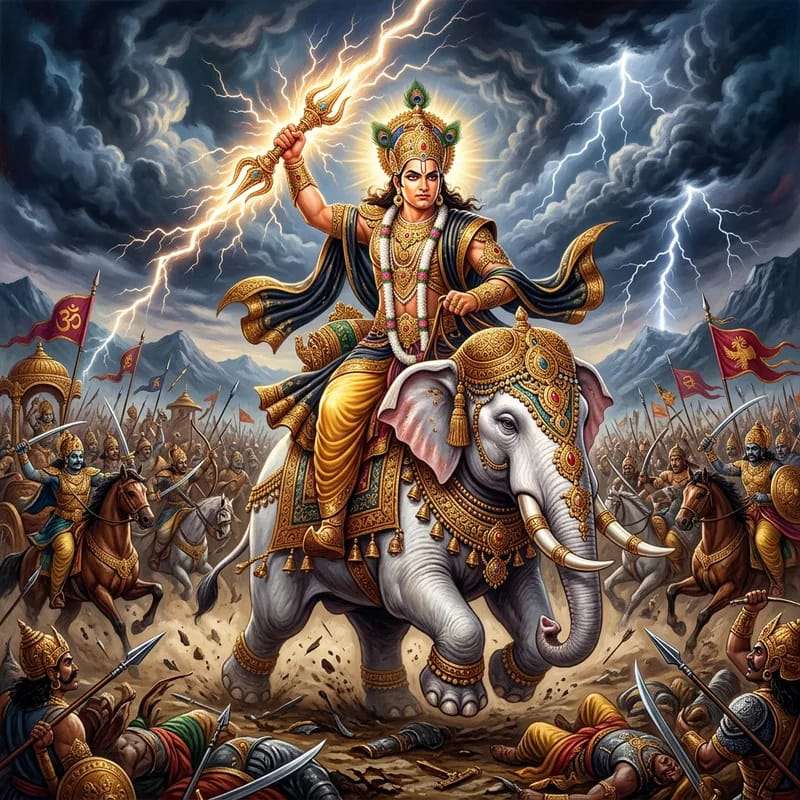
Indra, the sustainer of the earth, is extolled as the one who expanded its realms and upheld its stability. With the thunderbolt, the vajra, he shattered the dense clouds, releasing life-giving rains that nourish all beings. His heroic act of slaying the demon Vṛtra and severing its sinews signifies not merely a mythic battle, but the triumph of order over chaos, of मुक्त प्रवाह over obstruction. Likewise, his destruction of Rohina and other adversaries reflects the eternal struggle against forces that hinder the flow of life and truth. Thus, Indra emerges as the wielder of शक्ति who executes divine will through his inherent strength.
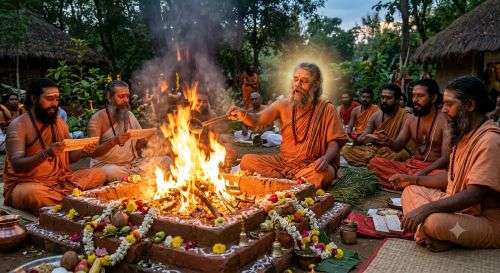
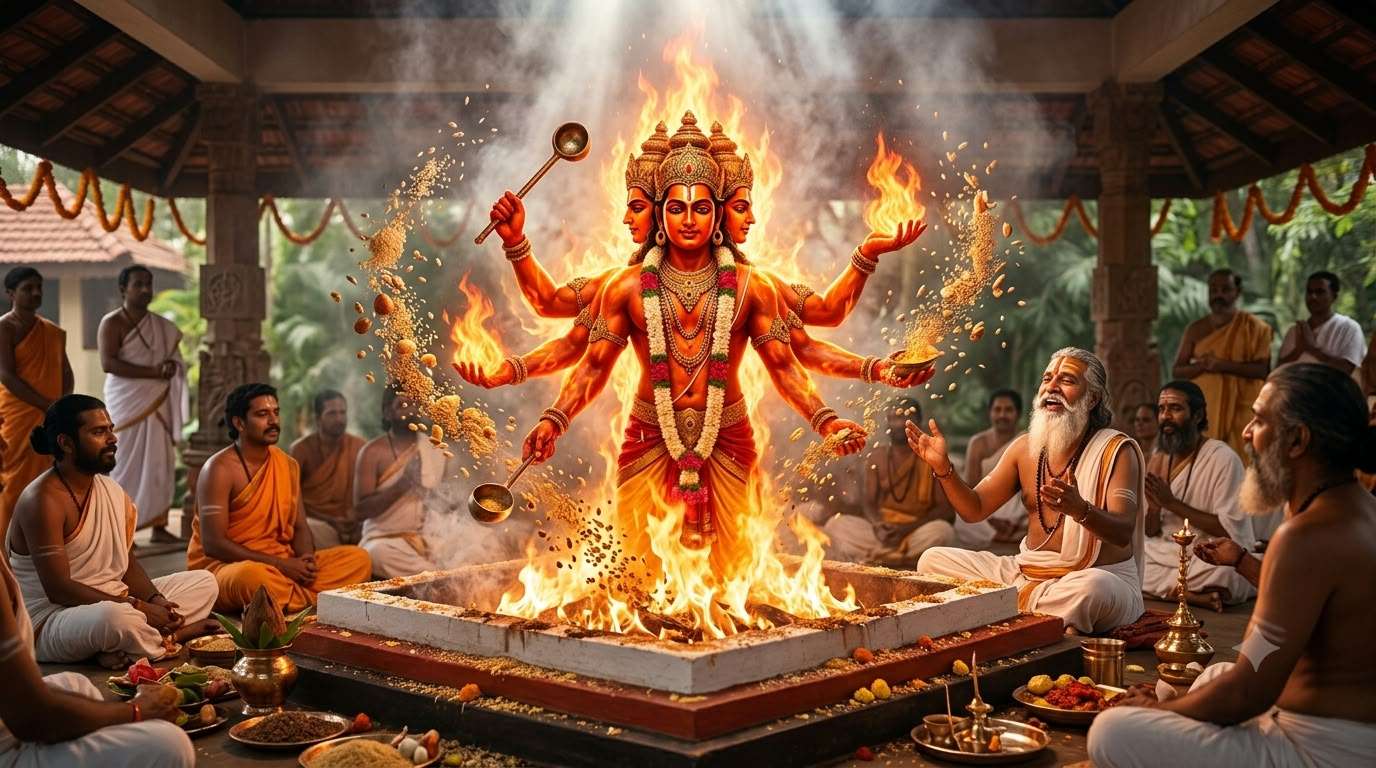
The devotees of Indra, through their hymns and sacrificial offerings, become participants in this cosmic interplay. Their praises are not empty words but potent invocations that enhance the deity’s strength, reflecting a reciprocal relationship between the human and the divine. In return, Indra bestows power, prosperity, and protection. He is the architect of ages, the conqueror of hostile forces, and the granter of wealth acquired from those who oppose dharma. Through yajña and the preparation of soma, the sacred elixir, the devotees invite him into their midst, seeking his presence as a source of vitality and inspiration.
Indra’s creative aspect is equally celebrated. He is described as the originator of cows, horses, and medicinal herbs, symbolizing sustenance, mobility, and healing. His rains are not merely physical phenomena but expressions of cosmic benevolence. Even his awakening from the intoxication of soma is portrayed as a stirring of divine energy, applauded by Vāyu and other celestial hosts. His victories over Sushna, Pipru, Kuyava, and Sambara represent the subjugation of ignorance and the penetration of fortified illusions that bind the human spirit.
The hymn further unfolds a vivid imagery of ritual devotion. A sacred platform is prepared for Indra, where he is invited to arrive, whether by day or night, in his chariot drawn by swift steeds. The loosening of the bridles signifies readiness and reverence, as the deity is offered the highest seat in the yajña. The presence of other gods alongside Indra ensures the completeness of the ritual, emphasizing the interconnectedness of divine forces in sustaining cosmic order.
A mysterious narrative emerges in the account of Kuyava, a being who dwells within the depths of waters, guarding hidden riches. His elusive nature and secretive abode symbolize the concealed aspects of existence, known only through insight and divine guidance. The confluence of rivers—Anjana, Kulisa, and Virapatni—becomes a symbolic स्थल where material and spiritual currents meet, offering a dwelling place for such enigmatic forces. The devotees, guided by Indra, seek to uncover these hidden paths and overcome the challenges posed by such beings.
In their earnest supplication, the devotees express unwavering faith in Indra’s शक्ति. They seek not only material wealth but also moral refinement—to be gentle, just, and aligned with the rhythms of Surya and the purifying waters. They pray for the protection of their progeny, the preservation of ancestral rituals, and the continuity of sacred traditions. Their appeal is intimate and heartfelt, asking Indra to listen as a father would, to nurture rather than disrupt, and to safeguard their peace and prosperity.
Thus, the hymn stands as a profound testament to the Vedic vision, where mythology, spirituality, and a keen observation of natural phenomena converge. Indra is not merely a warrior god but a symbol of cosmic intelligence, a force that harmonizes the elements, sustains life, and inspires human aspiration. Through this narrative, the ancient seers reveal a worldview that is both deeply spiritual and remarkably attuned to the scientific rhythms of the universe, where every act of nature is imbued with meaning and every prayer is a step towards cosmic alignment.