Vinay Rao
A writ petition was dismissed. A system exposed. And an administration is still silent.
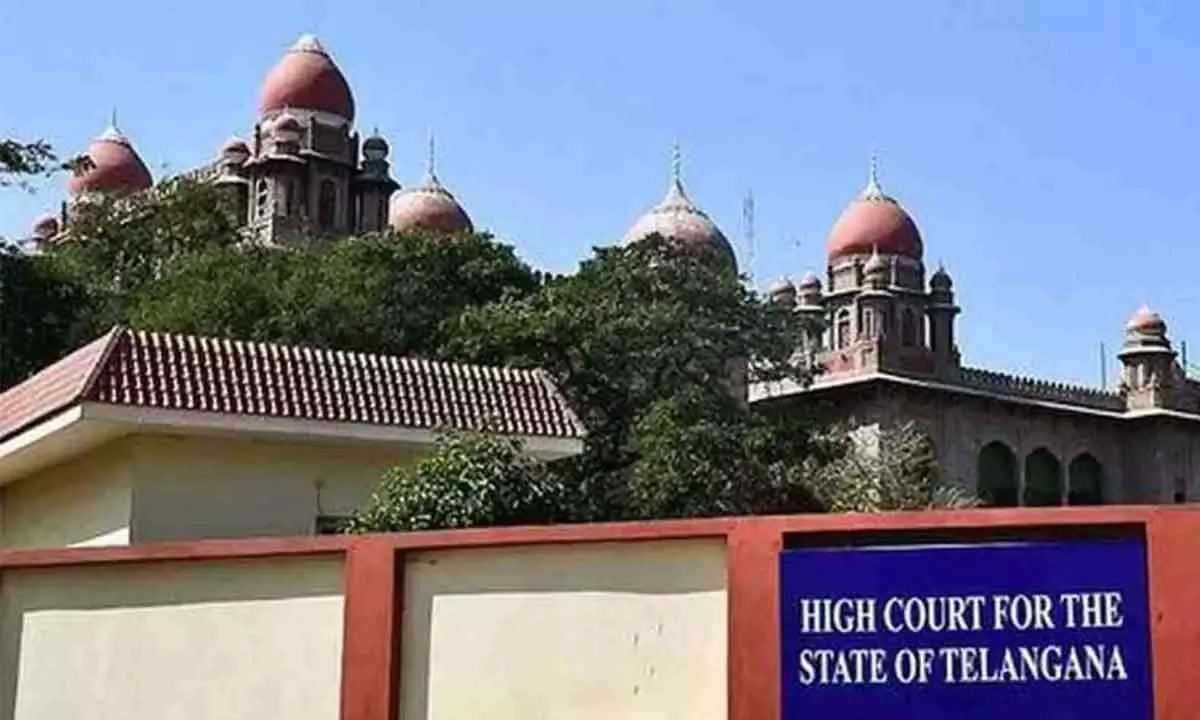
The Telangana High Court’s ruling in WP No. 10001 of 2026 was not just another routine dismissal. It was, in effect, a forensic audit of how the Hyderabad Cricket Association (HCA) has been functioning — or failing to function. In precise, unambiguous language, the Court recorded how established processes were bent, jurisdictional lines crossed, and decisions taken without legal or sporting basis.
And yet, after all that, nothing has happened. That cannot be the end of this story.
A Minor in the Line of Fire
Begin with the most disturbing aspect. Akula Sai Chandra — an under-19 cricketer, Player ID HCAA00073 — is a young athlete whose future depends entirely on fair access to recognised competitive cricket. Instead, his name appeared as the face of a High Court writ petition.
Someone drafted that petition. Someone briefed senior counsel. Someone bore the legal costs. Crucially, the Court itself noted there was no formal authorisation from Rohit XI Cricket Club empowering the minor to represent it.
This was never just about a young player’s “prospects,” as claimed. Eligibility disputes and league structures are administrative questions. They belong in boardrooms, not courtrooms — and certainly not on the shoulders of a minor.
Using a young cricketer as the legal vehicle in what is clearly an institutional power struggle crosses a line. It raises an uncomfortable but unavoidable question: who decided this, and why has no one been held publicly accountable?
What the Court Made Crystal Clear
The High Court’s findings are not open to interpretation. They are definitive:
- Promotion must be earned on merit — not negotiated, not consensual, and certainly not administratively manufactured
- The Ombudsman has no jurisdiction over promotion or relegation; that authority lies solely with the Supervisory Committee
- The promotion of four teams had no legal or performance-based foundation
- Player eligibility disputes cannot be “resolved” by granting promotions
- No constitutional violation was made out — the petition was dismissed in its entirety
Most damningly, the Court observed that the Ombudsman’s order and the issue placed before him were “not at all connected.”
That single line should unsettle anyone who cares about governance. It implies that a quasi-judicial authority was approached with one question — and chose to answer another entirely, one that he was not even empowered to decide.
If that does not demand scrutiny, what does?
The Ombudsman’s Order: Silence Is Not an Option
The Ombudsman was asked to rule on a specific issue: the eligibility of player Chittineni Srihith.
What followed on 24 March 2026 was something else altogether.
The order recorded a so-called “consensus” and directed that all four semi-final teams — including those facing eligibility violations — be promoted to A-Division. HCA, in its submission to the Court, stated that it had not authorised any such consensus. No competent body of the Association had ratified it.
Yet this unverified “consensus” became the foundation of a sweeping decision.
An experienced authority understands jurisdiction. He understands that consent cannot replace competition. He understands that a case cannot be disposed of by answering a question that was never asked.
So how did this order come to be?
Was it a lapse in judgment? A misunderstanding? Or something more troubling — external influence or institutional pressure?
The answer matters. Because without it, the system’s credibility remains compromised.
The Enforcement Failure No One Wants to Discuss
Beyond legal overreach lies a deeper operational failure.
Rohit XI CC and Sportive CC allegedly fielded players in violation of HCA’s eligibility rules — specifically, players from Andhra Pradesh recorded as local Telangana cricketers.
The rules here are not ambiguous. The league notification lays down clear eligibility criteria and equally clear penalties — for players, for clubs, and for officials.
What has happened so far?
- The player, Chittineni Srihith, has been suspended for two years
- The clubs that fielded him? No visible penalties
- The officials who processed and approved these registrations? No public accountability
This selective enforcement raises serious questions:
- Where are the club-level sanctions mandated by the rules?
- How were out-of-state players registered across multiple Telangana clubs?
- What recourse exists for teams that lost to sides fielding ineligible players?
Rules that punish individuals but spare institutions are not rules — they are instruments of convenience. And such systems are not just flawed; they are designed to be exploited.
The Real Problem: Cricket as a Commodity
This controversy is not an isolated breakdown. It is the logical outcome of a deeper structural distortion.
Increasingly, HCA league teams are being “leased” to third parties — academies, agents, or individuals with no enduring stake in the club’s identity or the sport’s integrity.
When a cricket team becomes a tradable asset rather than a sporting institution, the consequences are inevitable:
- Eligibility rules become negotiable
- Regulatory oversight becomes porous
- Disputes become strategic tools rather than genuine grievances
Opacity breeds control. And control, in the absence of accountability, breeds manipulation.
Until this model is confronted and corrected, today’s controversy will simply become tomorrow’s template.
The Court Has Done Its Job. Will HCA Do Its Own?
The High Court has drawn an unambiguous line. What happens next will determine whether HCA has the will to govern — or merely to react.
Three actions are non-negotiable:
First, enforce the rules — fully, visibly, and without exception. Clubs that violated eligibility norms must face institutional penalties. Anything less confirms that influence trumps regulation.
Second, explain the Ombudsman’s order. A ruling found to be jurisdictionally invalid and disconnected from the issue at hand cannot be brushed aside. It requires a formal, transparent explanation.
Third, address the leased-team ecosystem. HCA must define and enforce clear norms on club ownership, control, and accountability. Cricket clubs cannot be reduced to proxies for hidden interests.
The Final Question
The Court has spoken with clarity.
The question now is whether HCA is prepared to act with the same clarity — or whether it will, once again, wait for the next controversy, the next manipulated process, and perhaps the next young cricketer drawn into a battle that was never his to fight.
Because governance is not tested when things go right.
It is tested when the system is exposed, and whether those in charge choose to fix it.
(This report is based on WP No. 10001 of 2026, Telangana High Court, judgment dated 27 April 2026, before Justice Renuka Yara. HCA has been approached for comment. This is investigative commentary based on court records and does not constitute legal findings against any individual or institution.)