


Long before Google became synonymous with search and artificial intelligence, an Indian-origin scientist working quietly in the United States had already begun reimagining how machines could think. Subhash Kak is not a household name in today’s AI-dominated discourse—but perhaps he should be. Because decades before Silicon Valley discovered “intelligence” in code, Kak was already asking a deeper question: can machines understand meaning, not just process data?
In the early 1990s, when the internet itself was still finding its feet and search engines were little more than keyword-matching tools, Kak proposed something radically ahead of its time. His system, LASSI (Language Analysis and Synthetic Search Inference), attempted to move beyond mere word retrieval into the realm of semantic understanding. While early platforms like AltaVista relied on matching queries to indexed pages, Kak’s approach explored associative memory and neural structures to infer context—a precursor to what we today recognize as semantic search.
But Kak’s work did not stop at the search. He ventured into one of the most complex challenges in artificial intelligence: how to make machines learn like humans. At a time when computational power was limited and data scarce, he proposed what later came to be known as the “Kak Neural Network”—a model that explored instantaneous or one-shot learning. Unlike modern large language models that require enormous datasets and training cycles, Kak’s framework was inspired by a simple observation: a child can learn a concept after hearing it just once. That idea—still an active area of research in AI—was something Kak was already probing decades ago.
His intellectual curiosity also extended into the intersection of physics and computation. Kak was among the early thinkers to explore quantum neural computing, attempting to merge ideas from quantum theory with neural architectures. While the field itself is still evolving, his work placed him among those rare researchers willing to cross disciplinary boundaries long before such interdisciplinarity became fashionable.
Yet, what truly sets Kak apart is not just his technical foresight but the philosophical depth underpinning his ideas. He drew inspiration from ancient Indian knowledge systems, particularly the linguistic framework developed by Pāṇini. Dating back over two millennia, Panini’s grammar is often regarded as one of the most sophisticated rule-based systems ever created—arguably an early form of formal language theory. Kak recognized in it patterns and structures that resonated with modern computational logic.
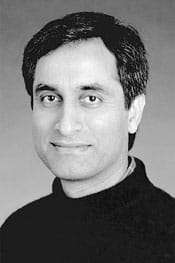
At Oklahoma State University, where he spent much of his academic career, Kak pursued research that often sounded like science fiction: translating the structural logic of Vedic texts into computational frameworks, and exploring how ancient ritualistic and linguistic systems might inform machine intelligence. In doing so, he bridged a gap that few have dared to even acknowledge—the connection between ancient epistemology and modern algorithmic thought.
Beyond artificial intelligence, Kak also made contributions to the study of the history of Indian science. Using archaeo-astronomy—the analysis of celestial references in ancient texts—he argued for a much earlier dating of key developments in Indian mathematics and astronomy. This work placed him in debates that extend far beyond computing, touching on civilizational narratives and the global history of knowledge.
And yet, despite such a wide-ranging body of work, Kak remains curiously under-recognized. Part of the reason lies in the very nature of his scholarship. In a world of increasing specialization, Kak refuses to fit neatly into a single category. He speaks the languages of both quantum physics and ancient philosophy, of algorithms and Vedic texts. For Western academia, his references to ancient Indian knowledge systems can seem unconventional; for traditional scholars, his technical depth can feel inaccessible.
The result is a paradox: a thinker too interdisciplinary for a siloed academic world, and too ahead of his time to be easily classified. But perhaps that is precisely why his work matters.
In an age where artificial intelligence is often framed as a purely modern, Western-driven revolution, Kak’s work serves as a reminder that the roots of intelligent systems may run deeper—and older—than we imagine. He challenges the assumption that innovation is always linear and contemporary. Instead, he suggests that the future of computing might well lie in rediscovering the past.
In the end, Subhash Kak stands as a quiet outlier in the story of artificial intelligence—a man who saw, long before it became fashionable, that the machine is not just a processor of information, but potentially a reflection of the human mind itself.




Sparsha Indians intellectual contribution to post behaviouralism is exemplified by the eminence of Subhas kak. Sanskrit is introduced in Schools in western countries as a measure of promoting the future realm of Artificial Intelligence. The connection between Sanskrit and AI has tremendous scope for research .. infact all the regional dialects. The Akshara Mala , its learning method through recitation ignites grasping skills as well as promoting emotional intelligence. That’s the reason why our grandparents and their forefathers just with their matriculation were masters in many fields . A Thought provoking article with significant educational value 👌🏼👏🏻👍🏼