New Delhi: The scorching heat, which has been slowly but steadily gripping northern states, showed no signs of abating, as the India Meteorological Department (IMD) released detailed guidelines and advisories on how to combat and survive heatwaves on Saturday, with Delhi logging its hottest day of the season, so far.
Temperatures in several regions have been significantly above normal — by five degrees Celsius or more — indicating a developing heat stress scenario across parts of the country, according to the IMD.
Meanwhile, India’s peak power demand hit a record high of 252.07 GW on Friday following an intensifying heat wave, which pushed up the use of cooling devices like air conditioners and desert coolers, according to the latest power ministry data. The previous record high of 250 GW peak power demand was recorded in May 2024.
Isolated areas in Jammu and Kashmir, Himachal Pradesh, Punjab, Haryana, Chandigarh, Delhi, Uttar Pradesh, Rajasthan, and central India are expected to experience heatwave conditions and warm nights, the weather office observed.
On Saturday, Delhi recorded its highest maximum temperature of the year so far at 42.8 degrees Celsius, marking the highest maximum temperature in the city since 2022, when it reached 43.5 degrees Celsius on April 28.
While the IMD had initially classified Friday as the season’s first isolated heat wave, the MeT department later clarified on Saturday that it had been the third consecutive day of a heatwave.
IMD classifies a heatwave when at least two stations have met the required criteria. An IMD official clarified that while Delhi had fulfilled the heatwave condition only in one station on Thursday, the two-step criteria are actually for the entire subdivision of Haryana-Chandigarh-Delhi.
“On Thursday, one station, Rohtak to be specific, of Haryana and Ridge of Delhi, had satisfied heatwave criteria, thus making it the first day. Saturday was the third consecutive day of heat waves,” an IMD official said.
Uttar Pradesh was left reeling from soaring temperatures as Banda logged a scorching 47.4 degrees Celsius. This was followed by Prayagraj at 45.5 degrees Celsius and Varanasi at 45 degrees Celsius.
Similar blistering conditions were witnessed in Haryana and Punjab on Saturday, with Rohtak and Faridkot baking under the sizzling conditions. Both states recorded above-normal maximum temperatures by up to six degrees. In Punjab, Faridkot recorded a day temperature of 45.2 degrees Celsius. In Haryana’s Rohtak, the mercury settled at 44.6 degrees Celsius, according to the MeT.
In Rajasthan, Barmer recorded the highest temperature on Saturday, reaching 45.7 degrees Celsius, as temperatures hit sweltering levels in the state.
Although Himachal Pradesh is also enduring above-normal temperatures and heatwaves, the Shimla Meteorological Office predicted a wet spell for the state from April 27 to April 30, which is expected to provide some relief.
Intermittent rains in Kashmir on Saturday brought a respite from heatwave conditions, with light snowfall reported at Zojila Pass. Following the rainfall and overcast skies, temperatures dropped to 21.2 degrees Celsius—approximately seven degrees lower than the previous day. However, Jammu remained hot, with the city recording a high of 39.5 degrees Celsius, which is 5.1 degrees above normal, officials noted.
The full impact of the heat has not yet hit Uttarakhand, where maximum and minimum temperatures hover around 39 degrees Celsius and 22 degrees Celsius, respectively. However, Pantnagar recorded a high of 40.4 degrees Celsius.
Southern states are also feeling the effects of the extreme weather. In Kerala, high levels of ultraviolet (UV) radiation are being reported, with maximum temperatures ranging between 37 and 40 degrees Celsius. Chief Minister Pinarayi Vijayan held a high-level meeting on Saturday, issuing several recommendations to address the issues caused by the heatwave, including ensuring an uninterrupted power supply.
Vijayan also warned of a potential increase in cases of amoebic meningoencephalitis — a rare brain infection caused by Naegleria fowleri, a “brain-eating amoeba” found in warm, freshwater sources. He advised against bathing or washing one’s face in unclean water and using stagnant water sources.
The Andhra Pradesh State Disaster Management Authority has warned of severe heatwave and heatwave conditions in several mandals across the state, with temperatures crossing the 42-degree mark in several districts.
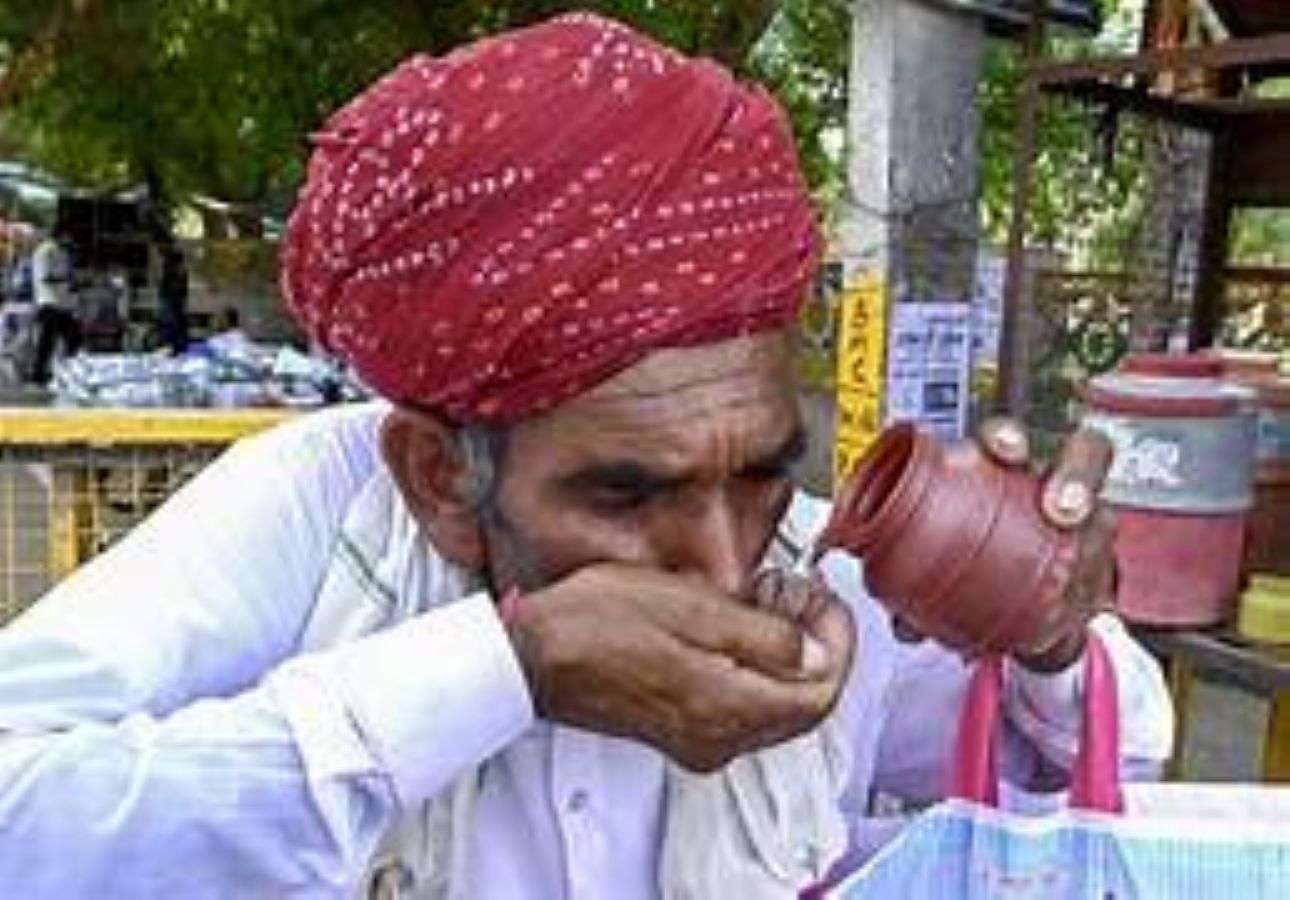
In its guidelines, the IMD advised avoiding prolonged exposure to direct sunlight, especially during peak afternoon hours, staying adequately hydrated, wearing light and breathable clothing, and avoiding strenuous outdoor activities during high-temperature periods.
The weather body has advised special care for vulnerable groups such as children, the elderly, and individuals with pre-existing health conditions. “The department emphasised that early awareness and preventive action are critical in reducing heat-related illnesses such as heat exhaustion and heat stroke,” an IMD official said