
From the earliest dawn of contemplation, the Vedic seers perceived that existence is not a chaos of events but a rhythm of sacred order. They observed the procession of seasons, the alternation of light and darkness, the stirring of winds, the descent of rains, and the ripening of grain. In these movements, they discerned not mere natural change, but the breathing of cosmic intelligence. Thus, through deep meditation and refined inquiry, they integrated the cycles of nature with human endeavour and distilled them into sacred knowledge. What modern minds might call research, they called tapas — a disciplined churning of consciousness to uncover hidden truths. Their hymns arose from this churning, and through them they sought to harmonize the human world with the vast order of the cosmos.
Central to this harmony was the sacred drink Soma, not merely an offering but a symbol of vitality, illumination, and divine exhilaration. When the sages invoked Indra, they did not summon a distant anthropomorphic god alone; they invoked the dynamic principle of strength, rain, and victorious energy that sustains life. “O Indra,” they proclaimed, “come with the seasons and drink the Soma.” The association between Indra and the seasons was declared unbreakable, for rain, thunder, and fertility follow the ordained cycle of time. When he drinks Soma during the three savanas — morning, midday, and evening libations — he is invigorated to release rains and to protect cosmic order. Thus, ritual time mirrors seasonal time; both move in sacred rhythm.
The Maruts, storm deities of luminous vigor, were praised as generous companions. Twashta, the divine artisan, was invoked with his consort as the giver of gems and forms. Through these invocations, the sages expressed a profound metaphysical insight: creation is sustained by cooperation among divine principles, just as society flourishes through cooperation among humans.
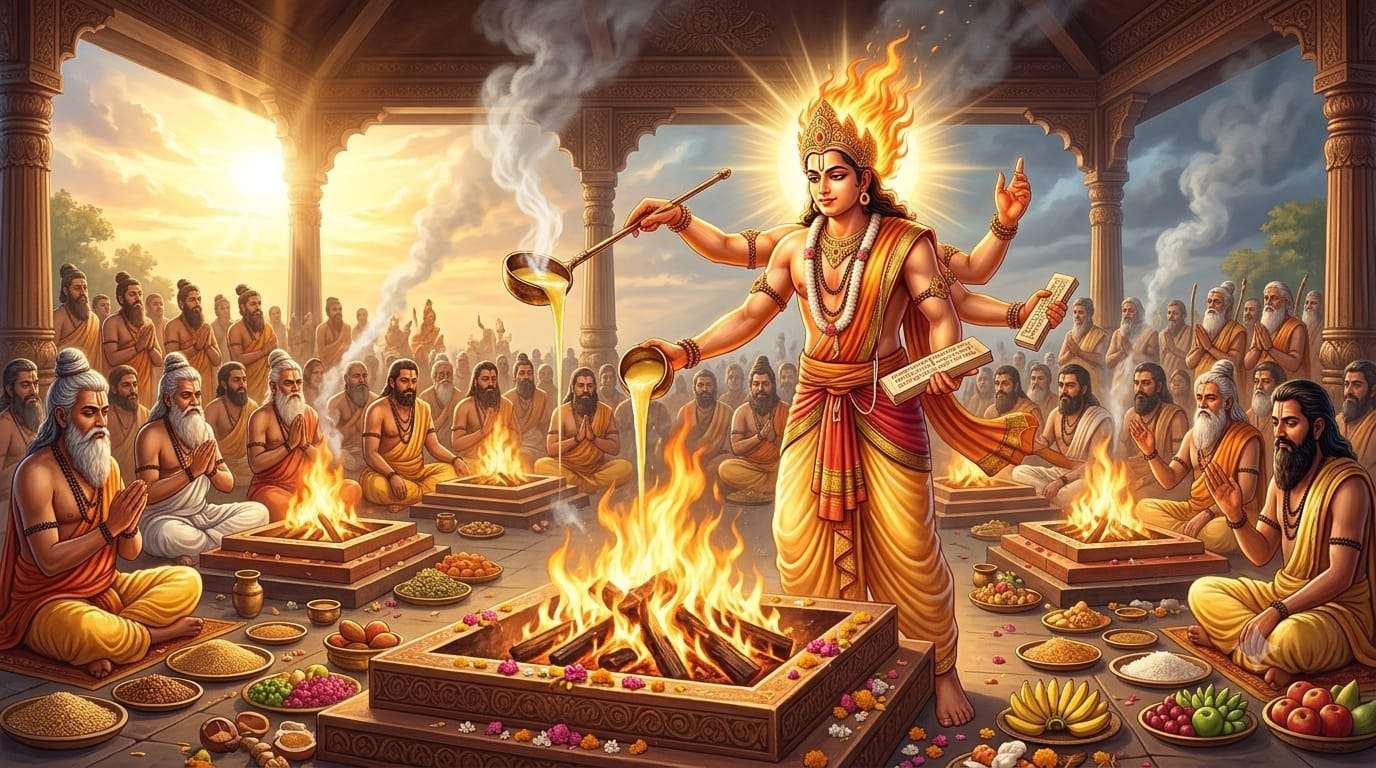
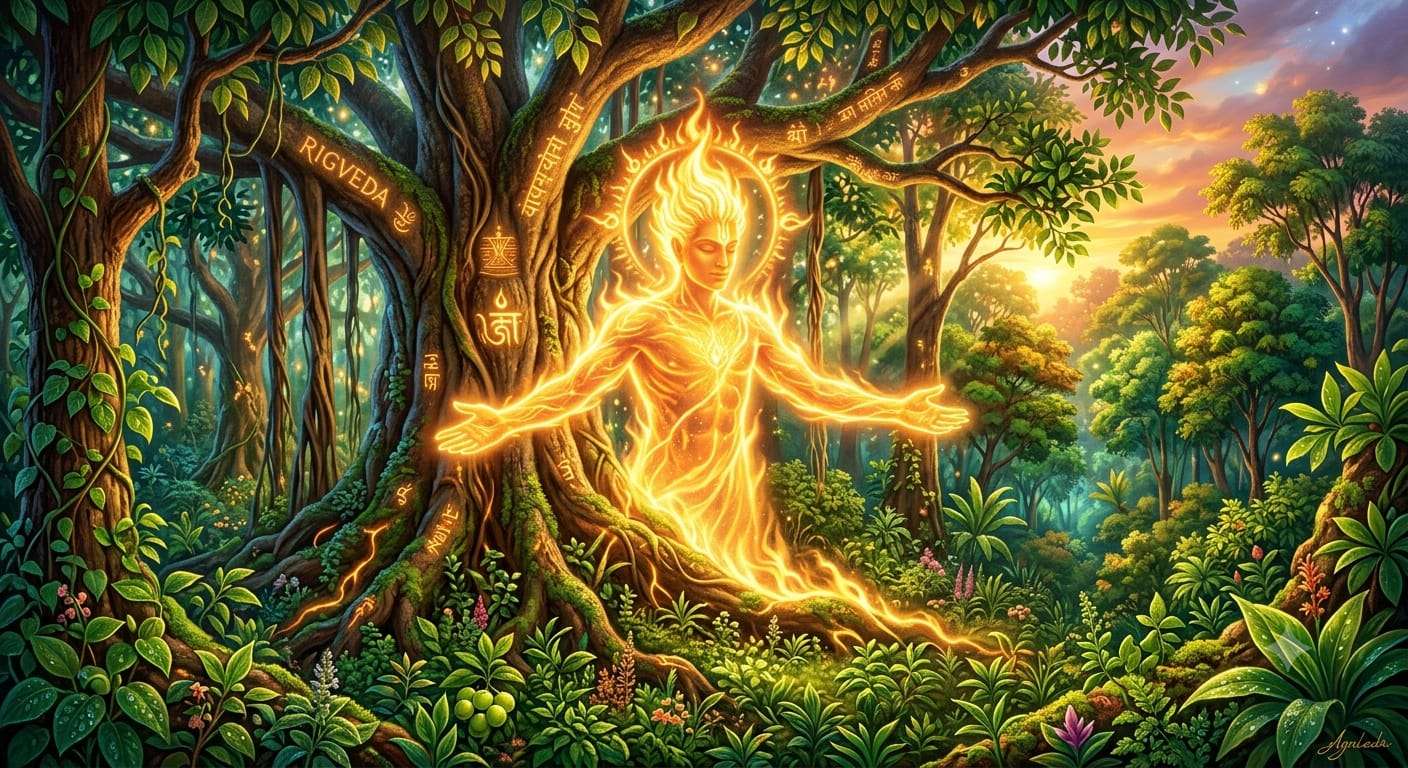
At the heart of every yajña stood Agni, the sacred fire. Agni was not merely flame but mediator, priest, messenger, and transformer. He bore offerings from the visible to the invisible realm. The Vedic ritual recognized three principal fires — Dakshina, Garhapatya, and Ahavaniya — each symbolizing a dimension of life and consciousness. Yet in poetic exaltation, the sages sometimes hailed Agni as the “fourth of the seasons,” signifying that fire itself is a cycle, a principle interwoven with time. Morning, midday, and evening rituals were adorned with offerings, chants, clarified butter, and parched grain, all sanctified upon holy grass. These were not empty gestures but embodiments of gratitude and reciprocity between humanity and the divine.
The priests — Ritvijas and Brahmanachamsins — pressed the Soma with stone, chanting precise hymns learned through lineage. Their discipline exemplified spiritual commitment. When they invoked Mitra and Varuna, guardians of cosmic law and moral order, they affirmed that ritual must be rooted in truth and ethical restraint. Wealth was indeed sought — cows, horses, grain, and strength — but it was desired as divine trust, not selfish possession. “We desire riches for the sake of the gods,” they declared, meaning that prosperity is sanctified only when aligned with righteousness.
The Asvins, radiant twin healers, were invited to partake of honeyed offerings, symbols of sweetness and restoration. Through them, the sages acknowledged the healing aspect of cosmic forces. Even ritual fruit — the merit and blessing arising from sacrifice — was understood as the grace of Agni manifesting in the domestic Garhapatya fire, sustaining household and lineage.
Among these contemplatives was Medhaditi, chanting Vedic hymns with luminous devotion. His vision was not isolated ecstasy but communal invocation. When Indra was praised as the bestower of rain, his golden horses, Hari, were imagined drawing his chariot across the heavens. The imagery conveyed an experiential truth: thunderclouds move like chariots; lightning flashes like reins; rain descends like grace. Thus, poetic vision became theology.
In the sacrificial arena, the purified Soma was placed upon sacred grass, shining like liquid light. The priests called upon Indra to drink deeply, “as a thirsty cow,” and thereby gain immense strength to overcome hostile forces. Indra, celebrated as the performer of a hundred yajñas, was invoked not only as a warrior but as a participant in sacred reciprocity. By drinking Soma, he renewed his power; by granting rain and protection, he renewed the world.
Through these hymns, the sages bestowed equal dignity upon the seasons and the gods. Time itself became divine. The rituals of morning, noon, and evening were microcosms of spring, summer, and autumn. In honoring seasons, humanity honored the structure of existence. In offering Soma, humanity offered its aspiration, labor, and gratitude. In kindling Agni, humanity kindled its own inner fire of awareness.
The spiritual significance of these practices lies not merely in external ritual but in their symbolic depth. Soma represents blissful consciousness; Agni, transformative insight; Indra, empowered will; Mitra and Varuna, moral harmony; the Asvins, healing grace. The pressing of Soma with a stone signifies the discipline required to extract wisdom from life’s raw material. The three fires reflect body, mind, and spirit unified in devotion. The seasons remind us that growth requires patience, endurance, and trust in cyclical renewal.
Thus, the Vedic seers did not separate nature from spirit nor labor from prayer. They perceived a cosmos alive with intelligence and sought to align humanity with that living order. Their hymns, resounding across millennia, invite us to rediscover that sacred integration.
In conclusion, the Vedic vision presents a majestic tapestry in which seasons, deities, ritual fires, and human aspiration interweave into one harmonious whole. By honouring time, offering gratitude, and cultivating disciplined awareness, humanity participates in the eternal rhythm of existence. The flame of Agni still burns wherever sincerity rises; the rains of Indra still fall where effort meets faith; the sweetness of Soma still flows where knowledge and devotion unite. To study these hymns is not merely to recall ancient rites but to awaken to the timeless truth that cosmic order and human endeavour are one sacred continuum.