In the dawn of civilization, when humanity sought not merely survival but truth, the sages of the ancient world conceived a grand and disciplined methodology to comprehend the profound depths of the Veda. They understood that the Veda was not an ordinary compilation of hymns but an eternal revelation—subtle, layered, and vast as the cosmos itself. To preserve its sanctity and unlock its meaning, they established a systematic framework of learning, creating six auxiliary disciplines known as the Vedangas and four Upavedas. Each stood independent in structure, yet all functioned harmoniously as supporting limbs of the Vedic body.
The six Vedangas were designed to ensure correct recitation, interpretation, and application of Vedic knowledge. Śikṣā (phonetics) governed pronunciation and accent, for a slight deviation in sound could alter meaning and diminish potency. Chandas (meter) preserved the rhythmic structure of hymns, ensuring that the vibrational integrity of sacred verses remained intact. Vyākaraṇa (grammar) refined linguistic precision, while Nirukta (etymology) revealed the inner meaning of words, often hidden beneath symbolic expression. Jyotiṣa (astronomy and calendrical science) determined the proper timing of rituals, aligning human actions with cosmic rhythms. Kalpa (ritual procedures) codified sacrificial and ceremonial practices. These six disciplines formed the indispensable foundation for every student of the Veda.
Complementing them were the four Upavedas, which bridged spiritual wisdom with practical life. Ayurveda, traditionally associated with the Atharva Veda, dealt with medicine and the science of life, teaching harmony between body, mind, and environment. Dhanurveda expounded the art of warfare and righteous defense, guiding rulers in discipline and valor. Gandharva Veda elevated music and dance into sacred expression, transforming art into worship. Artha Veda (often linked to statecraft and economics) addressed governance, architecture, and prosperity, ensuring that material order supported spiritual growth. Thus, Vedic knowledge extended from healing and aesthetics to administration and ethics, forming a complete civilizational blueprint.
The Veda does not remain confined to metaphysical abstraction; it insists upon lived application. It penetrates every dimension of existence, making knowledge a way of life. Its central pursuit is truth—satya—not merely factual correctness but alignment with cosmic order (ṛta). It enriches the human mind with wisdom, modesty, sacrament, and honesty. Its narratives are not fanciful myths but profound allegories grounded in logic.
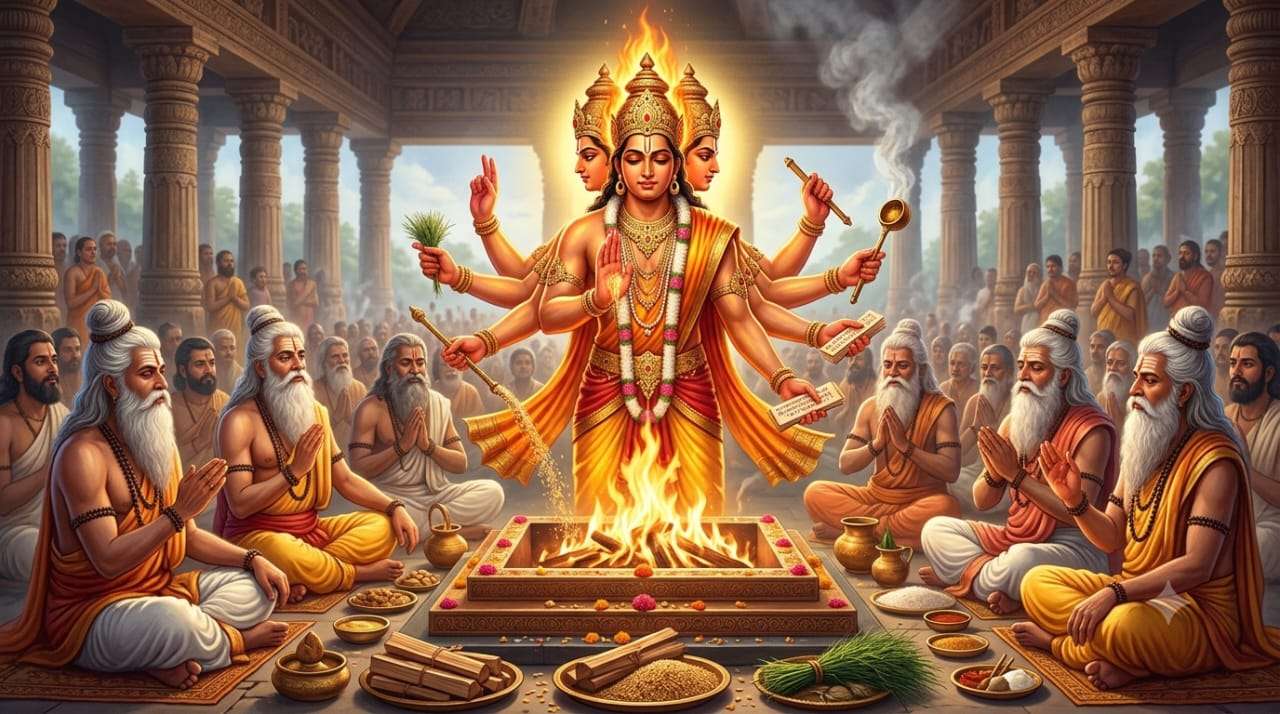
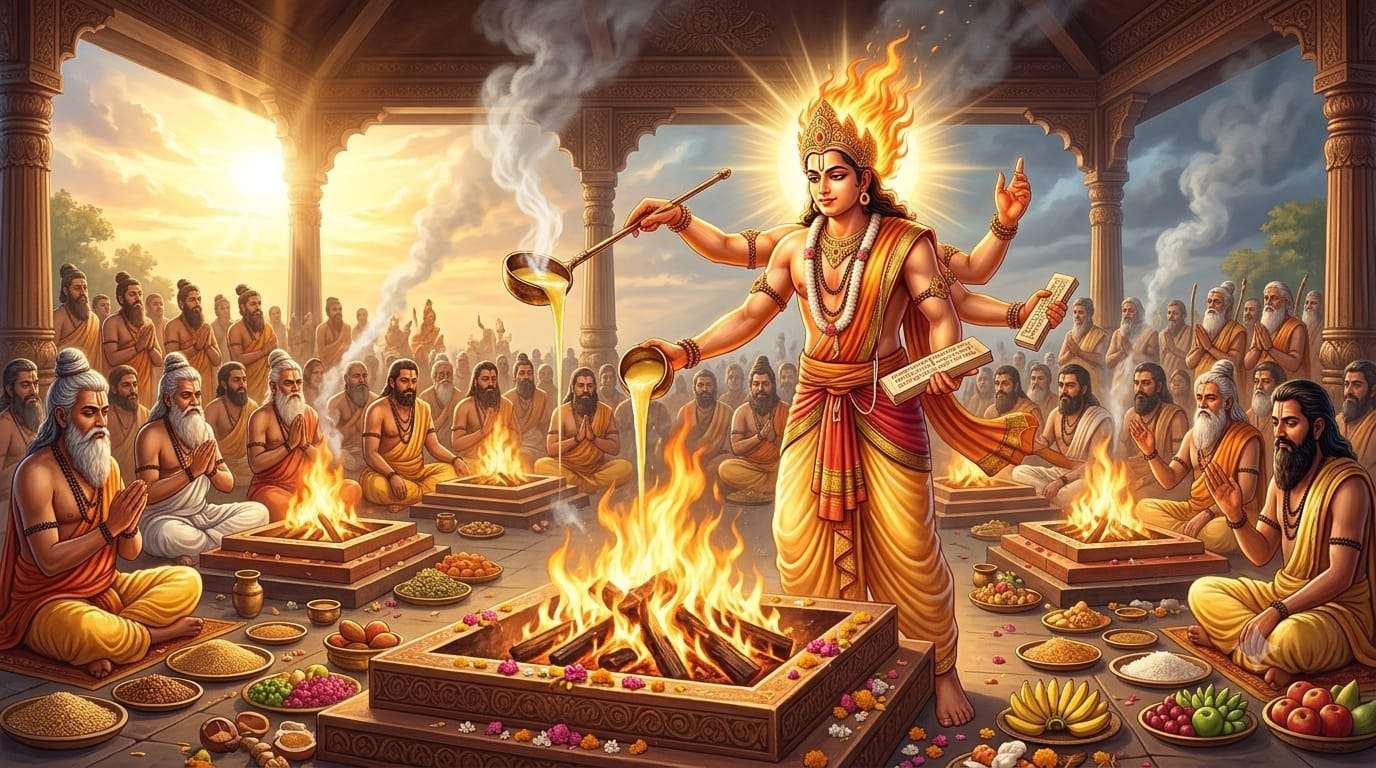
Consider Agni, the sacred fire so frequently invoked in the Rigveda. To the physical eye, fire appears as flame. Yet the seers declared that its root is the Sun, the vital energy sustaining all life. Fire thus symbolizes universal energy—the force that balances the cosmos. The digestive fire sustains the body; the fire of knowledge illumines the intellect; the solar fire sustains planetary motion; and the absolute fire is the divine radiance pervading existence. Through such layered symbolism, the Veda reveals unity between the physical and metaphysical.
The Veda is strictly Śruti— “that which is heard.” It is not a product of speculative science, yet it stands as the foundation upon which scientific inquiry may unfold. Its methodology recognizes human limitations but offers disciplined systems to transcend them. The sages proclaimed this wisdom to be infinite, its culture perpetual. Unlike temporal civilizations that rise and fall, Vedic culture aspires to sustain continuity—like the ceaseless motion of planets and stars.
This treasure of Bharata Khaṇḍa is incorruptible. It cannot be stolen, copied, or manipulated in essence, for its preservation lies in disciplined memory and oral transmission. Generations of devoted lineages safeguarded it with unwavering dedication. The chanting of mantras with precise phonetics was believed to generate profound psychological and spiritual effects, refining the human mind.
Understanding the Veda requires more than consulting a dictionary. Its words are symbolic, multi-layered, and context-bound. Only the guidance of a realized guru—one who dwells in its depth and breadth—can decode its mysteries. The Vedic language is natural yet sublime, born from divine intention and refined by mortal intelligence. Like the Sun, it illumines and energizes; like the Moon, it soothes and rejuvenates; like the Earth, it endures; like the Wind, it animates life.
Within the Rigvedic tradition emerged various śākhās (branches) such as Śākala, Bāṣkala, Āśvalāyana, Śāṅkhāyana, and Māṇḍūkyāyana. These branches represented scholarly lineages adapted to region and tradition while preserving the essential spirit of the Rigveda. For pedagogical clarity, the text was organized into divisions such as Aṣṭaka, Maṇḍala, Adhyāya, Anuvāka, Sūkta, and Mantra—structures that facilitated systematic study and social application.
The sage Vyasa is traditionally credited with compiling and organizing the Vedic corpus into its present form, ensuring its accessibility for future generations. In Vedic cosmology, even the deities are assigned precise cosmic functions, symbolizing the ordered harmony of creation.
The society envisioned by the Veda was grand yet restrained—rich in culture, modesty, and forbearance. Its systems of governance, education, and daily living sought not merely material success but soul enrichment. Ancient values—truthfulness, hospitality, reverence for nature, disciplined learning, and ethical rulership—were woven into its fabric. Kings were guided by dharma; scholars by humility; householders by responsibility; ascetics by renunciation.
Thus, the Veda stands as a living continuum—readable yet demanding, disciplined practice for realization. Each sanctified word carries latent power; when uttered with purity and understanding, it becomes a force of uncommon strength. It addresses life before birth, life after death, and the eternal journey of consciousness.
In its vast embrace, the Veda unites heaven and earth, science and spirituality, governance and art, body and soul. It is not merely a scripture but a civilization’s heartbeat—an undiminishing flame that has illumined ages and continues to guide seekers toward truth.