Upadhyayula Lakshman Rao
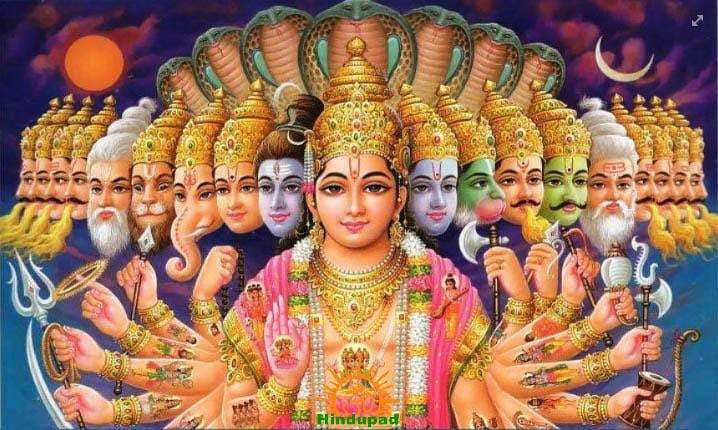
The sage Kutsa, born of the illustrious line of Angirasa, raises his voice in solemn invocation to the Vishvadevas, composing his hymn in the majestic measures of Maha Bruhati, Pankti, and Tristup. His vision stretches across the cosmic ocean, where the Moon moves mysteriously amidst the waters, reflecting the Sun’s brilliance as it journeys through the vast expanse of space. The origin of the Moon’s golden radiance remains veiled, suggesting an early contemplation of celestial phenomena, where observation blends with reverence. Heaven and Earth themselves seem to accept and sanctify this hymn, as human life unfolds below in harmony—wealth is earned through effort, households flourish in unity, and the cycle of birth continues as the wife, adorned with the seed of life, brings forth progeny.
Yet beneath this harmony arises a profound questioning. The sage wonders why the ancestors of higher realms do not descend, why those who nourish the gods with Soma should ever face want, and where the merits of ancient sacrifices have gone. Addressing Agni, he asks where the fruits of past praises have been bestowed, and which among the present receives fresh auspicious grace. He turns to the gods collectively, seeking to understand their stations across the three worlds, the luminous abodes of Surya, and the destiny of those who invoke them. His inquiry bears the tone of philosophical investigation, reflecting a scientific temperament that seeks causality, continuity, and justice within the cosmic order.
The hymn deepens into a personal lament, where the sage speaks as one beset by suffering, pressed between opposing forces like a man caught between two rivals. He identifies himself as the creator of hymns, yet confesses that afflictions gnaw at him like a relentless rodent. The image of the seven rays of the Sun reveals an early symbolic attempt to grasp the nature of solar light, while the sage Trita, described as the son of waters, understands these mysteries and directs his prayer toward liberation. The cosmos is envisioned as sustained by five great forces—Agni, Vayu, Surya, Chandra, and the stars—each fulfilling desires and maintaining balance, while the rays of the Sun traverse the immeasurable sky, illuminating both the outer world and inner consciousness.
The narrative then unfolds the dramatic plight of Trita, who, abandoned and cast into a well by his own companions Ekata and Dvita, finds himself in utter despair. Deprived of light and support, he invokes the gods with unwavering faith. His hymn becomes not merely a plea for rescue but a profound declaration of resilience and insight. The well symbolizes the depths of ignorance and confinement, while his voice rising from it signifies the enduring power of knowledge and devotion. When Brihaspati hears his call, he lifts Trita from darkness, restoring him to the world of light. This episode reflects both a spiritual allegory and a rational understanding that knowledge, when invoked with clarity, becomes the force that liberates one from the depths of uncertainty.
The sage’s vision continues to interweave cosmic observation with human experience. The rivers flow by divine ordinance, the Sun shines unfailingly, and Agni, ever wise and luminous, presides over sacrifice as in the ancient rites of Manu. Varuna is invoked as the knower of righteous paths, while Aryaman embodies the noble way of conduct. The Moon, governing the passage of months, moves among the stars, marking time itself. Even the encounter with the red wolf becomes symbolic, reflecting sudden adversity that arises in life’s journey, demanding vigilance and inner strength.
In its essence, this hymn stands as a bridge between observation and introspection, between the outer cosmos and the inner being. It reveals a mind that does not merely submit to divine will but questions, examines, and seeks coherence in the workings of the universe. The rescue of Trita, the contemplation of solar rays, and the invocation of multiple deities together signify a unified vision where spiritual insight and proto-scientific curiosity coexist. The hymn ultimately affirms that ignorance and darkness, however deep, are transient, and that through knowledge, devotion, and disciplined inquiry, one may rise from the depths into the radiant order of truth.