



The dust has barely settled on the electoral victories, but governance does not afford the luxury of celebration. For Prime Minister Narendra Modi, the political mandate—especially in sensitive border states like West Bengal and Assam—must now translate into decisive administrative action. The next phase is not about winning elections; it is about securing India’s frontiers and reinforcing internal stability in an increasingly volatile neighbourhood. Three priorities stand out, and they demand urgency bordering on wartime execution. First, the long-pending task of sealing the India–Bangladesh border must move from rhetoric to reality. For years, successive administrations in West Bengal—particularly under the All India Trinamool Congress—were accused of dragging their feet on land acquisition required for border fencing. The result is a porous frontier that has facilitated illegal migration, smuggling, and, more worryingly, potential security threats. Border fencing is not a political issue; it is a sovereign necessity. The Union government must now fast-track clearances, deploy resources, and complete the fencing project in mission mode. Delays here are not administrative lapses—they are national vulnerabilities. Second, identification and documentation of illegal migrants can no longer remain a half-hearted exercise. The debate has been politically weaponised for too long, but the facts are stark. Unregulated migration—particularly from Bangladesh—has altered demographic patterns in several districts of both Assam and West Bengal. The updating of the National Register of Citizens in Assam, despite its controversies, established that the scale of the problem is neither imagined nor trivial. What is needed now is a legally sound, transparent, and nationally coordinated mechanism to identify illegal residents, distinguish them from genuine citizens, and proceed with due process. Any hesitation on this front will only embolden networks that thrive on demographic ambiguity. Third, India’s border management suffers from fragmentation. Multiple states share boundaries with multiple countries—China, Nepal, and Bangladesh—yet coordination between state administrations and central forces like the Border Security Force remains uneven. A permanent coordination mechanism involving northeastern states and West Bengal is no longer optional. It is essential. Intelligence sharing, infrastructure planning, and rapid response protocols must be institutionalised, not improvised.
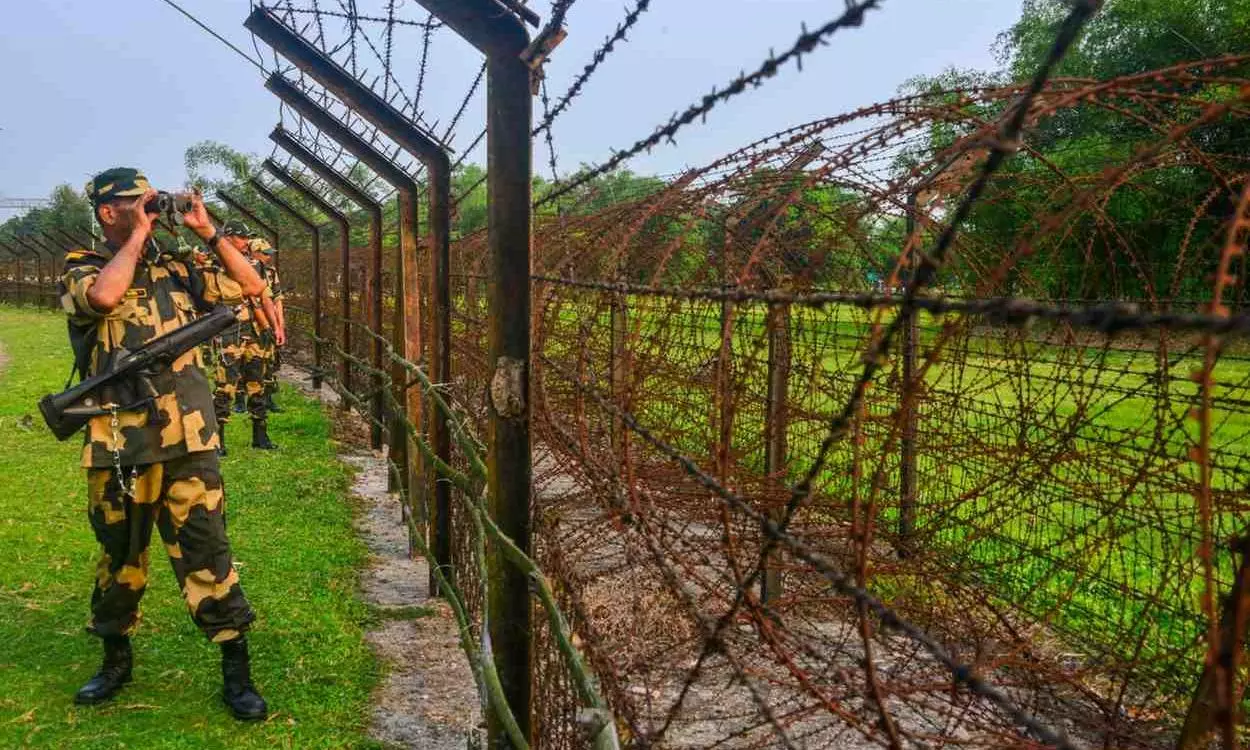
These domestic imperatives are sharpened by an increasingly hostile external environment. India’s eastern flank is no longer as stable as it once was. Political developments in Bangladesh have raised concerns about democratic backsliding and internal instability. Reports of political exclusion and apprehensions expressed by leaders there about potential deportation drives in India indicate rising unease. Instability across the border invariably spills over—through migration, radicalisation risks, and diplomatic friction. Simultaneously, China continues its cartographic aggression, releasing maps that lay claim to Indian territory, including large parts of Arunachal Pradesh. Renaming Indian locations and disputing settled boundaries is not symbolism—it is strategic signalling. Add to this the periodic friction with Nepal over territorial and transit issues, and a clear pattern emerges: India’s neighbourhood is unsettled, if not openly adversarial. What complicates matters further is the rhetoric from sections of the domestic Opposition, which often mirrors instability rather than countering it. Loose talk about replicating political upheavals seen in neighbouring countries undermines institutional confidence at home. In a region already prone to external pressures, internal political irresponsibility can have disproportionate consequences. This is where leadership must rise above politics. The mandate secured by Narendra Modi is not merely electoral—it is strategic. It places upon his government the responsibility to act decisively where others hesitated. Border fencing must be completed. Illegal migration must be addressed with legal clarity and administrative firmness. Inter-state and centre-state coordination must be strengthened into a seamless security architecture. Because the reality is blunt: in geopolitics, vacuums are never empty—they are exploited. If India does not secure its borders with urgency and coherence, others will test them with persistence and intent. The time for incrementalism is over. This is the moment for decisive statecraft.Top of Form



Excellent suggestions.
Modi must delivery without blinking