



Shri Dadaji Hanuman Temple is located in the Rangai area of Vidisha, a historic town situated about 60 km from Bhopal-Madhya Pradesh. The temple is a well-known spiritual center attracting devotees from across the region.
The exact age of the temple is not clearly documented in inscriptions or official historical records. However, based on long-standing local traditions and continuous worship, the temple is believed to be several hundred years old. It is regarded as an ancient Siddha Kshetra where devotion has been practiced for generations.
The temple is dedicated to Lord Hanuman, worshipped here as “Dadaji,” a name that reflects a caring and protective elder-like presence. The idol is believed to be Swayambhu (self-manifested) and is covered with sindoor (vermilion), following traditional Hanuman worship practices. Devotees believe that the deity is highly powerful and fulfills sincere prayers, giving the temple its name “Manokamna Purna.”
The temple follows a simple North Indian architectural style, focusing more on spiritual energy than grandeur. The sanctum houses the sacred idol, and the premises are spacious enough to handle large crowds. A unique feature of the temple is its alignment for the Surya Tilak ritual, where sunlight is directed onto the forehead of the deity, reflecting a blend of devotion and scientific design.
Though detailed written records are not available, the temple has gained prominence over time due to strong faith and the experiences of devotees. Many believe that their wishes were fulfilled after visiting this temple. In recent times, the temple gained wider attention due to the Surya Tilak ritual performed during Hanuman Jayanti, where sun rays are scientifically directed onto the idol’s forehead.
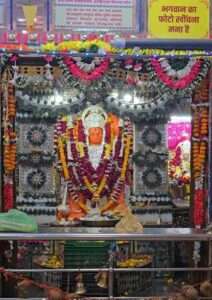
According to local tradition, the idol of Lord Hanuman appeared on its own (Swayambhu) at this sacred location. In earlier times, saints and devotees experienced divine visions and spiritual vibrations here, which led to the establishment of regular worship.
Over the years, many devotees experienced fulfillment of wishes, relief from problems, and protection from negative forces. Because of this compassionate and responsive nature, the deity came to be lovingly called “Dadaji.”
The Surya Tilak ritual also holds spiritual meaning. In Hindu belief, Lord Hanuman is said to have learned from Surya Deva (the Sun God) as his Guru. The direct falling of sunlight on the idol symbolizes divine blessings from Surya, strengthening the temple’s spiritual importance.
This temple is considered a powerful Siddha Sthaan where divine presence is actively experienced. Devotees visit with deep faith believing that their wishes will be fulfilled and obstacles will be removed. It is widely believed that prayers offered here help in overcoming life challenges, gaining strength and courage, and receiving protection from negative energies.
The temple is especially known as a Manokamna Purna Kshetra, where sincere prayers are answered. Devotees feel a strong personal connection with “Dadaji,” believing that he listens like a compassionate elder and blesses them with guidance, peace, and positive outcomes.
The temple is vibrant during Hanuman Jayanti, which is celebrated in a grand manner with special poojas, bhajans, and the unique Surya Tilak ritual. Tuesdays and Saturdays are considered highly auspicious, attracting large numbers of devotees. Offerings such as oil, sindoor, coconuts, and garlands are made, along with chanting of Hanuman Chalisa and Ram Naam.

