

When Narendra Modi urges every Indian household to participate in the long-delayed Census, it is not a routine administrative appeal—it is a reminder of something far more fundamental. Nations don’t just run on rhetoric or electoral arithmetic; they run on data. And in a country as vast, layered, and complex as India, the Census is the closest thing to a mirror we have. The decennial Census, last conducted in 2011, was due in 2021 but fell victim to the COVID-19 pandemic. That delay has created more than just a statistical gap—it has created a policy vacuum. Over half a decade without updated demographic data in a rapidly changing nation is not just inconvenient; it is risky. Migration patterns have shifted, urbanization has accelerated, fertility rates have changed, and economic realities have evolved. Yet, policymaking continues to lean on outdated numbers. This is precisely why Modi’s push matters. The Census is not merely about counting heads; it is about understanding lives. It maps the nation’s human resources, cultural composition, economic conditions, and social realities—from the smallest village to the largest metropolis. Without it, governance becomes guesswork. But the politics around it reveal a deeper discomfort. Sections of the Opposition appear uneasy—not necessarily about the exercise itself, but about what it might uncover. A comprehensive Census does not just count citizens; it clarifies identities, exposes demographic shifts, and, importantly, distinguishes between legal residents and those who may not belong within the framework of lawful citizenship. That discomfort is not happening in isolation. It coincides with a broader pattern of political positioning, where data-driven clarity often collides with vote-bank calculations. The same unease was visible during debates around women’s political representation and electoral mobilization. When high voter turnouts—particularly among women—were recorded in states like West Bengal and Tamil Nadu, it signalled something powerful: silent sections of society are no longer passive. They are participating, asserting, and, crucially, influencing outcomes.
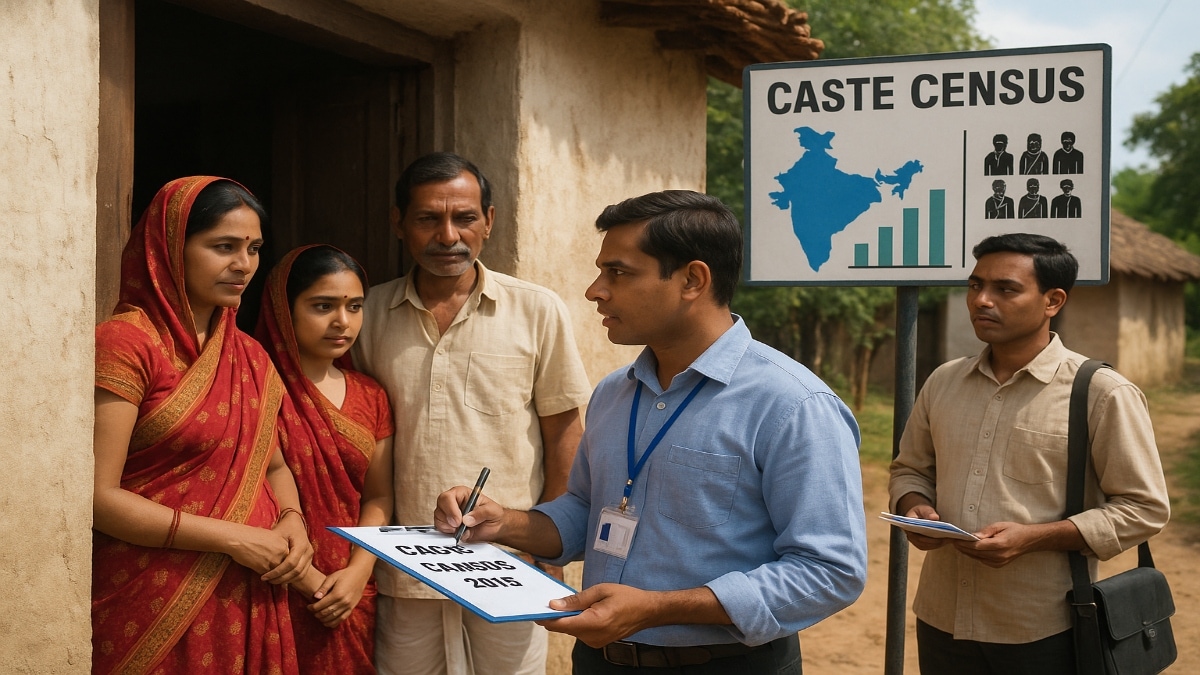
In that context, the Census becomes even more consequential. It is not just a demographic tool; it is a democratic instrument. It ensures that representation, resource allocation, and welfare schemes are grounded in reality rather than assumptions. When millions of questionable or duplicate entries are periodically removed from electoral rolls—as seen in recent revisions—the need for an accurate population baseline becomes even more urgent. Consider the scale of this exercise. Nearly 30 lakh enumerators and supervisors already fan out across the country to count over 1.4 billion people. They will document households, assess living conditions, and gather granular data on amenities, assets, and socio-economic indicators. This is not just a logistical challenge—it is one of the largest administrative exercises in human history. The two-phase structure—House-listing and Housing Census followed by Population Enumeration—ensures that the process is both comprehensive and methodical. It begins with mapping every structure and household, laying the groundwork for accurate population counts. The result is a dataset that informs everything from housing policies to welfare distribution, from infrastructure planning to economic forecasting. And yet, the Census is often taken for granted. That is a mistake. In a democracy, participation is not limited to voting once every five years. It extends to being counted, being visible, and being part of the national narrative. Refusing or neglecting to participate weakens the very system that citizens expect to serve them. Modi’s call, therefore, is not political grandstanding—it is administrative realism. Without updated data, governance loses precision. Without precision, welfare leaks, planning falters, and inequalities widen. The Census, at its core, is about truth. It tells India who it is, where it stands, and where it needs to go. In an era of loud political narratives, it offers something rare—quiet, unembellished facts. And that, perhaps, is exactly why it matters so much now.Top of Form